Skip to content
Briefings are running a touch slower this week while we rebuild the foundations.See roadmap
Cuba Dispatch
4JUN

Florida Republicans push for Cuba licence purge

3 min read
11:38UTC

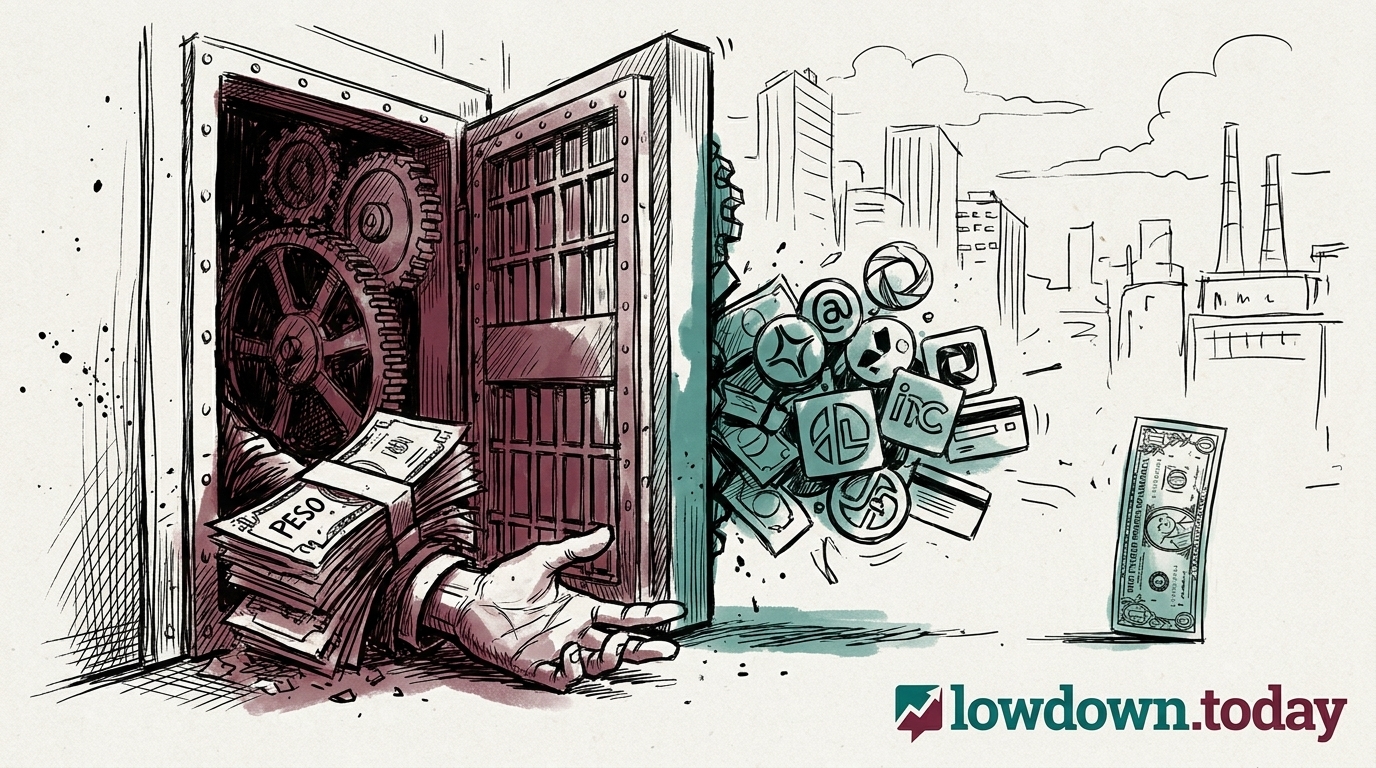
Three Miami-area Republicans wrote to OFAC on 11 February demanding review of every active licence authorising US business with Cuban state entities.

PoliticsDeveloping
Key takeaway

Three Miami members are pulling the Trump administration's Cuba policy back toward its most restrictive reading.

On 11 February 2026 Florida Representatives Carlos Giménez (FL-26), Mario Díaz-Balart (FL-25) and María Elvira Salazar (FL-27) sent a joint letter to OFAC and the Bureau of Industry and Security demanding a comprehensive review and revocation of every active licence authorising US business with Cuban state-controlled entities 1. The letter invokes the 1996 LIBERTAD Act and Cuba's State Sponsor of Terrorism designation.

The three signatories are not random. FL-25, FL-26 and FL-27 cover the majority of the Cuban-American diaspora in south Florida, and their offices function as the permanent congressional constituency for hardline Cuba policy. The demand is tactical: general licences and specific licences issued under the Cuban Assets Control Regulations are the legal instruments that carve exceptions into an otherwise comprehensive embargo, and revoking them removes the daylight through which ordinary US-Cuba commerce passes.

The effect is already partly visible in Treasury practice. The 25 March Venezuela licence permitting private-sector Cuban buyers only, while keeping GAESA and the Cuban state blocked, maps closely to the letter's logic of private-over-state differentiation. Lowdown has not found a public Treasury written response to the 11 February letter through 15 April, but absence is not the same as inaction: licence revocations under OFAC practice do not require correspondence announcements. Whether a broader revocation programme materialises, particularly against the telecommunications and travel authorisations that remain in place, is the open policy question. Silence past a further 30 days would itself be a signal about the weight Treasury is giving to the delegation's pressure.


Deep Analysis

In plain English

Three Republican members of Congress from South Florida; all representing districts with large Cuban-American populations; wrote a letter demanding the US government cancel every business licence that allows American companies to deal with Cuba's government-controlled companies. These three have enormous influence over US Cuba policy because they represent the community most directly affected, and their support matters to the Republican Party in a key electoral state. The letter is asking for maximum sanctions; essentially closing every remaining commercial loophole. Whether Treasury complies is a test of how much the administration wants to give the Miami delegation.

What could happen next?
  • Risk

    If OFAC reads the letter's 'regime-controlled entities' language broadly, telecommunications licences enabling internet access and journalism inside Cuba could be revoked; cutting the independent information channel that produces Yoani Sánchez and 14ymedio reporting.

  • Consequence

    The absence of a public Treasury response through 15 April does not confirm inaction; OFAC licence revocations are typically implemented without announcement, meaning compliance could already be occurring.

First Reported In

Update #1 · Cuba carve-out survives Venezuela oil easing

Office of Rep. Carlos Giménez· 15 Apr 2026
Read original
Different Perspectives
Spanish hotel operators
Meliá and Iberostar exited GAESA-linked Cuban hotels before 5 June to protect their broader Caribbean and global portfolios from secondary-sanctions exposure. Spain's commercial stake in Cuban tourism makes Madrid a structural veto risk if the EU advances Cuba-specific restrictive measures under Ollongren's mandate.
Cuban opposition / OCDH
After the US Senate killed a Cuba war-powers check 51-47 on 29 April, the Madrid-based OCDH formally demanded an EU reparations fund for political prisoners on 4 June, routing its pressure campaign to Brussels where the EU's existing restrictive-measures machinery, used previously against Venezuela and Belarus, does not require a Senate majority.
China
China
Beijing paired a birthday telegram to Castro with no operational commitment on fuel or credit, using the occasion to signal non-abandonment ahead of the G20 without incurring the cost of a replacement tanker. China has no military-logistics presence in the Caribbean comparable to Soviet-era capacity.
Russia
Russia
Moscow sent an official birthday message to the indicted Raúl Castro on 3 June, a deliberate legitimacy signal to Global South partners, while Sovcomflot has announced no replacement for the Universal's 270,000-barrel cargo that turned away on 26 May. The pattern mirrors Soviet public solidarity during the 1962 crisis while privately managing exposure.
Trump administration / OFAC
Washington let a calendar date do the work: no new designations were needed after 18 May, and the looming 5 June expiry, which strips foreign firms' legal-exit defence, drove the hotel exodus and card suspension without a second executive action. The administration has not publicly commented on the compound utility failures.
Cuban government and citizens
Havana's only countermeasure this week was a Granma editorial defending GAESA by name, conceding the designation is biting hard enough to require a public answer. Residents of Havana and Guanabacoa banged pots on the nights of 3-4 June, the first confirmed capital protests, after gas, water, and the state milk ration all failed.
