Skip to content
Briefings are running a touch slower this week while we rebuild the foundations.See roadmap
Cuba Dispatch
4JUN

Bloomberg satellites: Cuban night light fell 50%

3 min read
11:38UTC

Bloomberg's May 2026 satellite analysis confirmed Cuban nighttime light fell by up to 50% across the island, with Santiago de Cuba and Holguín worst affected.

PoliticsDeveloping
Key takeaway

Bloomberg's satellite imagery confirms Cuba's grid crisis at up to 50% nighttime-light loss.

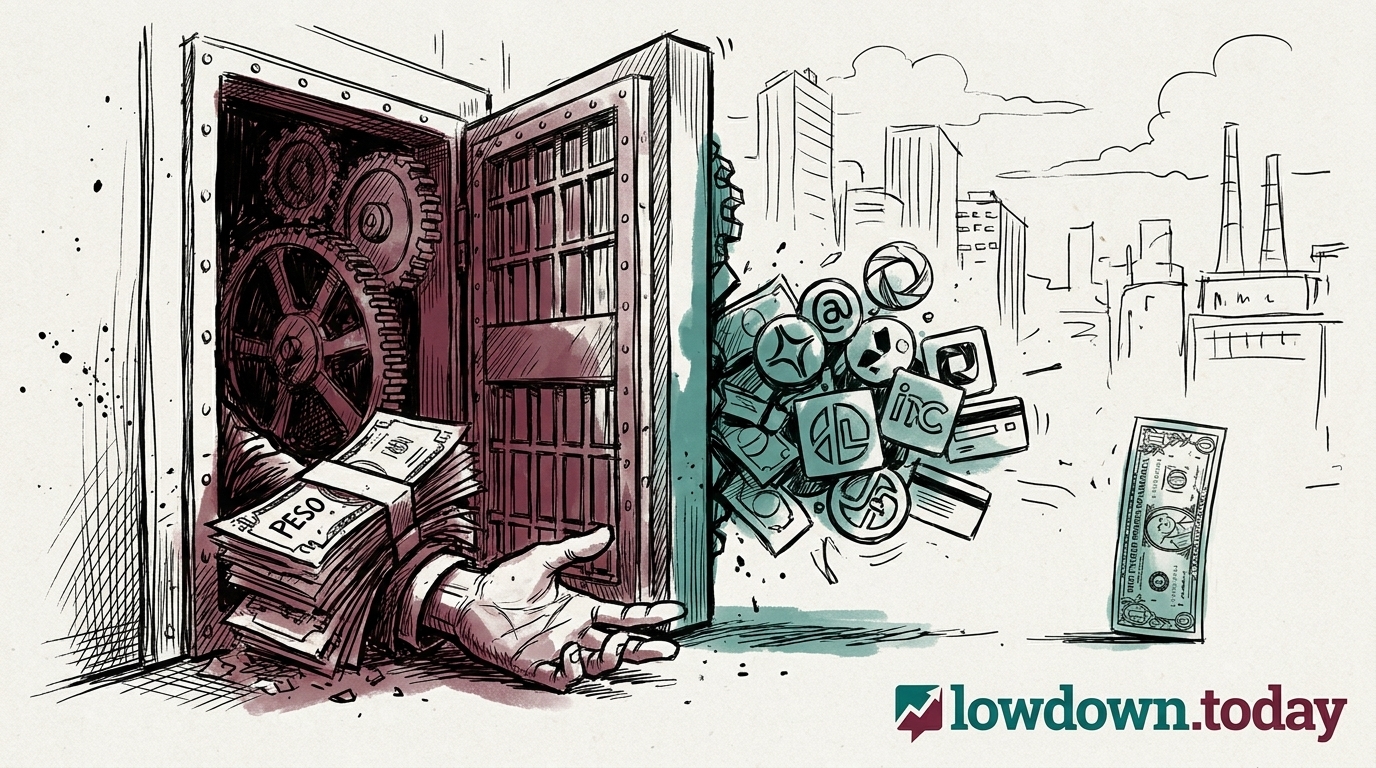
Bloomberg published a satellite-imagery analysis of Cuba's electricity crisis in May 2026, drawing on NASA Black Marble nighttime-light data and Sentinel-2 imagery from the European Space Agency. The headline finding: Cuban nighttime light fell by up to 50 per cent across the island compared with baseline imagery, with Santiago de Cuba and Holguín worst affected. Matanzas accumulated 40 or more continuous blackout hours in early May.

Bloomberg's imagery matters because it sits independent of any Cuban government or Unión Eléctrica Nacional (UNE) source. Lowdown's prior coverage relied on UNE's own daily Nota Informativa for the structural picture; the satellite analysis confirms the trend through external instrumentation. The geographic distribution of the light loss tracks the regional disparity Lowdown noted in late April, when Havana absorbed four blackout-free days from 19 to 23 April while Holguín and Granma ran on 24-hour outages .

Nighttime-light satellite analysis has a recognised methodology in development and crisis assessment. NASA's Black Marble product, processed at the Goddard Space Flight Center, calibrates for moonlight, cloud cover and atmospheric variation; year-on-year comparison isolates structural change from short-term weather. Cuba's up-to-50-per-cent loss sits at the upper end of what the methodology has detected in modern non-conflict economies. Comparable readings include Venezuela's 2019 collapse and Lebanon's 2021 fuel crisis.

Bloomberg's chart converts the SEN's daily reporting into a single visual statement. For policy audiences in Washington, Brussels and the multilateral lender Community, the satellite image performs work that successive UNE notices cannot: it shows the structural state of the crisis at a glance, without requiring the audience to trust the source.


Deep Analysis

In plain English

Satellites in low Earth orbit can measure the brightness of cities at night with a sensor called the **Visible Infrared Imaging Radiometer Suite**, or **VIIRS**. The sensor picks up streetlights, building lights and household lighting; it does not pick up daylight emissions. By comparing one month's data to the same month a year earlier, analysts can estimate how much less electricity is reaching the population. **Bloomberg** ran that analysis on Cuba in May. The result: nighttime emissions across the island fell by up to 50% compared with a year ago. The worst-affected cities were **Santiago de Cuba** and **Holguín**, which is consistent with what local reporting and family phone calls have been saying for months. The value of the satellite measurement is independence: it does not rely on what the Cuban government reports or what émigré groups publish. The number stands or falls on the physics.

What could happen next?
  • Consequence

    Independent macro-confirmation of grid collapse raises pressure on international donors and EU institutions to treat Cuba's energy situation as a humanitarian emergency rather than a political negotiation.

    Short term · 0.6
  • Precedent

    Bloomberg's deployment of VIIRS analysis for Cuba establishes the methodological template that EU and UN agencies can cite without their own independent measurement.

    Medium term · 0.7
  • Meaning

    Eastern provincial concentration of the light loss confirms the SEN's longitudinal-corridor fragility documented in the 14 May disconnection pattern.

    Immediate · 0.85
First Reported In

Update #4 · Diesel adrift, grid splits, Rubio at Vatican

Bloomberg· 18 May 2026
Read original
Causes and effects
This Event
Bloomberg satellites: Cuban night light fell 50%
The imagery provides the visual macro-confirmation of the grid's microsystem fragmentation, independent of any UNE or Cuban government source.
Different Perspectives
Spanish hotel operators
Meliá and Iberostar exited GAESA-linked Cuban hotels before 5 June to protect their broader Caribbean and global portfolios from secondary-sanctions exposure. Spain's commercial stake in Cuban tourism makes Madrid a structural veto risk if the EU advances Cuba-specific restrictive measures under Ollongren's mandate.
Cuban opposition / OCDH
After the US Senate killed a Cuba war-powers check 51-47 on 29 April, the Madrid-based OCDH formally demanded an EU reparations fund for political prisoners on 4 June, routing its pressure campaign to Brussels where the EU's existing restrictive-measures machinery, used previously against Venezuela and Belarus, does not require a Senate majority.
China
China
Beijing paired a birthday telegram to Castro with no operational commitment on fuel or credit, using the occasion to signal non-abandonment ahead of the G20 without incurring the cost of a replacement tanker. China has no military-logistics presence in the Caribbean comparable to Soviet-era capacity.
Russia
Russia
Moscow sent an official birthday message to the indicted Raúl Castro on 3 June, a deliberate legitimacy signal to Global South partners, while Sovcomflot has announced no replacement for the Universal's 270,000-barrel cargo that turned away on 26 May. The pattern mirrors Soviet public solidarity during the 1962 crisis while privately managing exposure.
Trump administration / OFAC
Washington let a calendar date do the work: no new designations were needed after 18 May, and the looming 5 June expiry, which strips foreign firms' legal-exit defence, drove the hotel exodus and card suspension without a second executive action. The administration has not publicly commented on the compound utility failures.
Cuban government and citizens
Havana's only countermeasure this week was a Granma editorial defending GAESA by name, conceding the designation is biting hard enough to require a public answer. Residents of Havana and Guanabacoa banged pots on the nights of 3-4 June, the first confirmed capital protests, after gas, water, and the state milk ration all failed.
