Skip to content
You can now search across every topic, entity and event.What's new
Cuba Dispatch
26JUL

The fuel with nowhere to land

2 min read
10:44UTC

No tanker has reached Matanzas or Santiago since CUPET's designation on 11 June. Vanguard Energy's 250,000-barrel deal was cancelled after Washington denied it any authorisation to use CUPET facilities. The reform legalises a fuel import the sanctions physically block.

PoliticsDeveloping
Key takeaway

The reform legalises fuel imports that CUPET's sanctioned terminals make impossible to land.

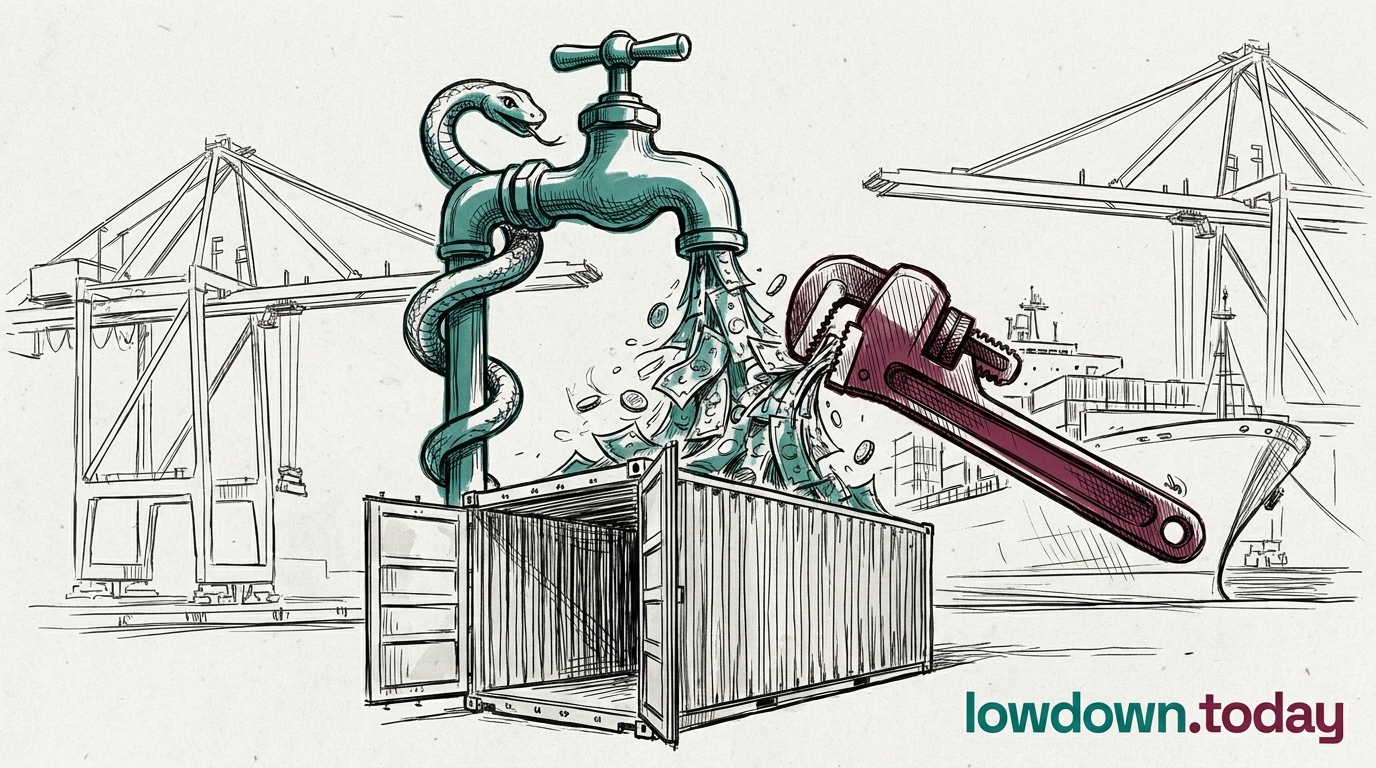
No oil tanker has reached Matanzas or Santiago de Cuba since the 11 June designation of CUPET 1. CUPET is Cuba's state petroleum firm, which controls every import terminal and filling station on the island; its placement on the US sanctions list puts that infrastructure off-limits to anyone clearing dollars or touching US-connected banks. The reform lets the non-state sector import and sell fuel 2, but a private importer with a cargo has no terminal to land it.

The pre-negotiated Vanguard Energy deal for 250,000 barrels is cancelled; the State Department had already denied it any authorisation to use CUPET facilities 3. The energy expert Jorge Pinon flags only one narrow path, small isotank shipments through Mariel that avoid a physical CUPET connection, and doubts it can carry meaningful volume 4. The last Russian tanker turned away weeks ago , leaving no state-to-state substitute.

The consequence cascades through a chain the headline hides. The Center for Strategic and International Studies (CSIS), a Washington think tank, calculates that 95.9% of Cuban electricity depends on oil and gas 5, so there is no renewable buffer to absorb a fuel gap of this size. No fuel means no grid, and with 84% of water pumping running off that grid, no grid means no water. The reform's energy pillar is inert unless a cargo clears, and the single highest-consequence variable for the island is whether any shipment lands under the new rule, an import the designation that triggered the crisis keeps physically shut.


Deep Analysis

In plain English

Cuba gets most of its oil through large tanker ships docking at ports in Matanzas and Santiago. CUPET, Cuba's state oil company, operates those ports. On 11 June 2026, OFAC, the US sanctions bureau, placed CUPET on its blacklist. Since that day, no tanker has docked because any ship unloading oil through CUPET's facilities would breach US sanctions. Energy expert Jorge Pinon at the University of Texas identified one possible workaround: Mariel port, which has a special economic zone with different management, could theoretically receive small isotank containers of fuel that bypass CUPET facilities. Pinon doubted this would carry meaningful volume. Cuba's power stations need the equivalent of thousands of isotank containers every day, and Mariel was not built to handle bulk fuel. The reform package authorised non-state fuel imports on 18 June, four days after the CUPET designation made every reachable terminal off-limits.

Deep Analysis
Root Causes

CUPET's OFAC designation on 11 June is the terminal point in a sequential blocking strategy. The sequence ran: Venezuelan state crude blocked from January 2026; the private-buyer loophole created in March was theoretically viable but practically unusable because CUPET's infrastructure was required at every port step; CUPET was then designated, closing the loophole retroactively.

The Vanguard Energy cancellation illustrates the practical mechanism: a deal for 250,000 barrels was pre-negotiated, meaning supply was willing and the buyer was nominally private. OFAC applied the CUPET designation to the facilities themselves, beyond CUPET as a counterparty. The State Department's position that no Treasury authorisation exists for 'use of CUPET facilities' means any physical delivery through Cuba's actual ports is prohibited regardless of who nominally purchases the cargo.

Jorge Pinon's Mariel isotank loophole is the only theoretical route because Mariel's special economic development zone has different regulatory governance than CUPET-controlled terminals.

Pinon expressed scepticism that isotank volumes can replace the large tanker loads Cuba's thermal fleet requires: the grid needs approximately 50,000-70,000 barrels per day of imports against domestic production of 40,000, and isotank shipments handle hundreds of barrels per container, not hundreds of thousands.

First Reported In

Update #8 · Cuba opens its economy as the door slams

CSIS· 19 Jun 2026
Read original
Different Perspectives
Spain (Foreign Ministry and hotel investors)
Madrid has worked to shield Spanish hotel operators exposed to Cuba, and OFAC's General Licences 2 and 3 winding down the Guernsey-listed CEIBA Investments fund give those investors a defined exit rather than an abrupt block. Spain's stake in managing an orderly wind-down, not confronting the designation itself, keeps it distinct from Havana's collective-punishment framing.
Cuban Ministry of Foreign Affairs (MINREX)
Foreign Minister Bruno Rodriguez Parrilla called the 23 July designations "castigo colectivo" and defended the medical missions as protecting healthcare access for patients in the countries where Cuban doctors serve, without addressing the evasion allegation against Coral Maritima directly.
US Treasury (OFAC) and State Department
OFAC designated Cuba's medical-missions operators and named the Mariel-Coral Maritima transfer as GAESA sanctions evasion on 23 July, characterisations Washington has not independently substantiated in public documents reviewed. The administration frames the wave as closing hard-currency channels sector by sector, following the same pattern applied to tourism and financial clearing in June and July.
Human rights monitors (OCDH and Prisoners Defenders)
OCDH's 14 July dictamen named the specific offices responsible for holding Otero Alcántara past his sentence-expiry date; Prisoners Defenders counted 1,306 political prisoners, including 40 detained minors, on 9 July. Both oppose the Cuban government's account without endorsing Washington's sanctions instrument as a remedy.
US State Department
US State Department
Secretary Rubio said Cuba 'continues to ally itself with America's enemies' and framed the 13 July designations as deploying 'every tool at our disposal', now citing forced-labour export to Angola for the first time. These quotes rest on cached web snippets; state.gov was unreachable this run and could not be directly verified.
Cuban Ministry of Foreign Affairs
Foreign Minister Bruno Rodríguez Parrilla called the 13 July designation package 'criminal and genocidal' and said 'Cuba is not a threat and US intelligence agencies know it'. State media frame the 16 July gas-price rise as a direct consequence of the intensifying blockade, though Havana has not disclosed its own container-import shift dated 3 July.