Skip to content
You can now search across every topic, entity and event.What's new
Autonomous Systems: Land & Sea
18JUL

A400M airdrops a working robot boat

3 min read
13:42UTC

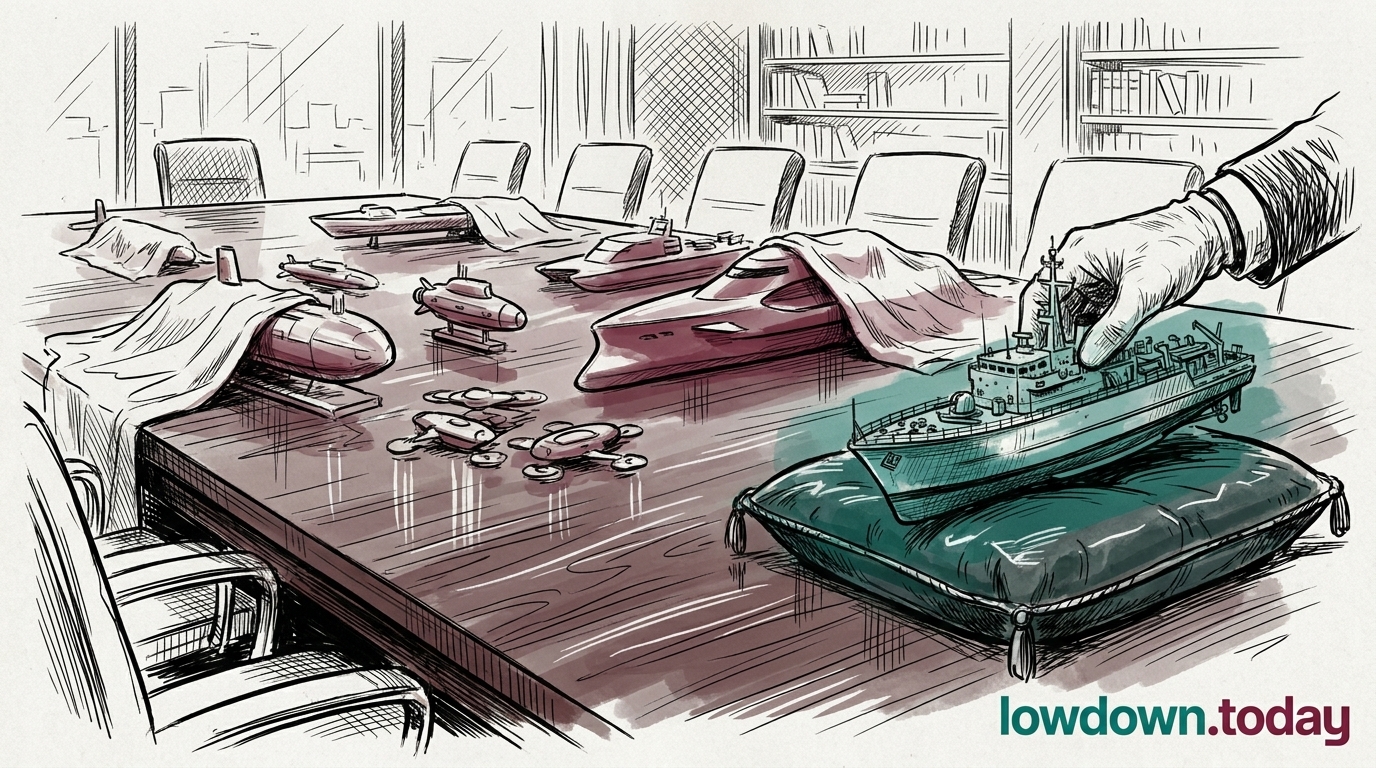
Kraken and Capewell dropped a K3 SCOUT robot boat from an A400M into Sea State 4 waters four times, the world's first airdrop of an uncrewed surface vessel from an aircraft.

TechnologyDeveloping
Key takeaway

Air-insertion turns strategic airlift into a launch platform for uncrewed maritime systems.

Kraken Technology Group and Capewell airdropped a K3 SCOUT uncrewed surface vessel (USV) from an Airbus A400M transport four times at 1,300 feet into waters up to Sea State 4, the world's first extracted-load airdrop of a USV from an aircraft, across a six-day campaign that ended on 8 July 1.

Kraken is a British maritime-autonomy firm; Capewell is a US aerial-delivery specialist. An uncrewed surface vessel is a robot boat that runs mine-hunting or surveillance sensors with no crew aboard. For a defence-procurement buyer, the drop turns strategic airlift into a way to place such a craft hundreds of miles from any friendly port or mother ship. It used Kraken's airdrop kit on Capewell's UMCADS (Universal Maritime Craft Aerial Delivery System) parachute platform, plus a new IN-Release electro-mechanical system that synchronises the parachute separation so the hull enters the water intact and ready to work 2.

Mal Crease, Kraken's founder and chief executive, said the K3 SCOUT can be "rapidly deployed directly from a military transport aircraft into contested or difficult-to-access waters ready for operation" 3. Mark Lavender of Capewell confirmed the UMCADS platform can carry mission equipment other than boats, widening the sales case beyond a single hull.

The Royal Navy's uncrewed future was, last update, a set of names, Type 91 to Type 94, with no contractors or dates attached . Under Project Beehive, an SME has instead delivered a concrete deployment mechanic: the class of craft the Navy first sailed toward Hormuz in May can now arrive by parachute rather than by sea. Commenters on the naval site Navy Lookout question the K3 SCOUT's range, its ability to defend itself in hostile waters, and the cost of recovering the drop rig; the demonstration ran in home waters, not a contested theatre 4.

Deep Analysis

In plain English

An uncrewed surface vessel (USV) is a small boat that drives itself, with no crew aboard. Kraken Technology Group builds one called the K3 SCOUT. Normally a USV like this has to be lowered into the sea from a ship. In this trial, the Royal Navy and its industry partners instead pushed it out of the back of an A400M, a large military transport plane, on a parachute, while the plane flew over open water. The test worked four times over six days, dropping the boat from 1,300 feet into rough water, what sailors call 'Sea State 4', choppy but not stormy. The point is speed and reach: instead of waiting for a ship to sail somewhere, planners could fly a transport aircraft over contested or hard-to-reach water and drop an uncrewed boat straight in, ready to work.

Deep Analysis
Root Causes

Britain's surface fleet is thin: the Royal Navy's front line runs to six Type 45 destroyers and eight Type 23/26 frigates, none purpose-built to carry and launch a USV.

An air-droppable K3 SCOUT sidesteps that hull shortage by turning any A400M with spare cargo capacity into a forward-deployment platform. The demonstration mattered to the Royal Navy even though the airframe and aircrew belong to the strategic-airlift fleet, not the fleet this capability is meant to support.

Escalation

This is a logistics and delivery-method trial, not a deployment against any named adversary; it expands where the UK could put a USV, not who it is being used against.

What could happen next?
  • Precedent

    Establishes a repeatable delivery method that other transport-aircraft operators, not just A400M crews, could adapt for their own USV fleets.

    Short term · Assessed
  • Risk

    The drop rig itself remains unproven for repeated operational use beyond a controlled trial, and nobody has costed replacing it after each drop.

    Immediate · Assessed
  • Opportunity

    Turns any A400M with spare cargo capacity into a de facto forward USV base, addressing the Royal Navy's thin escort fleet without a new shipbuilding order.

    Medium term · Assessed
First Reported In

Update #6 · UK airdrops a robot boat; Gulf order stalls

Kraken Technology Group· 11 Jul 2026
Read original
Different Perspectives
RUSI naval-procurement analysts
RUSI reads Thales-Exail as backward integration into a supply chain Thales already depended on, and the mothership order as the true bottleneck behind Britain's autonomy transition, not the drones themselves. Firm specifications for Type 91-94 without a named contractor mark a requirement stage, not a procurement commitment.
US Defense Innovation Unit
DIU used its Other Transaction Authority to select Norway's Kongsberg over a US-only team to design the CAMP extra-large underwater vehicle, due for concept design in the third quarter of 2026. DIU values proven HUGIN-class vehicle hours over the domestic-sourcing preference a standard procurement track would apply.
UK Ministry of Defence
Defence Minister Luke Pollard confirmed on 17 July that Britain will spend GBP 90 million on three Norwegian-built mine-hunting motherships, retiring HMS Chiddingfold the same fortnight after 42 years' service. The motherships, not more drones, are the bottleneck the Royal Navy is actually funding to hold its autonomy timetable.
Kongsberg
Kongsberg
Kongsberg's HUGIN line won a US Navy XLUUV design lead from the Defense Innovation Unit on 15 July while the same product family closed Main Supplier and HUGIN-order deals with Fugro and DOF. One Norwegian programme now serves a US design study, a European AUKUS bid and two commercial survey contracts at once.
Thales
Thales
Thales agreed on 6 July to pay EUR 3.9 billion for Exail Technologies, folding sonar, vehicle and navigation production under one French roof rather than continuing to buy in the vehicle layer. The deal turns Thales into a single vertically-integrated bidder against Kongsberg's DRASS-partnered European AUKUS counter-bid.
China (military commentary)
Chinese military commentary has called uncrewed maritime equipment 'an excellent force multiplier' that cannot overturn the fundamental logic of naval warfare, the lone voice against the Western consensus that autonomy is the central axis of naval modernisation. Beijing reads the airdrop trial as an incremental logistics fix, not London's claimed doctrinal breakthrough.