Skip to content
You can now search across every topic, entity and event.What's new
Autonomous Systems: Land & Sea
12AUG

Ukraine deploys 228 specialists to Gulf

2 min read
14:17UTC

Ten-year defence deals with Saudi Arabia and Qatar turn combat experience into an export commodity. A UAE agreement is expected imminently.

TechnologyDeveloping
Key takeaway

Gulf states are paying for Ukrainian combat expertise the US declined to support.

Ukraine signed 10-year defence deals with Saudi Arabia and Qatar in March 2026, deploying 228 counter-drone specialists across five Gulf states.1 A deal with the United Arab Emirates is expected imminently.

The personnel deployments are the most commercially significant element. Zelenskyy proposed drone combat hubs to the White House in August 2025; the US dismissed the offer . The Gulf states did not. At $2,500 to $5,000 per interceptor versus $13.5 million for a PAC-3 Patriot, Ukrainian systems offer a cost advantage of roughly 3,000 to 1. Gulf buyers gain operational counter-drone capability years faster than domestic development would allow. For Ukraine, these deals create a revenue stream independent of Western military aid.

Deep Analysis

In plain English

Ukraine has spent three years developing the world's most battle-tested drone warfare doctrine. Now it is selling that expertise to Gulf states that face real drone threats from Houthi and Iranian forces. The 228 specialists are essentially working as counter-drone consultants, embedded in five Gulf countries. The 10-year deal structure means Ukraine is not just selling equipment; it is selling knowledge and presence. The US had the opportunity to partner on this and declined in August 2025. The Gulf states accepted the same offer.

Deep Analysis
Root Causes

Zelenskyy proposed drone combat hubs to the White House in August 2025 and was dismissed. The Gulf pivot reflects a pragmatic reorientation toward buyers with both the need and the financial capacity to pay for Ukrainian expertise, without the political constraints that made US engagement difficult.

The 10-year deal structure also reflects Ukraine's need for long-term revenue certainty. Annual military aid packages from Western donors are subject to political cycles; a decade-long commercial contract with Gulf states provides a planning horizon that aid cannot.

What could happen next?
  • Consequence

    Ukraine establishes a sustainable revenue stream from Gulf defence relationships that reduces dependence on Western military aid and provides long-term financial planning certainty.

    Short term · High
  • Opportunity

    Gulf states gain combat-proven counter-drone capability far faster and cheaper than domestic development would allow, with practitioners who have real operational experience.

    Immediate · High
  • Risk

    Specialist deployments create potential intelligence exposure for Ukraine and create dependency dynamics that could complicate Ukrainian foreign policy if Gulf state interests diverge.

    Medium term · Medium
  • Precedent

    Ukraine's model of monetising combat expertise through personnel deployments will be studied by other conflict-experienced smaller militaries seeking to diversify beyond traditional hardware exports.

    Long term · Medium
First Reported In

Update #3 · Anduril wins $20 billion counter-drone deal

DroneXL (sourcing NYT)· 30 Mar 2026
Read original
Causes and effects
This Event
Ukraine deploys 228 specialists to Gulf
Monetises Ukraine's three years of combat-proven counter-drone doctrine through personnel deployment and long-term contracts.
Different Perspectives
Conservative opposition
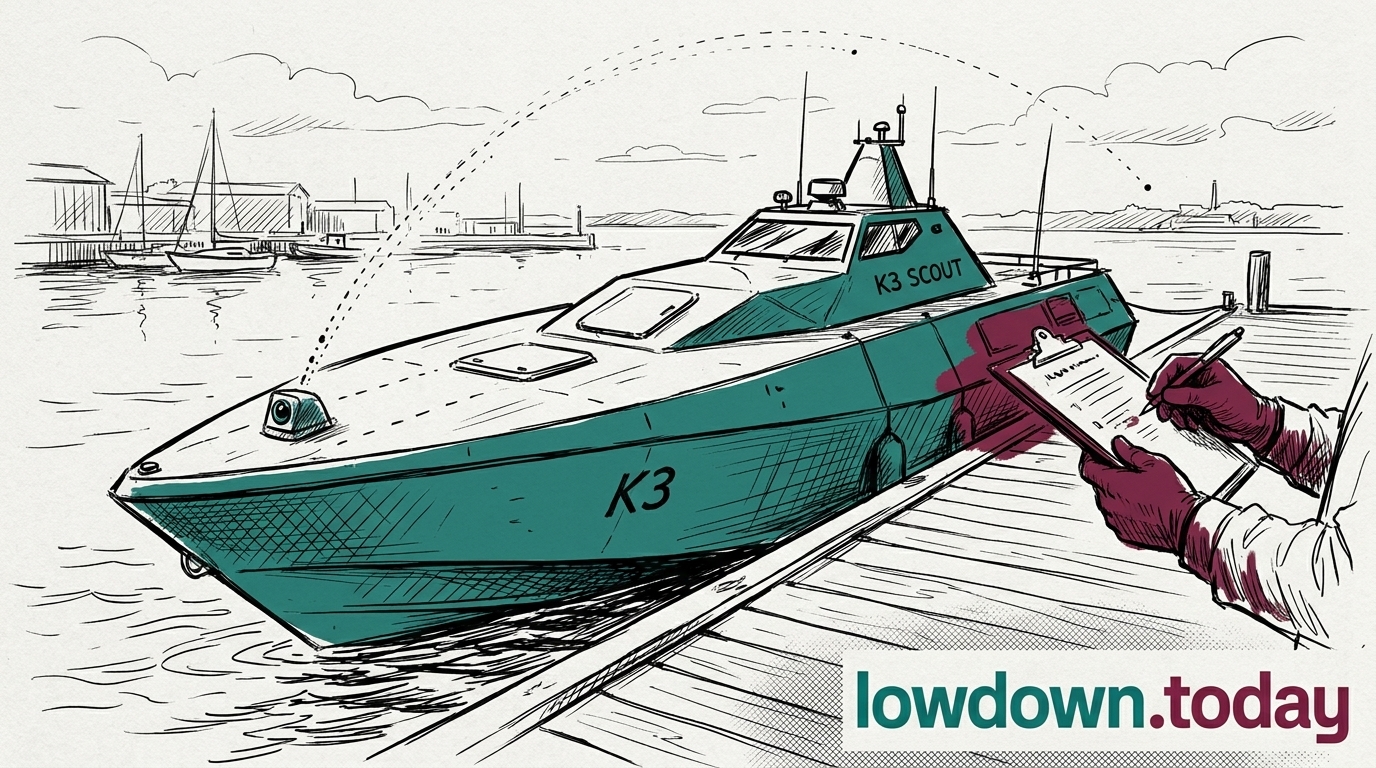
The Conservative opposition called on the Government on 9 August to 'urgently audit' equipment for hidden Chinese components, after the Telegraph's K3 SCOUT report. No named MP has been quoted on the record; the call came at party level, alongside the Ministry of Defence's own 10 August statement that no data had been compromised.
Netherlands Ministry of Defence
The Netherlands Ministry of Defence authorised Dutch Naval Design on 4 August to design 12-metre anti-submarine warfare uncrewed vessels for the Dutch-Belgian frigate programme, and to buy an adapted Compact FLASH dipping sonar from Thales Underwater Systems France. The order commits money and a named supplier while Britain's own certification body remains at the market-engagement stage.
Kraken Technology Group
Kraken Technology Group is a UK maritime-defence company based in Portsmouth that builds the K3 SCOUT, and crossed a $1bn valuation in July on a single-sourced $175m raise. The camera components reached the fleet under a third party's written security assurance, which the Platform Authority, which does not yet exist, was never positioned to check.
Navy Commercial
Navy Commercial
Navy Commercial at Whale Island published two notices on 5 August: 074032-2026, asking industry how to build a Platform Authority to certify uncrewed vessels, and 074351-2026, a GBP10m multi-role USV testbed for the Defence Chief Technology Officer. Responses on the Platform Authority close 19 August, ten days after the cameras were found transmitting to China.
Ministry of Defence
Ministry of Defence
The Ministry of Defence said on 10 August that a routine cyber vulnerability assessment found the camera fault, and a thorough investigation found no evidence that MoD data or systems had been accessed, compromised or transmitted externally. It stripped the cameras of internet connectivity but did not say whether it acted against the supplier.
Thales
Thales
Thales converted its 6 July engaging accord with Exail into a definitive combination agreement on 30-31 July, but the tender offer for Exail's remaining shares now closes by early 2028, later than July's timetable implied. Thales integrates its new undersea prime while still bidding against Kongsberg and DRASS's 2027 target for the AUKUS Pillar II contest.
