Skip to content
You can now search across every topic, entity and event.What's new
Autonomous Systems: Land & Sea
12AUG

Type 91 to 94 robot fleet takes shape

2 min read
14:17UTC

The Ministry of Defence attached GBP 1.5 billion and a 2030 target to the Royal Navy's four new uncrewed classes, publishing their first size figures.

TechnologyDeveloping
Key takeaway

Britain put GBP 1.5 billion and firm sizes behind four uncrewed warship classes, though no builder is yet named.

The Ministry of Defence attached a GBP 1.5 billion, four-year funding line and a 2030 delivery target to the Royal Navy's four newly designated uncrewed hulls on 16 July 2026, publishing their first size figures. 1 The classes were first named in the 30 June Defence Investment Plan ; the detail now firms up what each hull is for.

Type 91 is an uncrewed missile platform of roughly 70 to 75 metres; Type 92 an autonomous anti-submarine warfare platform near 90 metres; Type 93 an extra-large uncrewed submarine (XLUUV) grown from the existing Excalibur trials programme for long-endurance surveillance; Type 94 an uncrewed sensor platform of up to 3,000 tonnes for fleet and homeland air defence. The Ministry targets the first large autonomous vessels, including a prototype missile platform and XLUUVs, in service by 2030.

That architecture sits alongside the at least six Common Combat Vessels recast as drone-control hubs , sketching a surface fleet where crewed motherships direct uncrewed shooters and sensors rather than fighting alone. No contractor is named and no in-service date beyond the 2030 aspiration is set, which leaves the delivery risk on a programme now sized in metres and billions but not yet in signed steel.

Deep Analysis

In plain English

Britain has given more detail about four new types of uncrewed warship it plans to build, numbered Type 91 to Type 94. One will fire missiles, one will hunt submarines, one is a large underwater robot for long missions, and one will carry sensors to spot threats from the air. The government has promised at least GBP1.5 billion over four years for this work, and wants the first of these robot ships working by 2030. But no company has yet been chosen to actually build them, so the plan is still on paper rather than in a shipyard.

Deep Analysis
Root Causes

The Ministry of Defence is naming four distinct hull types rather than one flexible class because each mission set, missile strike, anti-submarine sensing, extra-large underwater surveillance, and air sensing, demands a different hull form and sensor fit that a single uncrewed platform cannot combine without unacceptable compromises in size or endurance.

Type 93's design is growing directly out of the Excalibur trial vehicle rather than starting fresh, because the Submarine Delivery Agency's 2026-to-2028 Excalibur contract already generated hull and endurance data the Ministry of Defence can reuse rather than re-fund from scratch.

What could happen next?
  • Risk

    Four hull classes advancing at once concentrates budget and schedule risk in one spending review period rather than spreading it across sequential builds.

First Reported In

Update #7 · Thales buys Exail; UK retires a minehunter

The News (Portsmouth)· 18 Jul 2026
Read original
Different Perspectives
Conservative opposition
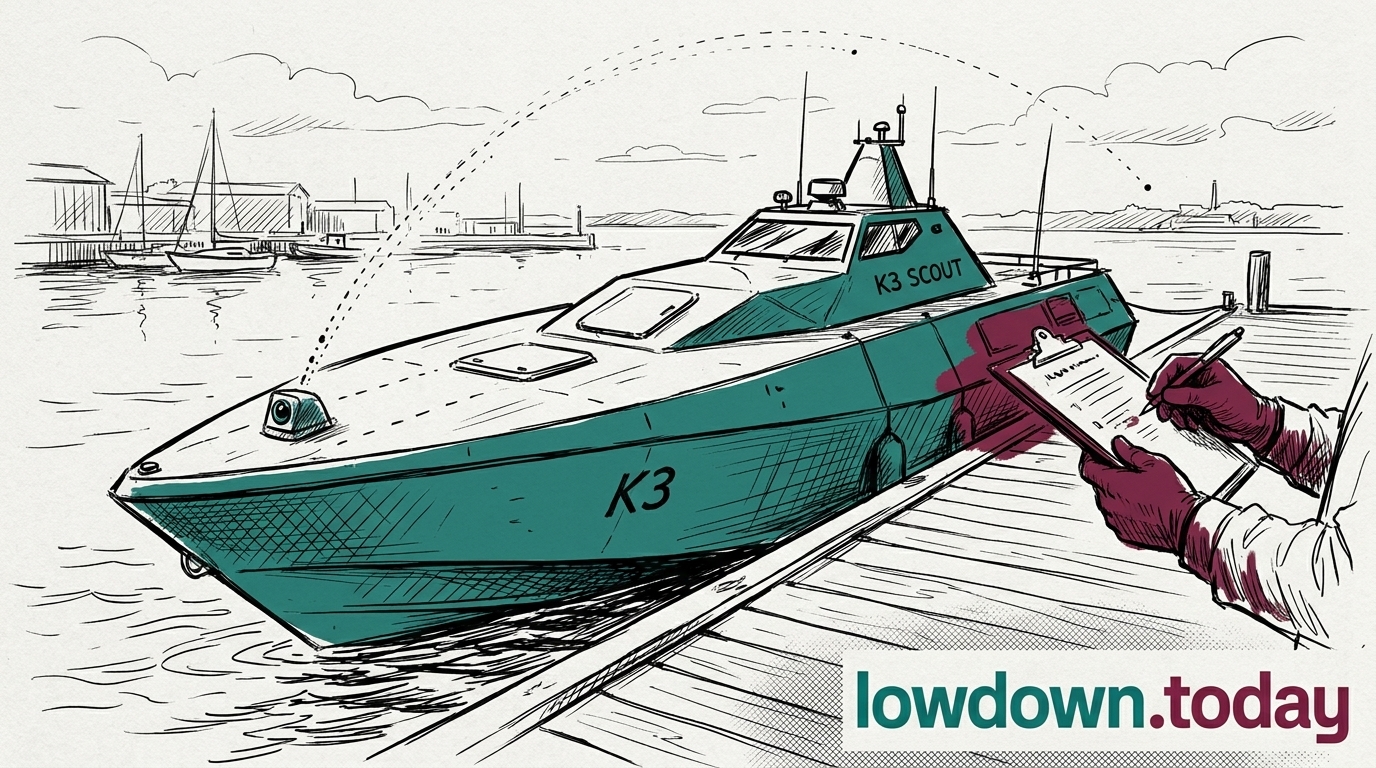
The Conservative opposition called on the Government on 9 August to 'urgently audit' equipment for hidden Chinese components, after the Telegraph's K3 SCOUT report. No named MP has been quoted on the record; the call came at party level, alongside the Ministry of Defence's own 10 August statement that no data had been compromised.
Netherlands Ministry of Defence
The Netherlands Ministry of Defence authorised Dutch Naval Design on 4 August to design 12-metre anti-submarine warfare uncrewed vessels for the Dutch-Belgian frigate programme, and to buy an adapted Compact FLASH dipping sonar from Thales Underwater Systems France. The order commits money and a named supplier while Britain's own certification body remains at the market-engagement stage.
Kraken Technology Group
Kraken Technology Group is a UK maritime-defence company based in Portsmouth that builds the K3 SCOUT, and crossed a $1bn valuation in July on a single-sourced $175m raise. The camera components reached the fleet under a third party's written security assurance, which the Platform Authority, which does not yet exist, was never positioned to check.
Navy Commercial
Navy Commercial
Navy Commercial at Whale Island published two notices on 5 August: 074032-2026, asking industry how to build a Platform Authority to certify uncrewed vessels, and 074351-2026, a GBP10m multi-role USV testbed for the Defence Chief Technology Officer. Responses on the Platform Authority close 19 August, ten days after the cameras were found transmitting to China.
Ministry of Defence
Ministry of Defence
The Ministry of Defence said on 10 August that a routine cyber vulnerability assessment found the camera fault, and a thorough investigation found no evidence that MoD data or systems had been accessed, compromised or transmitted externally. It stripped the cameras of internet connectivity but did not say whether it acted against the supplier.
Thales
Thales
Thales converted its 6 July engaging accord with Exail into a definitive combination agreement on 30-31 July, but the tender offer for Exail's remaining shares now closes by early 2028, later than July's timetable implied. Thales integrates its new undersea prime while still bidding against Kongsberg and DRASS's 2027 target for the AUKUS Pillar II contest.
