Skip to content
Welcome, thoughtbot's Giant Robots listeners!Start here
Autonomous Systems: Land & Sea
12AUG

JIATF-401 adds ten Domestic Shield firms

3 min read
14:17UTC

A Pentagon counter-drone task force gave ten firms contract ceilings worth US$4.15bn to protect US bases from drones, with no orders yet published.

TechnologyAssessed
Key takeaway

Ten firms won US$4.15bn of Domestic Shield ceilings, which cap spending rather than fund it.

Joint Interagency Task Force 401 (JIATF-401), the Pentagon's counter-drone task force, added ten firms to Domestic Shield, its programme to protect military sites inside the US from drones, on 29 September⁠1. Their base contract ceilings total US$4.15bn. Seven firms hold US$500m each: SRC Inc., L3Harris, DroneShield, Allen Control Systems, Digital Force Technologies, Napatree Technology and RADA Technologies. Echodyne and PVP Advanced EO Systems hold US$250m each.

The tenth, SmartShooter, holds a US$150m single-award ceiling for rifle sights that let a soldier bring down a drone with a standard rifle. Of the ten awards, only SmartShooter's names a single supplier.

Add Perennial Autonomy's May award and AeroVironment's in July, and at least twelve firms hold US$5.15bn of ceilings. A ceiling is the most the government may spend under a contract, not money spent, and no published figure shows orders actually placed. DroneShield, the Australian counter-drone maker, said in its stock-exchange filing on 30 September that its award "does not guarantee any orders"⁠2.

Under a multiple-award contract of this kind, the holders usually compete again for each order. Seven matching US$500m ceilings therefore give JIATF-401 a pool of suppliers to choose from base by base, rather than a single prime for the whole country.

Deep Analysis

In plain English

The US military wants to protect its bases at home from drones, which can spy on or attack them. A Pentagon task force runs this work under the name Domestic Shield. It has now signed ten companies onto a framework contract. Each company has a maximum amount it could be paid, called a ceiling. That number is not a payment. When the military needs equipment at a base, the approved companies compete again for that specific order. Only then does real money change hands.

Deep Analysis
Root Causes

A multiple-award contract lets the buyer pre-approve many suppliers once and then order quickly without a new tender for each base. JIATF-401 has to protect many military sites inside the US against several kinds of drone, so it needs radars, jammers, optics and gun sights from different makers.

Setting identical ceilings for seven firms avoids picking a winner too early. It also means each ceiling says almost nothing about how much any single firm will sell.

What could happen next?
  • Meaning

    Summing Domestic Shield ceilings as spending would overstate the programme many times over.

  • Opportunity

    Foreign-origin firms, an Australian maker and two Israeli-origin technologies, hold places on a US homeland-defence contract.

First Reported In

Update #18 · Four EU states skip tenders on drone defence

US Army (via GlobalSecurity.org)· 1 Oct 2026
Read original →
Causes and effects
Different Perspectives
Conservative opposition
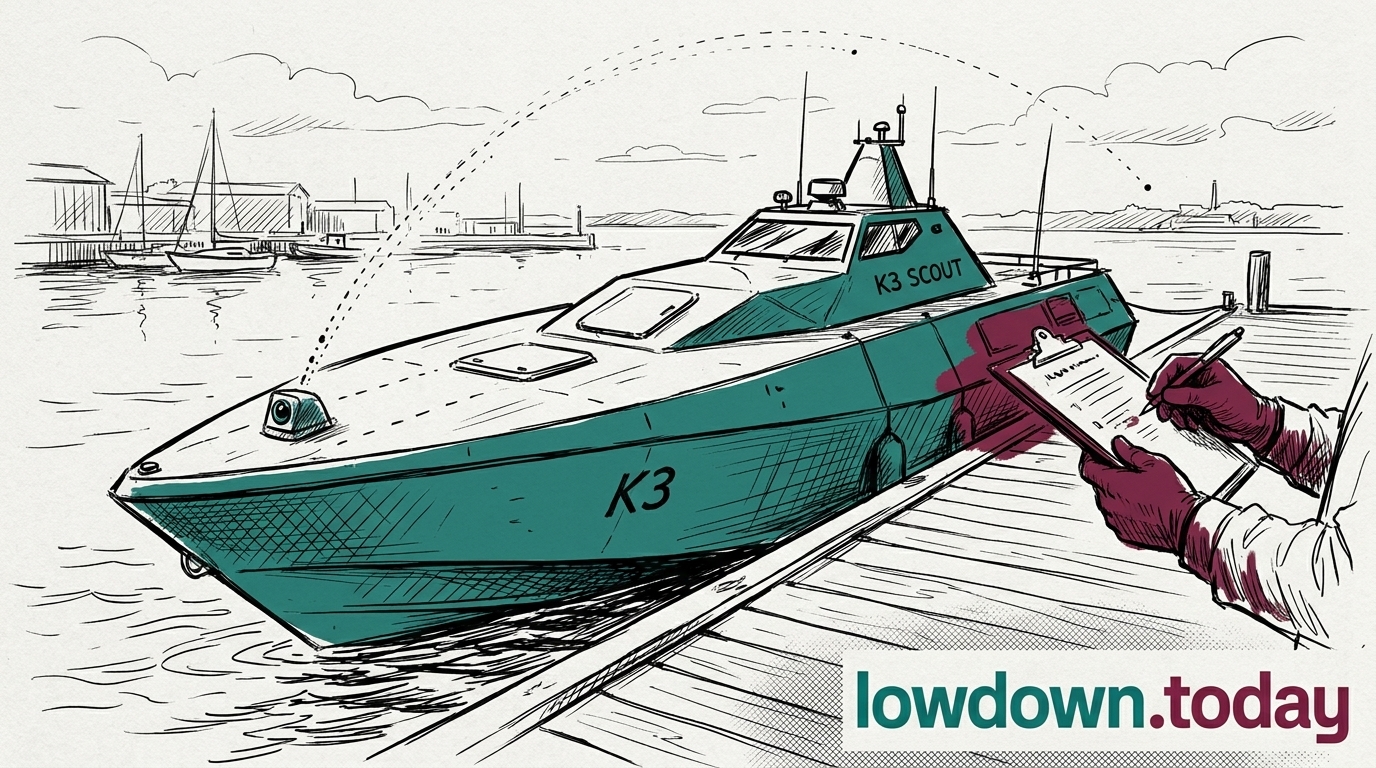
The Conservative opposition called on the Government on 9 August to 'urgently audit' equipment for hidden Chinese components, after the Telegraph's K3 SCOUT report. No named MP has been quoted on the record; the call came at party level, alongside the Ministry of Defence's own 10 August statement that no data had been compromised.
Kraken Technology Group
Kraken Technology Group is a UK maritime-defence company based in Portsmouth that builds the K3 SCOUT, and crossed a $1bn valuation in July on a single-sourced $175m raise. The camera components reached the fleet under a third party's written security assurance, which the Platform Authority, which does not yet exist, was never positioned to check.
Navy Commercial
Navy Commercial
Navy Commercial at Whale Island published two notices on 5 August: 074032-2026, asking industry how to build a Platform Authority to certify uncrewed vessels, and 074351-2026, a GBP10m multi-role USV testbed for the Defence Chief Technology Officer. Responses on the Platform Authority close 19 August, ten days after the cameras were found transmitting to China.
HUMAIN
HUMAIN
HUMAIN and Applied Intuition stated a 2030 target for thousands of autonomous trucks on Saudi logistics corridors. The announcement disclosed no order, fleet baseline or contract value.
Saildrone
Saildrone
Saildrone and Lockheed Martin demonstrated two JAGM launches from a Surveyor-class vessel at RIMPAC. The accepted record identifies no requirement, customer or production configuration behind the demonstration.
Taiwan Legislative Yuan
Taiwan's Legislative Yuan passed the Act at third reading with a small suicide uncrewed boat on the named development list. The NT$240 billion ceiling covers all unmanned domains, and the Act was not promulgated by 4 September.
