Skip to content
You can now search across every topic, entity and event.What's new
Autonomous Systems: Land & Sea
12AUG

Crewless-ship rules duck the hard part

2 min read
14:17UTC

The IMO's MASS Code is set to enter force on 1 July, yet seafarer union Nautilus International says three structural questions, liability, multi-vessel safety and jobs, remain unanswered when it does.

TechnologyDeveloping
Key takeaway

The crewless-ship rulebook takes effect on 1 July with liability for a master ashore still unwritten.

The International Maritime Organization's Maritime Autonomous Surface Ships (MASS) Code is set to enter force on 1 July 2026, opening its Experience Building Phase 1. The Code is the first global framework for cargo ships that sense, navigate and steer with reduced crews or none aboard, adopted in London in May . It is also a framework that takes effect with the questions it was meant to settle still open.

Nautilus International, the seafarer union, names three gaps that the Code leaves open 2. On liability, "the Code keeps a human master legally responsible but does not say who answers when that master sits ashore and something goes wrong," said David Appleton, the union's head of professional and technical. On safety, nobody has shown that one master can safely supervise several vessels at once, the watchkeeping model the Code permits. On jobs, shore control rooms create new roles while threatening to displace higher-paid sea-going officers with cheaper operators on land.

What takes effect on 1 July is a procedural milestone over an unresolved core question. A code that keeps a master legally responsible without allocating liability for a remote one leaves a defined accountability hole, and that hole gets filled by whoever has to price the risk. Classification societies including DNV and Lloyd's Register are already running parallel assurance frameworks alongside the Code, and the courts will eventually settle the remote-master liability the regulation chose not to define.

Deep Analysis

In plain English

The MASS Code (Maritime Autonomous Surface Ships Code) sets rules for ships that can navigate without a full crew, or even without any crew at all, aboard. The International Maritime Organization (IMO), a United Nations agency based in London, adopted it in May 2026. On 1 July 2026, the Code is scheduled to enter force. Three structural problems arrive with it, still unresolved: First, liability: if a ship goes wrong and its master is sitting in a control room on shore rather than on the ship, the law is currently unclear about who is legally responsible. Second, safety evidence: no one has yet proved that one shore-based master can safely supervise several ships at once. Third, jobs: shore-based control rooms require fewer staff than crewed ships, so the industry shift could displace well-paid seafaring officers. Classification societies such as DNV (Norwegian) and Lloyd's Register (British) certify that ships meet safety standards. Both are developing their own parallel frameworks to fill the gaps the Code left open.

Deep Analysis
Root Causes

The three unresolved MASS Code gaps share one structural origin: the IMO consensus process requires broad flag-state agreement, and the states most dependent on crewed seafarer labour (the Philippines, Indonesia, India) negotiated provisions that preserved the master-aboard requirement as a default, leaving the remote-master model as an opt-in that individual flag states must enable domestically.

MASS Code adoption therefore did not create a uniform international framework: a vessel registered in a flag state that has not updated its domestic maritime law to enable remote masters cannot operate without crew under the Code even after 1 July. The liability question remains unresolved at the IMO level and at an uneven stage of domestic implementation across the 175 member states.

First Reported In

Update #4 · Allied robot minehunters reach the Gulf

Nautilus International· 24 Jun 2026
Read original
Different Perspectives
Conservative opposition
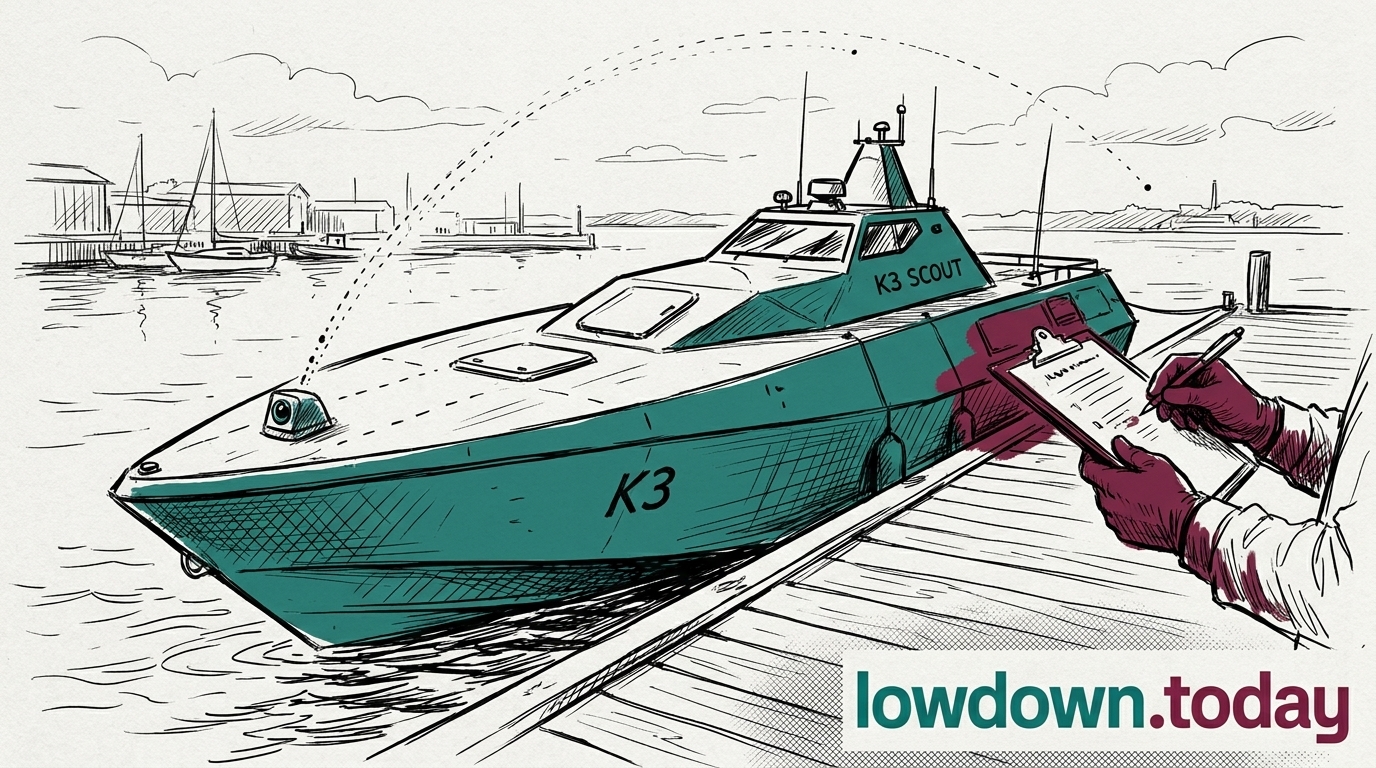
The Conservative opposition called on the Government on 9 August to 'urgently audit' equipment for hidden Chinese components, after the Telegraph's K3 SCOUT report. No named MP has been quoted on the record; the call came at party level, alongside the Ministry of Defence's own 10 August statement that no data had been compromised.
Netherlands Ministry of Defence
The Netherlands Ministry of Defence authorised Dutch Naval Design on 4 August to design 12-metre anti-submarine warfare uncrewed vessels for the Dutch-Belgian frigate programme, and to buy an adapted Compact FLASH dipping sonar from Thales Underwater Systems France. The order commits money and a named supplier while Britain's own certification body remains at the market-engagement stage.
Kraken Technology Group
Kraken Technology Group is a UK maritime-defence company based in Portsmouth that builds the K3 SCOUT, and crossed a $1bn valuation in July on a single-sourced $175m raise. The camera components reached the fleet under a third party's written security assurance, which the Platform Authority, which does not yet exist, was never positioned to check.
Navy Commercial
Navy Commercial
Navy Commercial at Whale Island published two notices on 5 August: 074032-2026, asking industry how to build a Platform Authority to certify uncrewed vessels, and 074351-2026, a GBP10m multi-role USV testbed for the Defence Chief Technology Officer. Responses on the Platform Authority close 19 August, ten days after the cameras were found transmitting to China.
Ministry of Defence
Ministry of Defence
The Ministry of Defence said on 10 August that a routine cyber vulnerability assessment found the camera fault, and a thorough investigation found no evidence that MoD data or systems had been accessed, compromised or transmitted externally. It stripped the cameras of internet connectivity but did not say whether it acted against the supplier.
Thales
Thales
Thales converted its 6 July engaging accord with Exail into a definitive combination agreement on 30-31 July, but the tender offer for Exail's remaining shares now closes by early 2028, later than July's timetable implied. Thales integrates its new undersea prime while still bidding against Kongsberg and DRASS's 2027 target for the AUKUS Pillar II contest.
