Skip to content
You can now search across every topic, entity and event.What's new
Autonomous Systems: Land & Sea
12AUG

29 missiles and 480 drones hit Ukraine

3 min read
14:17UTC

Twenty-nine missiles and 480 drones struck energy infrastructure in Kyiv and at least seven other locations on the night of 7 March — the same night the Izdeliye-30 hit Kharkiv — as Russia's air campaign sets consecutive daily records for drone volumes.

TechnologyDeveloping
Key takeaway

The 480-drone salvo exploits Ukraine's interceptor shortage at the precise moment Iran has drained Patriot stocks.

Russia launched 29 missiles and 480 drones against Energy infrastructure in Kyiv and at least seven other locations across Ukraine on the night of 7 March 1. The assault struck power generation and distribution networks as Ukraine approached the final weeks of winter heating demand — the period when grid failures translate most directly into civilian harm.

The Energy infrastructure campaign has a three-year lineage. Russia first struck Ukraine's power grid systematically in October 2022, following the Kerch Bridge explosion, and has repeated the tactic each subsequent winter. Ukraine rebuilt generation capacity after each wave — often with transformers and turbines sourced from European donors — but each cycle began from a diminished baseline, and the pool of available replacement equipment has shrunk with each successive campaign.

The volume of the 7 March assault fits an escalating trajectory. On 2 March, the Ukrainian General Staff recorded 8,828 kamikaze drones in a single 24-hour period — roughly triple the 2025 daily average of 2,000–3,000. By 8 March, the daily count had risen to 9,837 2. Russia is sustaining and increasing volumes that were already without precedent in this war, and directing a concentrated share of that output against fixed energy targets rather than front-line positions alone.

The timing compounds a structural vulnerability. With the Iran war consuming Western interceptor stocks faster than Lockheed Martin and Raytheon can replace them, Ukraine's capacity to defend thermal power stations, substations, and high-voltage transmission lines against sustained bombardment is degrading week by week. Russian military planners have every incentive to maintain or increase tempo while this window holds. Three days earlier, airstrikes had already hit Odessa, Kharkiv, Sumy, and Poltava oblasts . The pace has not slowed.

Deep Analysis

In plain English

Russia launched close to 500 cheap drones alongside 29 missiles at Ukraine's power stations and electrical substations overnight. The drones are individually inexpensive — each costing roughly the same as a family car — but Ukraine must decide whether to shoot each one down using interceptor missiles that cost millions per round. Overwhelmed defenders cannot intercept everything simultaneously. The targets — power stations, transformer yards, heating infrastructure — affect hospitals, apartment heating, water pumping, and mobile networks. Because Ukraine is connected to the European electricity grid, sustained blackouts also create knock-on management obligations for neighbouring European grid operators who must compensate for sudden load imbalances.

Deep Analysis
Synthesis

The 29-missile, 480-drone ratio reveals deliberate saturation architecture. Slow drones absorb radar tracking capacity and interceptor allocation; this increases cruise missile penetration probability against hardened energy targets. As Iran operations drain Ukraine's interceptor stockpiles, this ratio becomes progressively more effective without Russia needing to increase its own salvo size at all.

Root Causes

Russia's shift to mass drone-plus-missile salvoes reflects a deliberate cost-exchange calculation. Shahed-class drones at approximately $10,000–$20,000 each impose Ukrainian interception decisions worth 100–300 times that cost per Patriot round fired. Russia's domestic Geranium drone production — supplementing Iranian-origin Shahed supply — has scaled to estimated hundreds of units monthly, removing the earlier ceiling on salvo size.

Escalation

The 480-drone salvo on 7 March was followed by 9,837 recorded drone deployments across all fronts on 8 March — a sequencing that shows Russia sustaining high-volume multi-domain pressure on consecutive days without apparent resource constraint. The limiting variable is Ukrainian interceptor availability, which Iran operations are simultaneously depleting. The escalation vector is upward.

What could happen next?
  • Meaning

    The overnight assault demonstrates Russia is actively exploiting the Iran-driven interceptor gap within days of its emergence, not waiting to assess its depth.

    Immediate · Assessed
  • Risk

    Further attacks on thermal generation capacity could permanently decommission plants requiring 12–18 months to rebuild, creating irreversible infrastructure damage before any ceasefire.

    Short term · Assessed
  • Consequence

    Sustained energy infrastructure degradation forces Ukraine to divert reconstruction funding from productive economic investment into emergency repair cycles, compounding war-economy strain.

    Medium term · Assessed
  • Precedent

    Drone-saturation-plus-missile combined tactics, validated against NATO-standard defences, will be adopted and adapted by other state actors as a template for future conflicts.

    Long term · Suggested
First Reported In

Update #3 · Iran war halts talks, drains air defences

Al Jazeera· 9 Mar 2026
Read original
Causes and effects
This Event
29 missiles and 480 drones hit Ukraine
The coordinated overnight assault targeted energy infrastructure across at least eight locations simultaneously, compounding Ukraine's air defence strain at the moment the Iran war is draining the Western interceptor stockpiles needed to defend against exactly this category of attack.
Different Perspectives
Conservative opposition
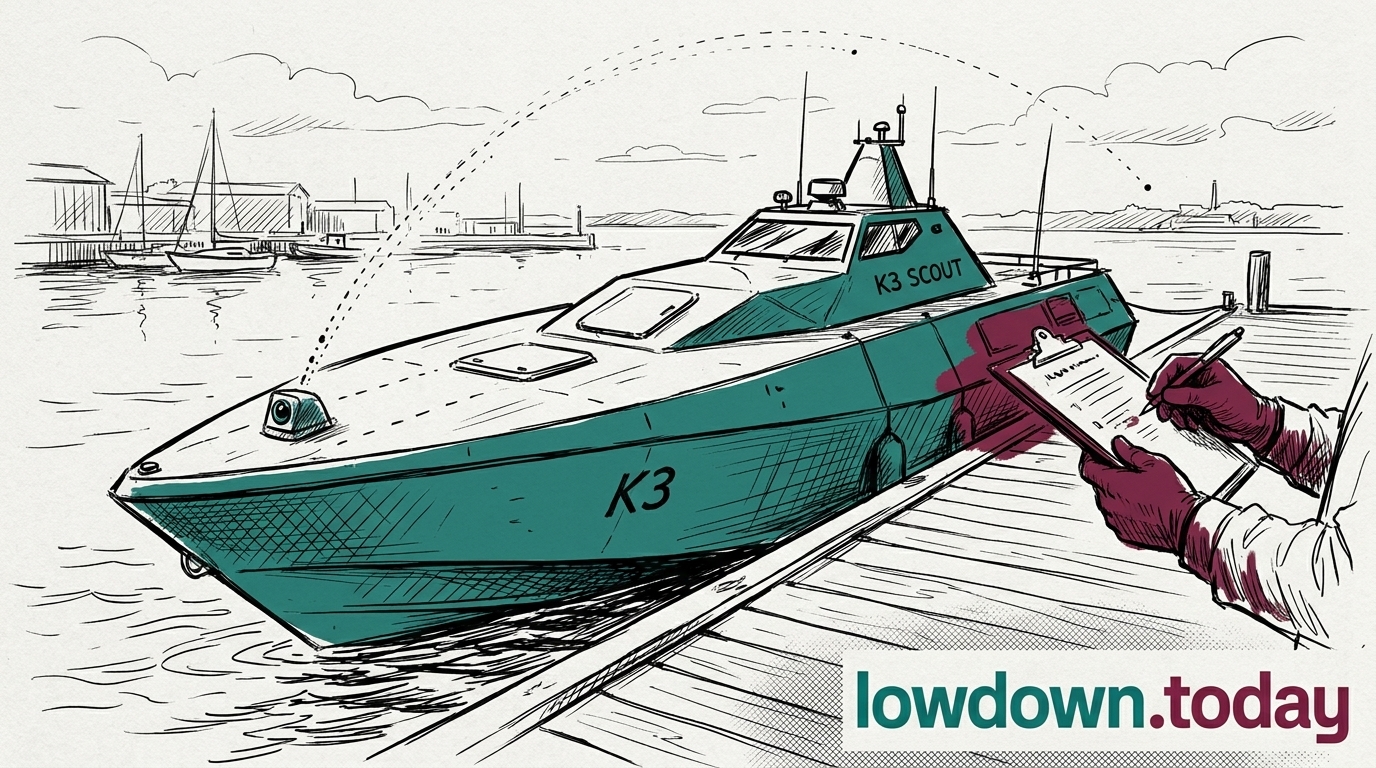
The Conservative opposition called on the Government on 9 August to 'urgently audit' equipment for hidden Chinese components, after the Telegraph's K3 SCOUT report. No named MP has been quoted on the record; the call came at party level, alongside the Ministry of Defence's own 10 August statement that no data had been compromised.
Netherlands Ministry of Defence
The Netherlands Ministry of Defence authorised Dutch Naval Design on 4 August to design 12-metre anti-submarine warfare uncrewed vessels for the Dutch-Belgian frigate programme, and to buy an adapted Compact FLASH dipping sonar from Thales Underwater Systems France. The order commits money and a named supplier while Britain's own certification body remains at the market-engagement stage.
Kraken Technology Group
Kraken Technology Group is a UK maritime-defence company based in Portsmouth that builds the K3 SCOUT, and crossed a $1bn valuation in July on a single-sourced $175m raise. The camera components reached the fleet under a third party's written security assurance, which the Platform Authority, which does not yet exist, was never positioned to check.
Navy Commercial
Navy Commercial
Navy Commercial at Whale Island published two notices on 5 August: 074032-2026, asking industry how to build a Platform Authority to certify uncrewed vessels, and 074351-2026, a GBP10m multi-role USV testbed for the Defence Chief Technology Officer. Responses on the Platform Authority close 19 August, ten days after the cameras were found transmitting to China.
Ministry of Defence
Ministry of Defence
The Ministry of Defence said on 10 August that a routine cyber vulnerability assessment found the camera fault, and a thorough investigation found no evidence that MoD data or systems had been accessed, compromised or transmitted externally. It stripped the cameras of internet connectivity but did not say whether it acted against the supplier.
Thales
Thales
Thales converted its 6 July engaging accord with Exail into a definitive combination agreement on 30-31 July, but the tender offer for Exail's remaining shares now closes by early 2028, later than July's timetable implied. Thales integrates its new undersea prime while still bidding against Kongsberg and DRASS's 2027 target for the AUKUS Pillar II contest.
