Skip to content
Briefings are running a touch slower this week while we rebuild the foundations.See roadmap
AI: Jobs, Power & Money
16APR

Oracle WARN filings cover under 4%

2 min read
13:29UTC

Fewer than 1,100 of Oracle's up to 30,000 cut positions appear in US disclosure filings, with Massachusetts producing no filing at all.

EconomicDeveloping
Key takeaway

Oracle's filings cover under 4% of its workforce cuts, exposing US disclosure gaps.

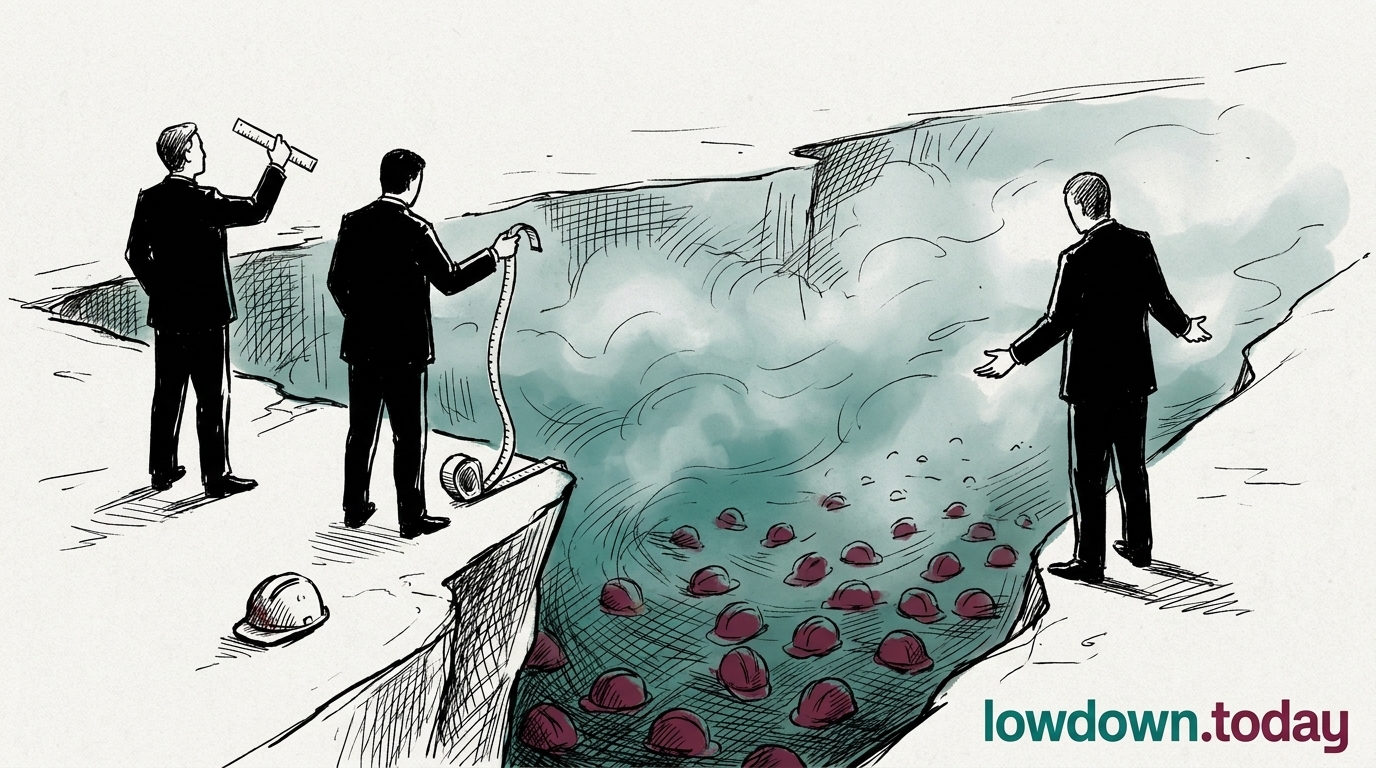
Oracle WARN Act filings remained incomplete as of early April 2026 1. Washington state filed 491 positions; Missouri filed 539. Massachusetts produced no filing despite Oracle's Burlington offices. At up to 30,000 cuts , total US WARN filings cover less than 4% of the affected workforce. Law firms are investigating potential violations.

The Massachusetts gap follows the pattern the New York WARN Act study documented: zero AI attributions from 162 companies covering 28,300 workers in the law's first year . Oracle's 12,000 India staff were terminated by a 6am email , and none will appear in US BLS payroll data or any WARN Act filing. The company has demonstrated a template for circumventing US disclosure law: concentrate cuts offshore, use email terminations without HR contact, and file minimally where state laws require it.

The 60-day clock from Oracle's 31 March cuts expires in late May. If no Massachusetts filing appears, the precedent is set.

Deep Analysis

In plain English

In the United States, when a large employer cuts 500 or more workers, the law requires them to give 60 days' advance notice. This is the WARN Act. The filings are public, and they are one of the few ways to track large-scale US job losses independently of what companies choose to announce. Oracle cut between 20,000 and 30,000 workers in late March 2026. As of early April, the WARN Act filings covering those cuts totalled fewer than 1,100 positions across two states. Massachusetts, where Oracle has offices in Burlington, produced no filing at all. Law firms are investigating. Oracle's 12,000 India-based staff who were terminated by a 6am email will never appear in any US disclosure database. The workforce data policymakers depend on cannot see them.

Deep Analysis
Root Causes

Oracle's WARN Act gap reflects three structural features of US disclosure law. First, the 60-day notice requirement applies at the site level, not the corporate level, enabling companies to stay below per-site thresholds by distributing cuts across many locations.

Second, international staff, Oracle's 12,000 India terminations, are entirely outside the US disclosure regime regardless of the parent company's domicile. Third, New York's AI attribution requirement produced zero disclosures in its first year because it relies on voluntary corporate self-identification of AI as a cause, with no independent verification mechanism.

The bipartisan nine-senator coalition led by Hawley and Warner that wrote to the Department of Labour requesting expanded AI workforce data collection is seeking data that the existing disclosure framework is incapable of producing.

What could happen next?
  • If Massachusetts law firms successfully bring WARN Act violations against Oracle, the case would establish precedent on distributed multi-site cuts and the threshold calculation methodology.

  • Precedent

    Oracle's filing pattern demonstrates a replicable template: concentrate cuts offshore, use email termination, distribute domestic cuts below per-site thresholds, file minimally where state law requires it.

First Reported In

Update #5 · The model they won't release

WARN Firehose· 10 Apr 2026
Read original
Different Perspectives
TSMC and Taiwan chip supply chain
Nvidia's 17% headcount growth to 42,000 on $81.6 billion in quarterly revenue depends on TSMC's CoWoS advanced packaging capacity constraining H100 and B200 supply, sustaining margins above 70%. The AI build-out's sole headcount-growth story runs through a Taiwan supply chain that has no parallel in downstream software.
Displaced tech workers globally
CrowdStrike's SEC disclosure puts AI attribution on a material regulatory record for the first time, but Oracle's Massachusetts WARN clock expired unfiled after up to 14 workers were logged as remote despite office proximity. The legal apparatus cannot enforce what it cannot see: hybrid reclassification, GCC transfers, and hires never made.
UK workforce and policymakers
ONS recorded UK vacancies at 705,000, below the pre-pandemic baseline for the first time, as payrolled employment fell 210,000 year on year with real wage growth at 0.1%. The Bank of England's AI worst case assumed 500,000 additional unemployed from a baseline above 730,000; the UK is already below that floor, and ONS still publishes no AI-exposure breakdown.
India IT workforce and graduates
NASSCOM's FY2026 data shows net sector growth of 140,000, but entry-level hiring fell 20-25% as the growth concentrated in in-house GCC offices requiring mid-career specialists. Indian graduates who previously entered through TCS, Infosys and Wipro fresher programmes find that channel closing at both ends: outsourcers cutting and GCCs not hiring at the junior level.
IG Metall and European trade unions
European labour bodies see the market reward pattern, cuts on record revenue, as investor preference for short-term margin extraction over validated AI productivity. They note the EU Digital Omnibus provisional deal has dropped binding employer AI-literacy obligations at the precise moment the ILO-NASK index has quantified that 3.3% of global workers are in the highest AI exposure category.
Federal Reserve Board
Governor Cook told Stanford's SIEPR on 27 May that speculative-grade software bond spreads have widened on AI-disruption concern, moving AI displacement from a labour observation into the Fed's financial-stability mandate. The Fed cannot resolve structural labour transformation through rate policy, so Cook routed the concern through the one channel the Fed does control.
