Skip to content
Welcome, thoughtbot's Giant Robots listeners!Start here
AI: Jobs, Power & Money
16APR

New York moves to count AI job losses

3 min read
13:29UTC

The New York State Assembly passed A 9581 on 3 June, requiring the state Labor Department to report annually on how AI affects hiring, and sent it to the Senate.

EconomicDeveloping
Key takeaway

New York's Assembly voted to make the state count AI's effect on hiring each year.

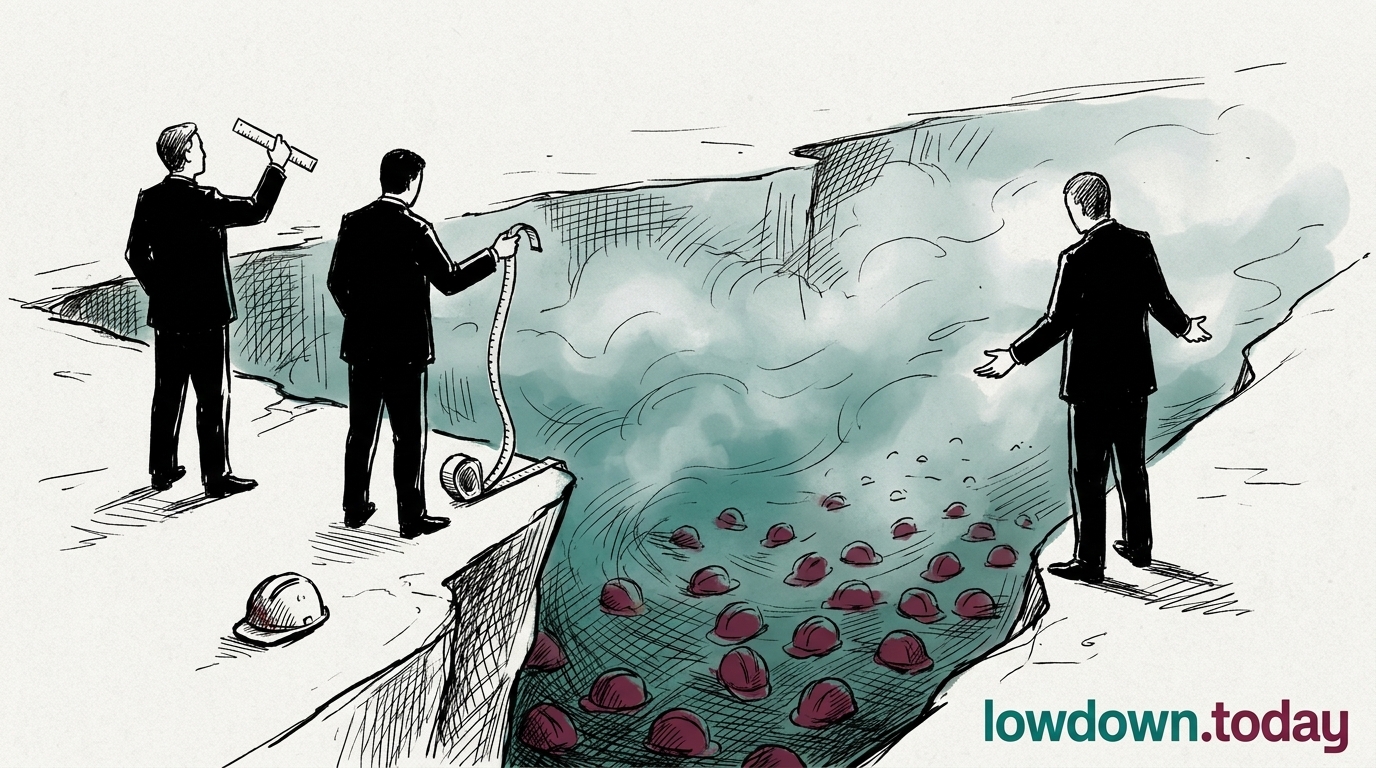
The New York State Assembly passed bill A 9581 on Wednesday 3 June 2026, requiring the state Labor Department to publish an annual report on artificial intelligence's effect on hiring and employment⁠1. The bill cleared the Assembly and went to the Senate for consideration. It is a measurement mandate rather than a restriction: the state would have to count what AI is doing to jobs, a number no federal instrument currently produces.

The gap A 9581 targets is real. No US federal agency currently measures how many jobs AI removes, which leaves legislators arguing over displacement without an agreed figure. New York's earlier WARN-style disclosure law showed the difficulty: in its first year, 162 companies covering 28,300 workers attributed none of their cuts to AI, because firms decide what reason to state.

The move runs against the opposite direction taken elsewhere. Colorado moved the opposite way in May, replacing its AI Act with a weaker notice-only regime that stripped out the substantive obligations. Two states, two contrary instincts on the same question, with no federal floor to reconcile them. A 9581's value depends on whether the Senate passes it and whether annual reporting can capture a channel that runs mainly through hires never made, the part of displacement that leaves no filing behind.


Deep Analysis

In plain English

The New York State Assembly, the lower house of the state's legislature, passed a bill on 3 June 2026 requiring the state's Department of Labor to publish an annual report on how artificial intelligence is affecting hiring in New York. The bill now moves to the Senate. No US government agency currently produces a regular, official count of how many jobs have been affected by AI. This bill would require New York's Labour Department to start building that record. This bill would require New York's equivalent of the UK's ONS to start keeping that record. Critics point out that a report with no penalties attached and no specific comparison metric may not change employer behaviour. But supporters argue that making the data official and public is the first step toward stronger legislation.

What could happen next?
  • Precedent

    If the New York Senate passes A 9581, it becomes the first US state to create a statutory annual AI-hiring-impact measurement obligation, potentially establishing a template other states adopt.

First Reported In

Update #12 · Jobs report says fine, layoff report says no

Transparency Coalition· 8 Jun 2026
Read original →
Different Perspectives
Competition and Consumer Commission of Singapore
The regulator found on 27 November that businesses can still choose and switch between cloud providers and AI models. It named dominant firms blocking rival AI agents as a risk, but answered with eight voluntary principles rather than rules.
La Poste
La Poste
France's state-owned postal group signed its first AI accord with four union confederations on 19 November, setting up a joint committee to oversee AI use. The announcement gives the unions a say, but no job security and no training hours for its 227,000 staff.
Nascent Information Technology Employees Senate (NITES)
The IT workers' union asked India's central government on 26 November for a mandatory national policy on AI layoffs, with every automated job cut logged in public. It expects to meet Labour Ministry officials; no government response has been reported.
China State Council
China State Council
Beijing's cabinet told local governments to pace AI in labour-intensive industries and to screen large AI projects for job losses. It keeps backing AI but wants the replacement of workers slowed, and it set no numeric targets.
SAP
SAP
SAP answered Bloomberg's report of at least 10,000 planned job cuts by telling CNBC that nothing is settled. In Germany a cut on that scale goes through works councils, and its 2024 round of about 10,000 ended mostly in voluntary departures.
Nvidia's board of directors
The board reinstated Jensen Huang on 22 November after input from senior levels of the US government, while its committee of independent directors keeps investigating. Its confidence rests, by its own account, on Washington's input, and the company says it will keep cooperating with government inquiries.

Written with AI from Lowdown's published reporting. Not individually reviewed by an editor. Editorial standards.
