Skip to content
Briefings are running a touch slower this week while we rebuild the foundations.See roadmap
AI: Jobs, Power & Money
16APR

BLS still absent; NY Fed fills the gap

3 min read
13:29UTC

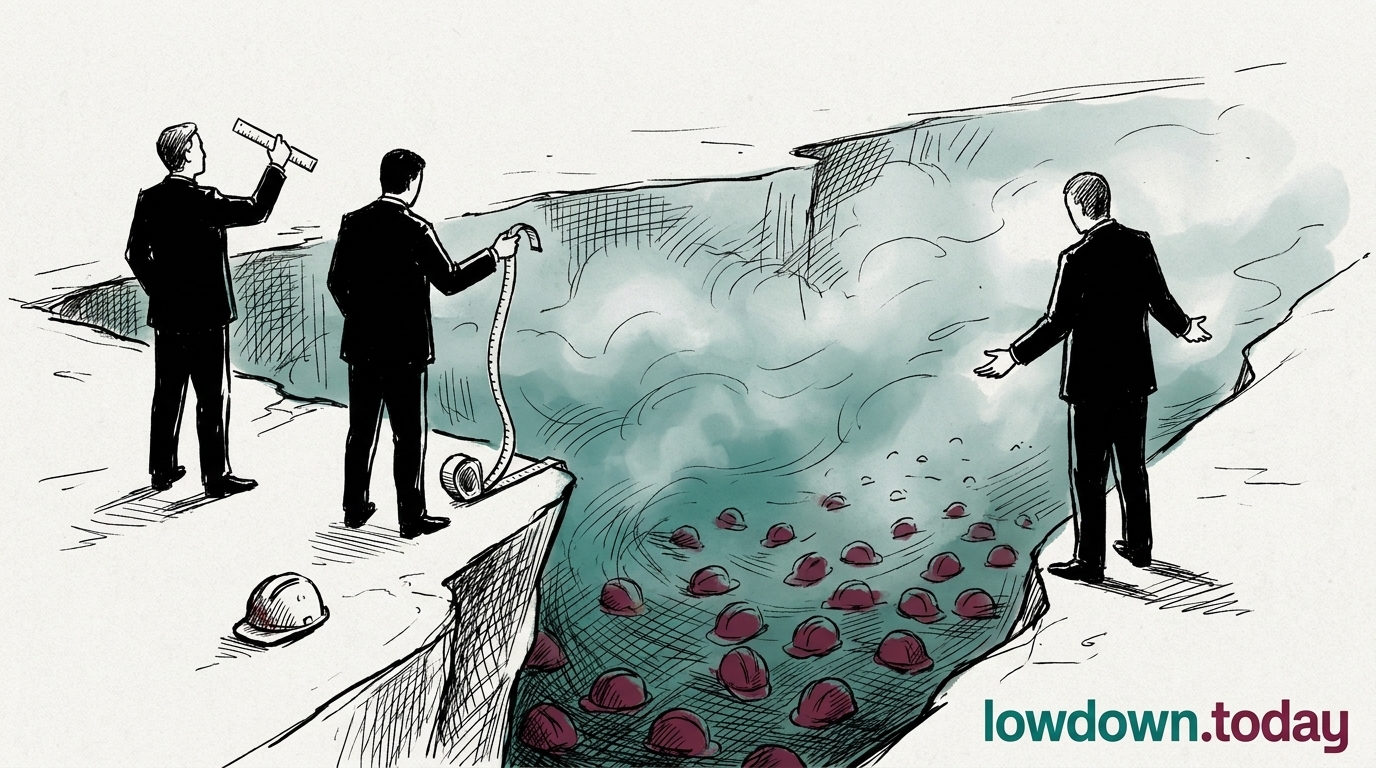
As of 23 April, the Bureau of Labor Statistics has not rescheduled its 14 April GenAI workplace paper, leaving the New York Fed's household survey as the de facto federal measure.

EconomicDeveloping
Key takeaway

Nine days on, the federal AI labour measurement brief has been ceded to a regional Fed household survey by default.

The Bureau of Labor Statistics, the US federal statistical agency responsible for labour market data, has not rescheduled its 14 April 2026 GenAI workplace paper as of 23 April. The skipped publication is now nine days old with no public explanation, leaving the New York Fed Survey of Consumer Expectations as the de facto federal measure of AI workplace impact.

GenAI, meaning generative AI, is the specific technology category the BLS paper was scheduled to quantify at workforce level. Without it, no single federal dataset captures the volume, composition or trajectory of AI-linked employment change.

The BLS skip was first documented nine days ago , when the NY Fed SCE immediately filled the vacuum with its 62% unemployment-expectation figure. The bipartisan Hawley-Warner coalition wrote to the BLS in March specifically to build an AI displacement instrument ; the agency's absence from its own publication date confirms the federal measurement gap the Hawley-Warner letter had identified.

The NY Fed SCE is a monthly household survey run by a regional reserve bank. It was not designed to be the primary federal measure of AI workplace impact, and it cannot substitute for the cross-sectional firm-level data only BLS produces. A household survey asks workers what they fear; a firm-level survey asks employers what they are doing. Goldman's substitution estimate and the Stanford JOLTS analysis remain the operative measures of AI displacement precisely because the statutory agency responsible has not produced a competing figure.

The practical consequence: as Meta, IBM, Wipro, Snap and UKG ran the April restructuring cycle, investors, policymakers and regulators priced the displacement wave off academic and wire-service models rather than federal statistics. Whether the BLS reschedules before its next publication window in May, or lets the federal AI labour measurement brief drift to the New York Fed by default, will be the clearest signal of whether the US statistical apparatus can keep pace with the phenomenon it was built to measure.

Deep Analysis

In plain English

The Bureau of Labor Statistics (BLS) is the US government agency responsible for measuring employment and economic conditions. It was scheduled to publish a paper on 14 April measuring how generative AI is affecting the job market. That paper did not appear, and nine days later there has been no public explanation. In the absence of BLS data, the New York Federal Reserve's separate consumer survey, which found that 62% of employed Americans expect AI to increase unemployment within twelve months, has become the de facto government measure of the issue. A household survey measuring fear is a different instrument from a statistical paper measuring actual displacement. Government policy responses to job market shifts require reliable data. Without BLS figures, both the scale of AI-driven displacement and the appropriate policy response remain officially unmeasured.

What could happen next?
  • Consequence

    The NY Fed Survey of Consumer Expectations, measuring employment anxiety rather than employment change, will be cited in congressional testimony and policy briefs as the official federal baseline on AI workplace impact until BLS publishes a competing figure.

  • Risk

    If BLS delays its GenAI paper past the EU Digital Omnibus second trilogue on 28 April, the EU will set employer AI literacy obligations (ID:2478) without a US federal measurement standard to benchmark against, widening the transatlantic regulatory gap on AI workplace rights.

First Reported In

Update #7 · Meta codes its own org chart

Hollywood Reporter· 23 Apr 2026
Read original
Different Perspectives
TSMC and Taiwan chip supply chain
Nvidia's 17% headcount growth to 42,000 on $81.6 billion in quarterly revenue depends on TSMC's CoWoS advanced packaging capacity constraining H100 and B200 supply, sustaining margins above 70%. The AI build-out's sole headcount-growth story runs through a Taiwan supply chain that has no parallel in downstream software.
Displaced tech workers globally
CrowdStrike's SEC disclosure puts AI attribution on a material regulatory record for the first time, but Oracle's Massachusetts WARN clock expired unfiled after up to 14 workers were logged as remote despite office proximity. The legal apparatus cannot enforce what it cannot see: hybrid reclassification, GCC transfers, and hires never made.
UK workforce and policymakers
ONS recorded UK vacancies at 705,000, below the pre-pandemic baseline for the first time, as payrolled employment fell 210,000 year on year with real wage growth at 0.1%. The Bank of England's AI worst case assumed 500,000 additional unemployed from a baseline above 730,000; the UK is already below that floor, and ONS still publishes no AI-exposure breakdown.
India IT workforce and graduates
NASSCOM's FY2026 data shows net sector growth of 140,000, but entry-level hiring fell 20-25% as the growth concentrated in in-house GCC offices requiring mid-career specialists. Indian graduates who previously entered through TCS, Infosys and Wipro fresher programmes find that channel closing at both ends: outsourcers cutting and GCCs not hiring at the junior level.
IG Metall and European trade unions
European labour bodies see the market reward pattern, cuts on record revenue, as investor preference for short-term margin extraction over validated AI productivity. They note the EU Digital Omnibus provisional deal has dropped binding employer AI-literacy obligations at the precise moment the ILO-NASK index has quantified that 3.3% of global workers are in the highest AI exposure category.
Federal Reserve Board
Governor Cook told Stanford's SIEPR on 27 May that speculative-grade software bond spreads have widened on AI-disruption concern, moving AI displacement from a labour observation into the Fed's financial-stability mandate. The Fed cannot resolve structural labour transformation through rate policy, so Cook routed the concern through the one channel the Fed does control.
