Skip to content
Briefings are running a touch slower this week while we rebuild the foundations.See roadmap
AI: Jobs, Power & Money
16APR

SAG-AFTRA wins consent rights, loses the Tilly tax

4 min read
13:29UTC

SAG-AFTRA and the Alliance of Motion Picture and Television Producers reached a tentative four-year agreement on approximately 2 May 2026, securing consent rights for every use of a performer's digital replica but failing to secure the Tilly tax: the per-use AI royalty for synthetic performers rejected outright by the studios.

EconomicDeveloping
Key takeaway

Hollywood's two largest creative unions have settled with consent protections for real performers and no compensation mechanism for AI-generated characters.

SAG-AFTRA (Screen Actors Guild-American Federation of Television and Radio Artists, the principal US union representing film, television, and radio performers) and the AMPTP (Alliance of Motion Picture and Television Producers, the trade association representing major Hollywood studios and streaming companies) reached a tentative four-year agreement on approximately Saturday 2 May 2026, ahead of an 11 May deadline, with the SAG-AFTRA National Board approving the deal.

The union secured meaningful protections on the member likeness question. Consent is required for every use of a performer's digital replica, covering face swaps, voice clones, and full-body doubles; performers must be informed and compensated per use. The final agreement defines two replica categories: employment-based and independently created. The Tilly Tax, the per-use AI royalty for synthetic performers, was rejected outright by AMPTP.

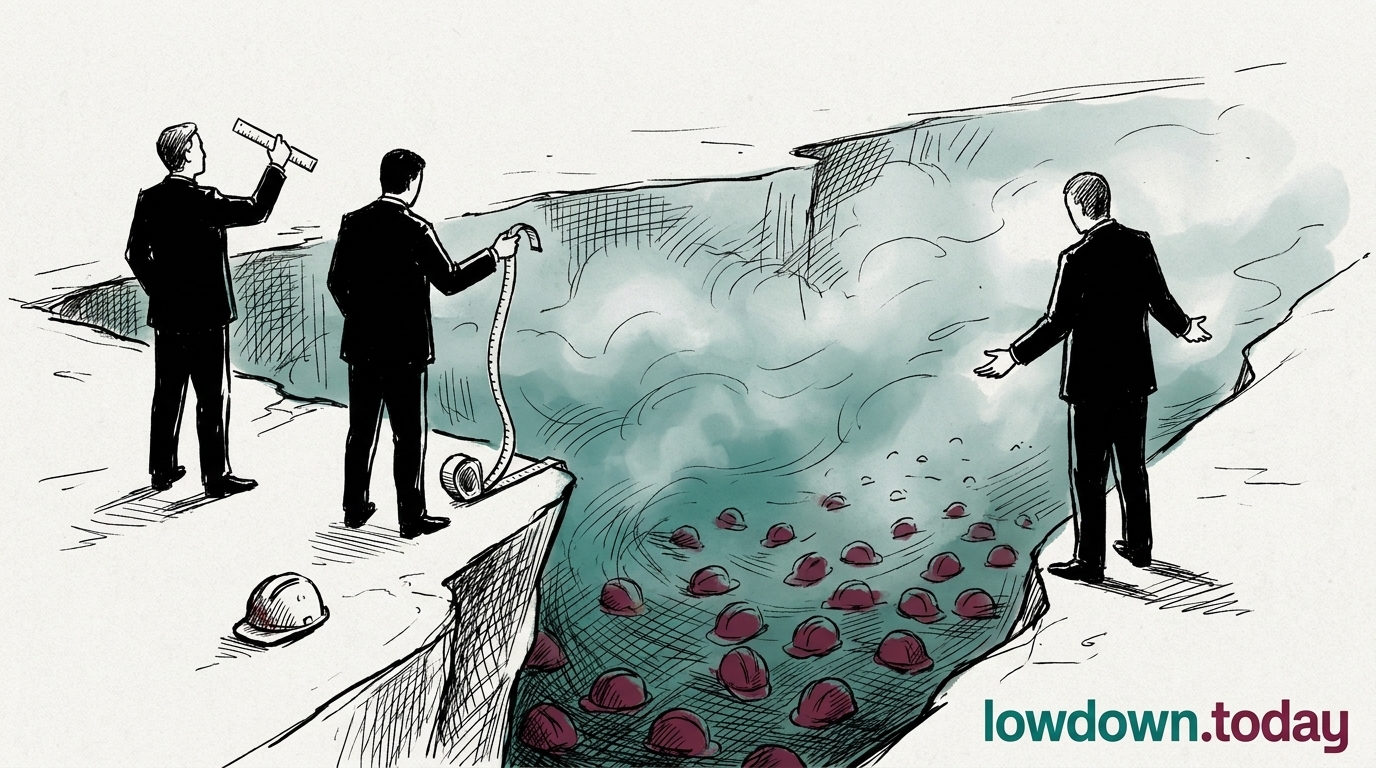
The Tilly Tax was the per-use AI royalty demand for synthetic performers: AI-generated characters not based on real actors, of which Tilly Norwood became the named symbol during contract negotiations. SAG-AFTRA chief negotiator Duncan Crabtree-Ireland had framed the per-use royalty as closer to a music performance right than a one-off licence. The AMPTP rejected it. The final language restricts synthetic performer use to productions where synthetics bring "significant additional value" but attaches no monetary mechanism to that restriction. No payments flow into a union fund for AI-generated performances.

This outcome follows a pattern the Writers Guild of America established earlier. WGA reached a four-year deal that secured health fund provisions but did not secure payment for AI training use of writers' work . SAG-AFTRA's royalty fight was the best opportunity for the Tilly tax ; the union had opened that demand in April with a specific analogy to music performance rights. Studios rejected it in both cases.

The precedent arriving into Directors Guild of America (DGA) and IATSE (International Alliance of Theatrical Stage Employees) negotiations: consent rights for real performers are achievable; royalties for AI-generated characters are not. Working actors retain protection over their own likenesses. Synthetic characters, the AI-generated performers who require no real actor at all, are subject to a vague "significant additional value" standard with no compensation mechanism. Studios preserved their position on the category that matters most to their long-term cost structure.

Deep Analysis

In plain English

SAG-AFTRA is the main union for actors in film and television in the United States. In May 2026, it reached a four-year deal with the studios on how AI can and cannot be used with actors' likenesses. The good news for actors: studios must now get consent before using a digital copy of an actor's face, voice, or body, and must pay them each time it is used. An actor's likeness cannot be cloned without their agreement. The part the union lost: a proposed rule called the Tilly tax, which would have required studios to pay a royalty every time they used a completely AI-generated character, one not based on any real actor. Studios create these synthetic characters, and the union wanted them to cost money so they would not entirely replace human actors. The studios refused. AI-generated characters with no connection to any real person can now appear in productions without any payment to the union.

Deep Analysis
Root Causes

The Tilly tax's failure has a structural cause in rights architecture that the fact names but does not fully explain. Music performance rights (the analogy Crabtree-Ireland used) are built on two separate categories: the composition right (who wrote the music) and the performance right (who recorded it).

US statute, specifically the Sound Recording Act of 1971 and subsequent Copyright Act provisions, defines both categories explicitly. When radio required a new licensing category for broadcast use, there were already two established rights to build on. AI synthetic performers sit in a rights vacuum: there is no statutory performance right for a purely generative character because there is no prior recording to build a right on.

The WGA precedent is the second structural cause. Once studios demonstrated they could withstand the WGA's demand for AI training payment through the full strike threat and settlement cycle, they knew the pattern: hold the line on new AI compensation categories, accept constraints on existing ones.

SAG-AFTRA's consent demand (protection of existing rights) succeeded for the same reason the WGA's AI training demand (new rights for new use) failed: existing rights have established legal precedent; new rights require legislation or a different power dynamic.

What could happen next?
  • Precedent

    DGA and IATSE enter negotiations knowing studios will accept consent-per-use for real performers' digital replicas and will reject per-use royalties for synthetic performers; the negotiating range is already defined.

    Short term · 0.85
  • Consequence

    Synthetic performer economics improve year-on-year as model capability reduces production cost and the 'significant additional value' guardrail becomes progressively easier to satisfy.

    Medium term · 0.7
  • Precedent

    The Tilly tax's failure pushes the AI synthetic performer royalty question toward legislative action rather than collective bargaining, following the historical trajectory of music performance rights.

    Long term · 0.55
First Reported In

Update #9 · GitLab signs the manifesto, Brussels backs out

UK AI Safety Institute· 15 May 2026
Read original
Different Perspectives
TSMC and Taiwan chip supply chain
Nvidia's 17% headcount growth to 42,000 on $81.6 billion in quarterly revenue depends on TSMC's CoWoS advanced packaging capacity constraining H100 and B200 supply, sustaining margins above 70%. The AI build-out's sole headcount-growth story runs through a Taiwan supply chain that has no parallel in downstream software.
Displaced tech workers globally
CrowdStrike's SEC disclosure puts AI attribution on a material regulatory record for the first time, but Oracle's Massachusetts WARN clock expired unfiled after up to 14 workers were logged as remote despite office proximity. The legal apparatus cannot enforce what it cannot see: hybrid reclassification, GCC transfers, and hires never made.
UK workforce and policymakers
ONS recorded UK vacancies at 705,000, below the pre-pandemic baseline for the first time, as payrolled employment fell 210,000 year on year with real wage growth at 0.1%. The Bank of England's AI worst case assumed 500,000 additional unemployed from a baseline above 730,000; the UK is already below that floor, and ONS still publishes no AI-exposure breakdown.
India IT workforce and graduates
NASSCOM's FY2026 data shows net sector growth of 140,000, but entry-level hiring fell 20-25% as the growth concentrated in in-house GCC offices requiring mid-career specialists. Indian graduates who previously entered through TCS, Infosys and Wipro fresher programmes find that channel closing at both ends: outsourcers cutting and GCCs not hiring at the junior level.
IG Metall and European trade unions
European labour bodies see the market reward pattern, cuts on record revenue, as investor preference for short-term margin extraction over validated AI productivity. They note the EU Digital Omnibus provisional deal has dropped binding employer AI-literacy obligations at the precise moment the ILO-NASK index has quantified that 3.3% of global workers are in the highest AI exposure category.
Federal Reserve Board
Governor Cook told Stanford's SIEPR on 27 May that speculative-grade software bond spreads have widened on AI-disruption concern, moving AI displacement from a labour observation into the Fed's financial-stability mandate. The Fed cannot resolve structural labour transformation through rate policy, so Cook routed the concern through the one channel the Fed does control.
