Skip to content
Welcome, thoughtbot's Giant Robots listeners!Start here
AI: Jobs, Power & Money
28NOV

OpenAI offers US a 5% stake, $42.6bn

2 min read
12:18UTC

OpenAI proposed handing Washington a 5% stake worth $42.6bn, pitched by Sam Altman to Trump as a public wealth fund.

EconomicDeveloping
Key takeaway

OpenAI would rather give Washington equity than face a windfall tax or an untested public listing.

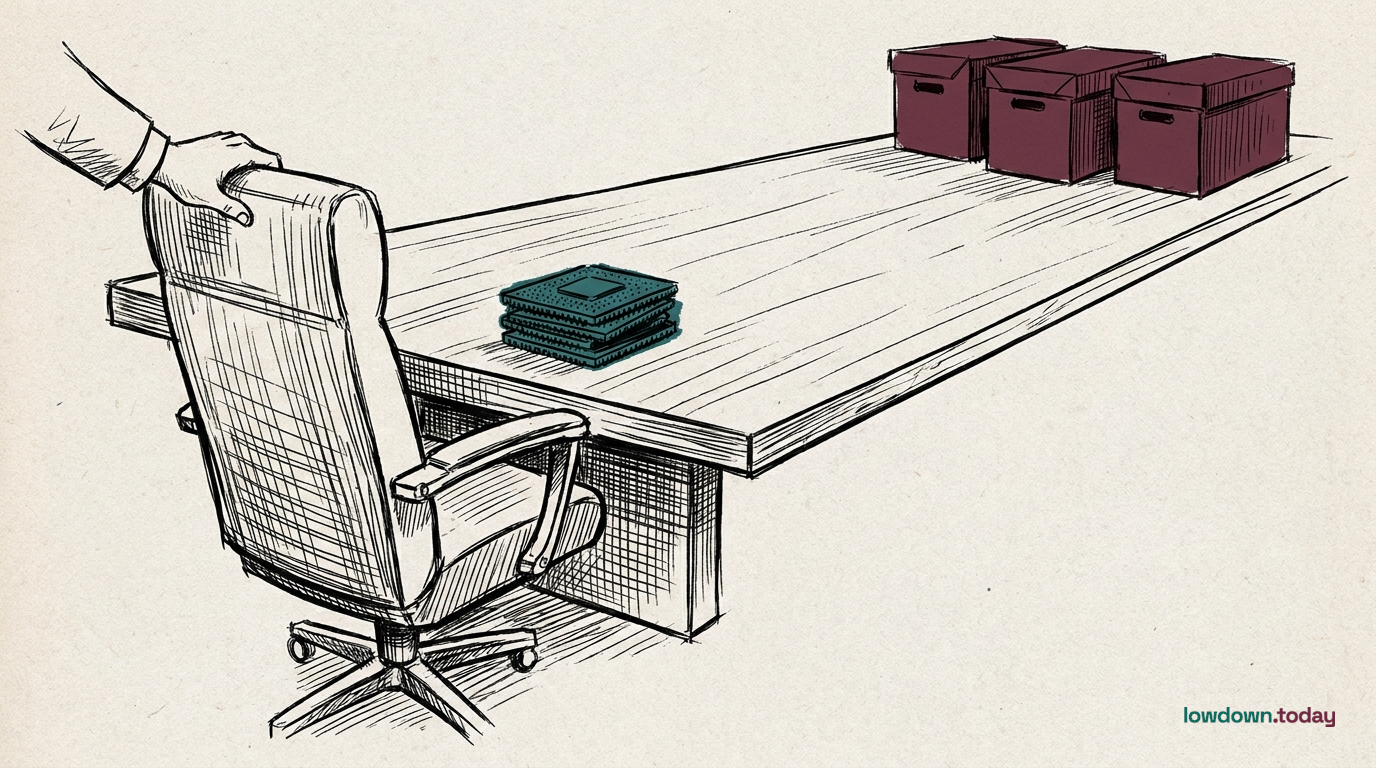
OpenAI has proposed handing the US government a 5% equity stake, worth about $42.6bn at its March valuation, structured as a public wealth fund modelled on the Alaska Permanent Fund, the vehicle that pays Alaskans an annual dividend from state oil revenues⁠1. Chief executive Sam Altman pitched the idea directly to President Donald Trump, Treasury Secretary Scott Bessent and Commerce Secretary Howard Lutnick, with other major artificial-intelligence (AI) labs reportedly asked to contribute to a similar fund.

The proposal answers a question this beat keeps circling: who captures the upside when displacement concentrates wealth in a handful of firms. It arrives as OpenAI leans toward delaying its roughly $1tn public listing to 2027, a sign the company would rather trade equity for political cover than test public markets now. Applied to AI, the Alaska model recasts displacement as resource extraction, where the public owns a slice of the thing displacing its labour rather than being compensated after the fact.

Senator Bernie Sanders has a rival plan, a one-time 50% tax on AI-company stock, that has not advanced to committee⁠2. The two proposals attack the same distributional problem from opposite ends: OpenAI offering Washington a permanent equity share, Sanders proposing to tax the windfall once and be done.


Deep Analysis

In plain English

OpenAI has offered the US government a 5% ownership stake, worth roughly $42.6bn at last year's valuation, structured like Alaska's oil fund that pays residents a yearly dividend. Sam Altman pitched the idea directly to President Trump and two of his senior officials. The idea is to give the public a direct financial stake in AI's growth, rather than relying only on ordinary taxes. Senator Bernie Sanders has a rival plan, a one-off 50% tax on AI companies' stock, but neither proposal has moved through Congress yet.

Deep Analysis
Root Causes

A shrinking payroll-tax base is the fiscal pressure behind the proposal: roughly 84-85% of federal revenue comes from labour income, so AI-driven job losses erode the tax base government normally uses to fund retraining or unemployment support, a gap a RAND working paper flagged as a deflationary risk to federal debt repayment.

Sanders' rival 50% one-time stock tax targets the same fiscal gap through a different mechanism, a levy on realised gains rather than an ongoing equity claim, and its lack of committee movement reflects how unresolved the underlying revenue question remains.

What could happen next?
  • Risk

    A government equity stake in OpenAI would give Washington a financial incentive to favour the company's growth even where that growth accelerates the job losses the same government is meant to address.

  • Precedent

    If adopted, the Alaska Permanent Fund structure would set a template other frontier AI firms could be pressed to replicate as a condition of regulatory favour.

First Reported In

Update #16 · AI layoffs fall, but the reversals begin

Transparency Coalition· 9 Jul 2026
Read original →
Different Perspectives
Competition and Consumer Commission of Singapore
The regulator found on 27 November that businesses can still choose and switch between cloud providers and AI models. It named dominant firms blocking rival AI agents as a risk, but answered with eight voluntary principles rather than rules.
La Poste
La Poste
France's state-owned postal group signed its first AI accord with four union confederations on 19 November, setting up a joint committee to oversee AI use. The announcement gives the unions a say, but no job security and no training hours for its 227,000 staff.
Nascent Information Technology Employees Senate (NITES)
The IT workers' union asked India's central government on 26 November for a mandatory national policy on AI layoffs, with every automated job cut logged in public. It expects to meet Labour Ministry officials; no government response has been reported.
China State Council
China State Council
Beijing's cabinet told local governments to pace AI in labour-intensive industries and to screen large AI projects for job losses. It keeps backing AI but wants the replacement of workers slowed, and it set no numeric targets.
SAP
SAP
SAP answered Bloomberg's report of at least 10,000 planned job cuts by telling CNBC that nothing is settled. In Germany a cut on that scale goes through works councils, and its 2024 round of about 10,000 ended mostly in voluntary departures.
Nvidia's board of directors
The board reinstated Jensen Huang on 22 November after input from senior levels of the US government, while its committee of independent directors keeps investigating. Its confidence rests, by its own account, on Washington's input, and the company says it will keep cooperating with government inquiries.

Written with AI from Lowdown's published reporting. Not individually reviewed by an editor. Editorial standards.
