Skip to content
Welcome, thoughtbot's Giant Robots listeners!Start here
AI: Jobs, Power & Money
6NOV

Sanders and AOC target AI data centres

1 min read
11:10UTC

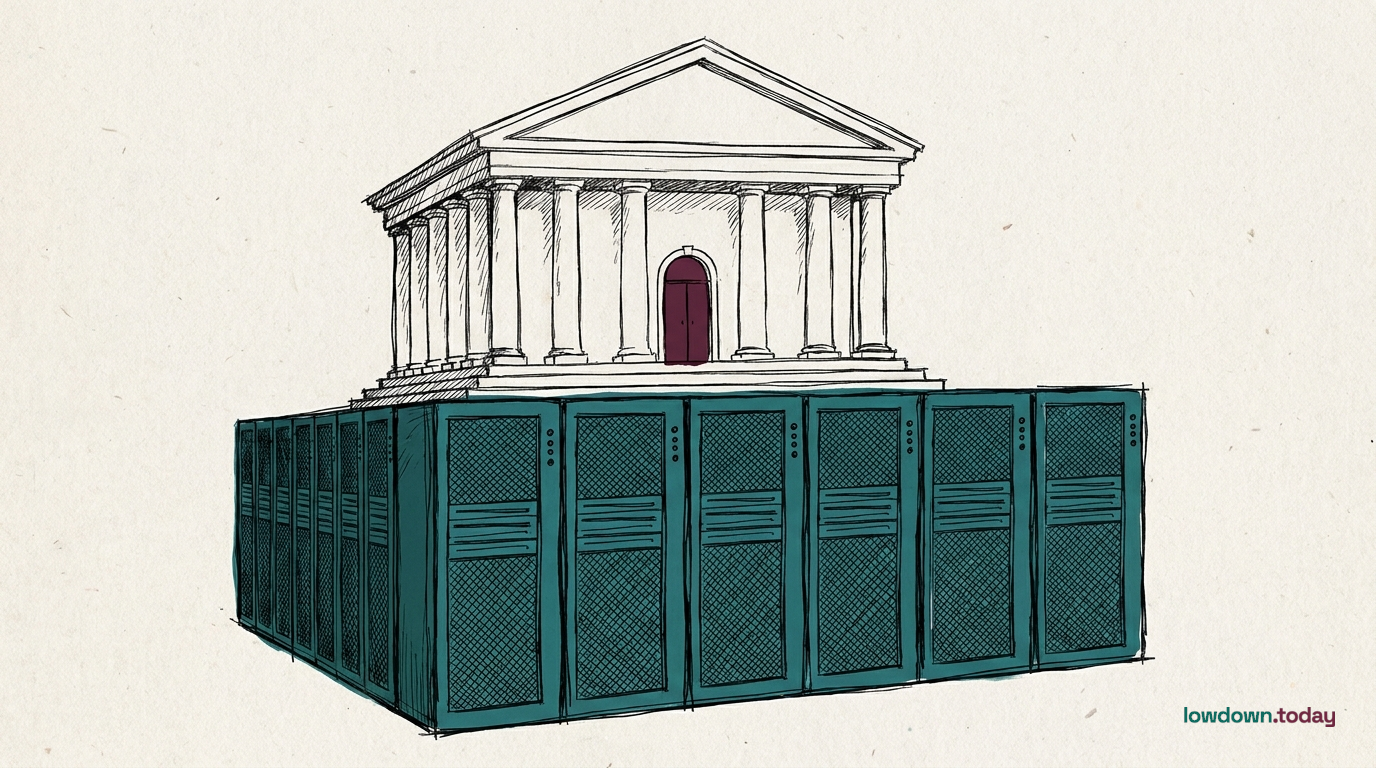
A bill to ban all new AI data centre construction until Congress passes worker protections. It will not pass. It was not designed to.

EconomicAssessed
Key takeaway

The bill will not pass but reframes AI regulation to include energy and infrastructure costs.

Senator Bernie Sanders and Representative Alexandria Ocasio-Cortez introduced the AI Data Centre Moratorium Act on 25 March.⁠1 The bill would ban all new AI data centre construction until Congress passes legislation addressing worker protection, consumer rights, civil rights, and environmental standards. It cites electricity costs rising nearly 7% last year, double the overall inflation rate, costing the average US household an extra $123 in 2025.

This is separate from Sanders' earlier robot tax proposal. He now operates on two tracks: one targeting AI's economic output through taxation, the other targeting its physical infrastructure through permitting. The moratorium has no path under a Republican-controlled Congress. It is a negotiating position, not legislation designed to pass. Its function is to define the left boundary of the debate and force centrist proposals to account for energy and environmental costs alongside labour displacement.


Deep Analysis

In plain English

Senators Sanders and Ocasio-Cortez have proposed a law that would stop any new AI server farms from being built until Congress passes laws protecting workers, consumers, and the environment. It will almost certainly not pass because Republicans control the Senate. The point is not to become law. It is to make a political argument: AI is already raising your electricity bill by $123 a year, and the companies building it should not be allowed to keep expanding until workers and communities are protected.

Deep Analysis
Root Causes

The moratorium bill reflects a strategic pivot in progressive AI regulation. Having failed to advance the robot tax through a Republican-controlled Senate, Sanders and Ocasio-Cortez are targeting the physical chokepoint: power and permitting. AI data centres require grid capacity, water, and zoning approvals that are already contested at the local level in Virginia, Arizona, and Texas.

The energy cost framing is deliberately populist. Electricity bills rising 7% with AI data centres consuming a growing share of grid capacity is politically legible in a way that labour market statistics are not. The bill is designed to shift the AI debate from abstract displacement risk to concrete household cost.

What could happen next?
  • Consequence

    The bill reframes AI regulation from a labour policy debate to an energy and infrastructure debate, opening a new coalition between labour and environmental advocates.

    Short term · High
  • Risk

    Even without passing, the moratorium bill may prompt hyperscalers to accelerate international data centre builds in EU, Asia, or Latin America to diversify political risk.

    Medium term · Medium
  • Precedent

    Sanders now operates two separate legislative tracks against AI: output taxation (robot tax) and infrastructure permitting (moratorium). Together they define the left boundary of the US AI policy debate.

    Long term · High
First Reported In

Update #3 · The AI jobs data contradicts itself

US News / Roll Call / Axios· 28 Mar 2026
Read original →
Different Perspectives
Korea's four largest banks, as reported by News1
KB Kookmin, Shinhan, Hana and Woori rehired 1,013 retirees last year, equal to 79.1% of their graduate intake, according to News1. Graduates face a smaller entry intake while returners take fixed-term credit-screening roles at lower pay, News1 reports.
High Court of Justice of Madrid
The court's employment chamber ruled in judgment 864/2026, dated 8 October and made public in early November, that introducing AI is not on its own a ground for dismissal. Employers must prove AI's effect through the four causes the Workers' Statute already lists.
Singapore Ministry of Manpower
The Singapore Ministry of Manpower put third-quarter retrenchments at 4,800, concentrated in information and communications, financial services and manufacturing, with business reorganisation the main driver. Its release does not mention AI.
Challenger, Gray & Christmas
Challenger reported on 5 November that market and economic conditions overtook AI as the leading stated reason for 2026's US job cuts, at 130,531 against 121,401. AI was cited for 1,265 cuts in October, its lowest month of the year.
Office for Budget Responsibility
The OBR's 28 October outlook showed output per worker in information and communication growing 7.6% a year, yet kept AI's boost to UK productivity at 0.2 percentage points a year. It does not attribute the faster growth to AI.
Central Bank of Ireland
Governor Gabriel Makhlouf said on 2 November that AI investment has supported Irish activity and flagged the debt financing behind it as a financial-stability risk. On jobs, he named skills bottlenecks and mismatches, not job losses.

Written with AI from Lowdown's published reporting. Not individually reviewed by an editor. Editorial standards.

