Skip to content
Welcome, thoughtbot's Giant Robots listeners!Start here
AI: Jobs, Power & Money
6NOV

Democrats kill the Sanders AI moratorium

2 min read
11:10UTC

The moratorium was not defeated by Republicans. It was destroyed by its own party.

EconomicAssessed
Key takeaway

Fellow Democrats killed the Sanders AI moratorium; only bipartisan data measurement survives.

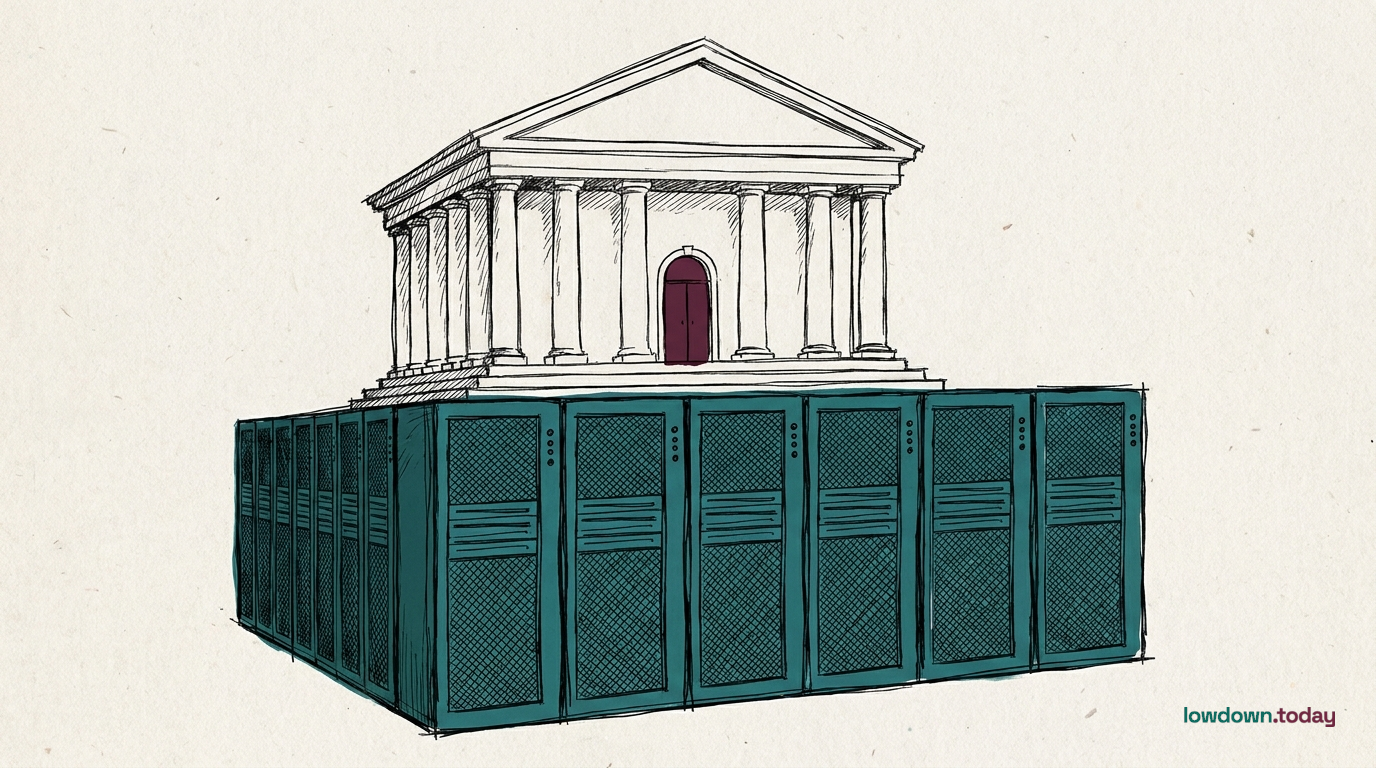
The AI Data Centre Moratorium Act introduced by Senator Bernie Sanders and Representative Alexandria Ocasio-Cortez is dead on arrival, killed not by the Republican majority but by the Democratic caucus itself. Senator John Fetterman branded it "China First." Senator Mark Warner called it "idiocy"⁠1.

Neither the moratorium nor the earlier robot tax proposal has a legislative path. What survives is measurement. The bipartisan nine-senator coalition led by Warner and Senator Josh Hawley wrote to the Department of Labour, the BLS, and the Census Bureau urging expanded AI workforce data collection. Federal agencies can act on this request without new legislation.


Deep Analysis

In plain English

Senator Bernie Sanders and Representative Alexandria Ocasio-Cortez introduced a bill that would have stopped the construction of any new AI data centres until Congress had passed laws protecting workers, consumers, and the environment from AI's effects. The bill did not die because Republicans voted against it. It died because fellow Democrats Senators Fetterman and Warner rejected it publicly, with Fetterman calling it 'China First' and Warner calling it 'idiocy.' The argument is that halting American AI investment would simply let China build the infrastructure instead. Whatever the merits, this debate illustrates that AI data centres are now treated as a national security asset, not just a corporate investment, which changes what kinds of restrictions politicians are willing to support.

What could happen next?
  • The moratorium's defeat by its own party signals that no restrictive AI infrastructure legislation will pass in the current Congress. Worker protection measures will be limited to disclosure, data collection, and retraining subsidies.

First Reported In

Update #4 · AI leads US layoffs as cuts go uncounted

Fox News / Axios / Al Jazeera· 4 Apr 2026
Read original →
Different Perspectives
Korea's four largest banks, as reported by News1
KB Kookmin, Shinhan, Hana and Woori rehired 1,013 retirees last year, equal to 79.1% of their graduate intake, according to News1. Graduates face a smaller entry intake while returners take fixed-term credit-screening roles at lower pay, News1 reports.
High Court of Justice of Madrid
The court's employment chamber ruled in judgment 864/2026, dated 8 October and made public in early November, that introducing AI is not on its own a ground for dismissal. Employers must prove AI's effect through the four causes the Workers' Statute already lists.
Singapore Ministry of Manpower
The Singapore Ministry of Manpower put third-quarter retrenchments at 4,800, concentrated in information and communications, financial services and manufacturing, with business reorganisation the main driver. Its release does not mention AI.
Challenger, Gray & Christmas
Challenger reported on 5 November that market and economic conditions overtook AI as the leading stated reason for 2026's US job cuts, at 130,531 against 121,401. AI was cited for 1,265 cuts in October, its lowest month of the year.
Office for Budget Responsibility
The OBR's 28 October outlook showed output per worker in information and communication growing 7.6% a year, yet kept AI's boost to UK productivity at 0.2 percentage points a year. It does not attribute the faster growth to AI.
Central Bank of Ireland
Governor Gabriel Makhlouf said on 2 November that AI investment has supported Irish activity and flagged the debt financing behind it as a financial-stability risk. On jobs, he named skills bottlenecks and mismatches, not job losses.

Written with AI from Lowdown's published reporting. Not individually reviewed by an editor. Editorial standards.

