Skip to content
You can now search across every topic, entity and event.What's new
AI: Jobs, Power & Money
27JUL

New York moves to count AI job losses

3 min read
10:02UTC

The New York State Assembly passed A 9581 on 3 June, requiring the state Labor Department to report annually on how AI affects hiring, and sent it to the Senate.

EconomicDeveloping
Key takeaway

New York's Assembly voted to make the state count AI's effect on hiring each year.

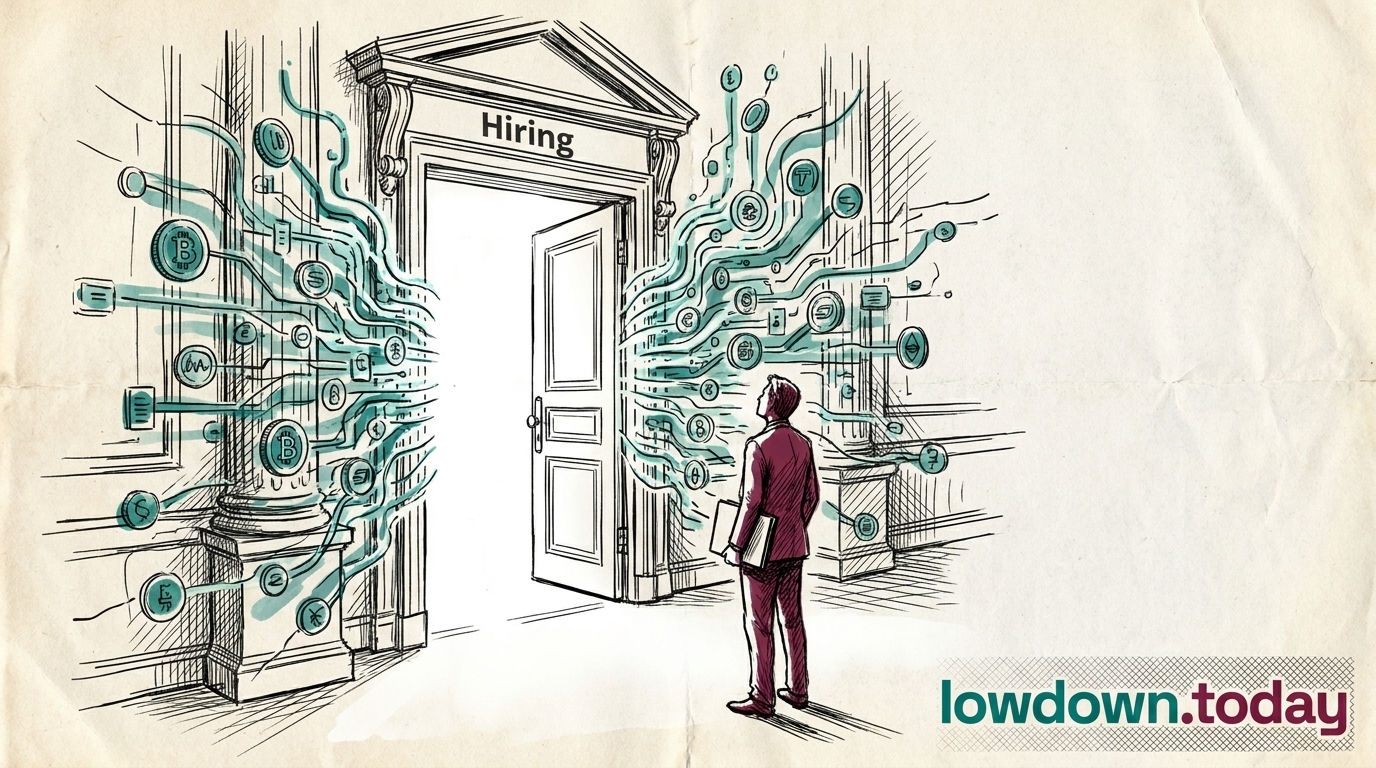
The New York State Assembly passed bill A 9581 on Wednesday 3 June 2026, requiring the state Labor Department to publish an annual report on artificial intelligence's effect on hiring and employment 1. The bill cleared the Assembly and went to the Senate for consideration. It is a measurement mandate rather than a restriction: the state would have to count what AI is doing to jobs, a number no federal instrument currently produces.

The gap A 9581 targets is real. No US federal agency currently measures how many jobs AI removes, which leaves legislators arguing over displacement without an agreed figure. New York's earlier WARN-style disclosure law showed the difficulty: in its first year, 162 companies covering 28,300 workers attributed none of their cuts to AI, because firms decide what reason to state.

The move runs against the opposite direction taken elsewhere. Colorado moved the opposite way in May, replacing its AI Act with a weaker notice-only regime that stripped out the substantive obligations. Two states, two contrary instincts on the same question, with no federal floor to reconcile them. A 9581's value depends on whether the Senate passes it and whether annual reporting can capture a channel that runs mainly through hires never made, the part of displacement that leaves no filing behind.

Deep Analysis

In plain English

The New York State Assembly, the lower house of the state's legislature, passed a bill on 3 June 2026 requiring the state's Department of Labor to publish an annual report on how artificial intelligence is affecting hiring in New York. The bill now moves to the Senate. No US government agency currently produces a regular, official count of how many jobs have been affected by AI. This bill would require New York's Labour Department to start building that record. This bill would require New York's equivalent of the UK's ONS to start keeping that record. Critics point out that a report with no penalties attached and no specific comparison metric may not change employer behaviour. But supporters argue that making the data official and public is the first step toward stronger legislation.

What could happen next?
  • Precedent

    If the New York Senate passes A 9581, it becomes the first US state to create a statutory annual AI-hiring-impact measurement obligation, potentially establishing a template other states adopt.

First Reported In

Update #12 · Jobs report says fine, layoff report says no

Transparency Coalition· 8 Jun 2026
Read original
Different Perspectives
European Commission
European Commission
The European Commission's draft Annex III guidelines, closed for comment on 23 July, treat algorithmic scoring in recruitment, pay and termination as high-risk regardless of whether a human signs off, echoing Spain's Audiencia Nacional ruling 101/2026 on concealed scheduling algorithms. Brussels is shifting the fight from counting AI job losses to assigning legal liability for the tools themselves.
Office for National Statistics
The Office for National Statistics recorded UK vacancies rising to 712,000 on 21 July, the first quarterly increase this beat has tracked, with payrolled employment down 85,000 on the year against May's 210,000 fall. The bulletin names no AI cause anywhere, and that is the point: nothing in the release confirms the displacement story it gets cited to support.
Christian Klein, SAP
Christian Klein told investors on 23 July that SAP's research headcount will not grow for twelve months because AI agents and their token costs are absorbing the work, not because SAP is cutting jobs. He frames it as commercial arithmetic: the cost of AI-assisted coding tokens plus the salaries specialist AI hires command, not people being replaced by machines.
Betsey Stevenson, University of Michigan
Betsey Stevenson argued that the 187,000 jobless-claims reading describes a market that hires little and fires little, not one AI is emptying. She said the real damage hides in eligibility rules and suppressed job postings, not in the headline layoff counts employers keep denying.
Comisiones Obreras, UGT and Concentrix's A Coruña works committee
Comisiones Obreras, UGT and Concentrix's A Coruña works committee blamed Microsoft's push toward AI self-service for the 80 redundancies unions signed off on 22 July, not unavoidable business cause. A second Coruña procedure covering 80 more jobs runs to a 31 August deadline, and the unions want the state, not the employer, setting the pace of AI-driven cuts.
Stanford's 'We Must Act Now' signatories
More than 200 academics, including 16 Nobel laureates, published a 13 July letter warning of AI-driven labour disruption, citing Daron Acemoglu's NBER estimate that AI's total factor productivity gain stays under 0.66% over ten years. The letter's own cited economics sit well below Goldman Sachs Research's 1.5-percentage-point estimate published the same week.