Skip to content
You can now search across every topic, entity and event.What's new
AI: Jobs, Power & Money
1JUL

Oracle Massachusetts WARN filing still absent

1 min read
11:00UTC

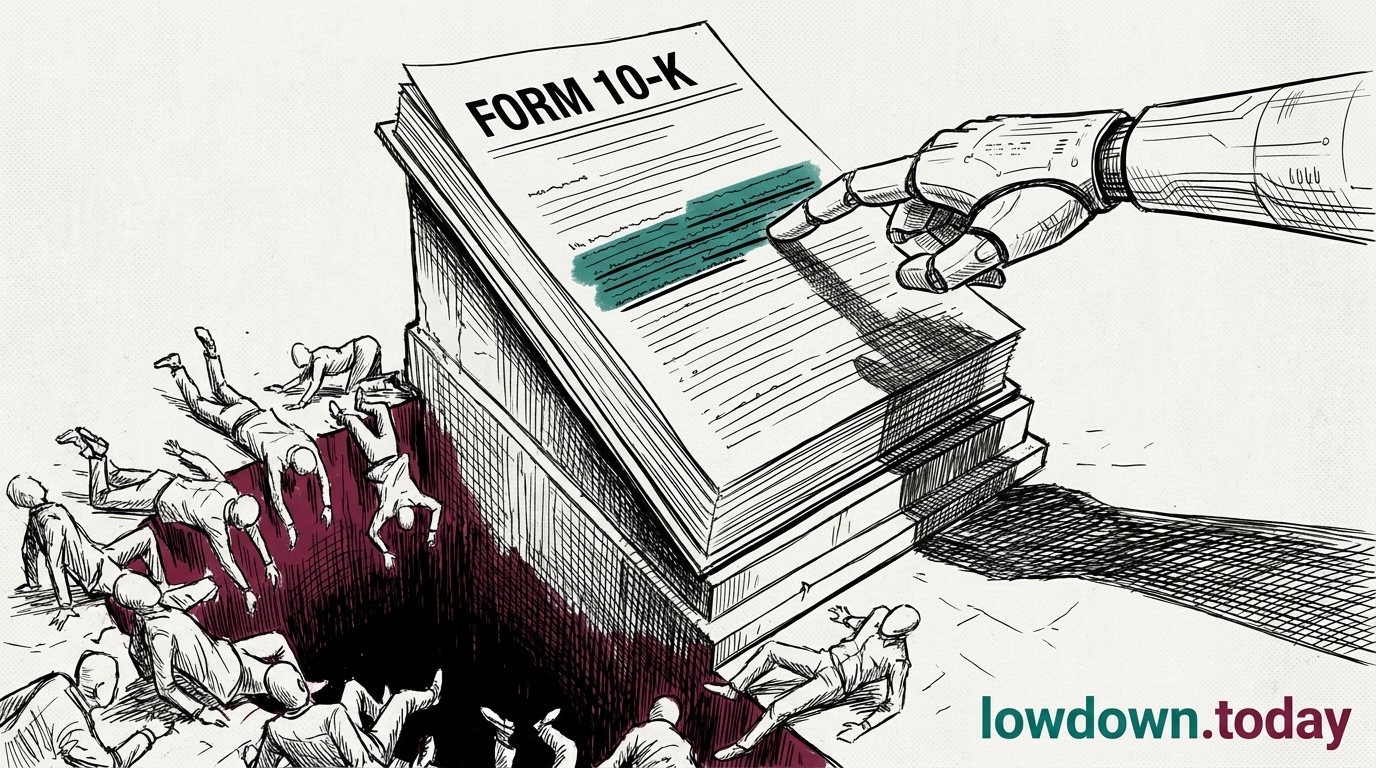
Oracle's Massachusetts WARN Act filing remains absent as of 13 April. The 60-day clock from the 31 March cuts expires around 30 May; Burlington offices remain unrepresented in any state disclosure.

EconomicDeveloping
Key takeaway

Oracle's 30 May WARN deadline tests whether federal disclosure produces legal consequence for AI-driven cuts.

Oracle's Massachusetts WARN Act filing remained absent as of 13 April 2026, covering the Burlington offices affected by the late-March round of cuts . The 60-day clock from those terminations expires around the end of May; law firms are still investigating potential violations. Prior Oracle filings covered Washington state (491 positions) and Missouri (539), together representing fewer than 4% of the affected workforce .

The Worker Adjustment and Retraining Notification Act requires employers of 100 or more workers to give 60 calendar days' notice of mass layoffs at a single site; the filings are public record and enforceable via state labour departments. The Massachusetts gap is therefore a compliance decision, not an oversight: Oracle has filed where required and has not filed where the calculus of enforcement risk against disclosure cost points the other way. The pattern follows the New York State precedent that its own WARN Act captured zero AI attributions from 162 companies covering 28,300 workers in the law's first year .

If Burlington produces no filing before the deadline, the operational template for large-scale US AI-driven workforce reductions becomes clear: concentrate cuts offshore where no WARN equivalent applies, file minimally in small US jurisdictions where state-level triggers are unambiguous, and avoid filing in larger states where the federal single-site test can be contested. Oracle's India terminations demonstrated the offshore concentration ; the sub-four-percent US filing rate demonstrates the minimal compliance layer. Massachusetts is the remaining test of whether the template extends to states with active labour departments and law-firm scrutiny.

Deep Analysis

In plain English

In the US, companies that lay off large numbers of workers are legally required to file public notices (known as WARN Act filings) giving workers 60 days' warning. Oracle cut up to 30,000 people at the end of March but has filed notices covering fewer than 4% of those workers. The Massachusetts offices have no filing at all. The 60-day legal deadline expires around 30 May, meaning workers there may have lost their jobs without the legal notice the law requires.

Deep Analysis
Root Causes

The WARN Act (Worker Adjustment and Retraining Notification Act, 1988) was designed for discrete plant closures and mass layoffs that occur at a single site on a known date. Oracle's 30,000-person cut was executed across multiple countries, business units and legal entities simultaneously; a structure that fragments any single WARN filing below individual state thresholds even when the aggregate cut is the largest US workforce reduction since 2009.

Massachusetts requires a WARN notice for cuts of 50 or more workers at a single site; Oracle's Burlington offices may contain fewer than 50 affected employees in any individually cognisable legal unit.

The prior New York WARN Act study (zero AI attributions from 162 companies covering 28,300 workers) reveals the systemic condition: disclosure law was designed for a labour market where the reason for termination is straightforward and the location is fixed. AI-driven reductions are neither; they are productivity-driven headcount optimisations spread across roles and sites, structurally designed for WARN avoidance regardless of intent.

First Reported In

Update #6 · Three federal surveys, one 34-to-1 gap

ProCap Insights / Stanford Digital Economy Lab· 16 Apr 2026
Read original
Different Perspectives
Barclays
Barclays
Barclays economist Pooja Sriram flagged a 28,000-a-month bleed in finance and information roles the same week Microsoft disputed that AI drove its own 4,800 cuts. The bank treats Challenger's AI-attribution share as a lagging indicator against faster erosion visible in raw labour-market data.
European Commission
European Commission
Brussels deferred the Digital Omnibus's Annex III employment-compliance deadline from 2 August 2026 to December 2027, even as California advanced three binding AI-hiring bills the same week. The 17-month delay leaves EU workers without the algorithmic-hiring safeguards the regulation already promises.
OpenAI
OpenAI
OpenAI proposed a 5% US government equity stake worth $42.6bn, structured as a public wealth fund modelled on the Alaska Permanent Fund, with Sam Altman pitching it directly to Trump, Bessent and Lutnick. The offer pre-empts Sanders' rival one-time 50% AI-stock tax, which has not yet reached committee.
India's IT and outsourcing sector
BAT's transfer of 3,500 roles to Accenture on 29 June fits a delivery model Indian IT firms increasingly run: consultancies win Western contracts, then execute through offshore centres. The sector expects more Fit2Win-style transfers, not straight redundancies, as employers absorb AI without cutting outsourced headcount.
European Trade Union Confederation
ETUC says the Council's shift from 'ensure' to 'support' in the AI-literacy duty, confirmed in the Digital Omnibus's final adoption on 29 June, is a collapse of the legal threshold, not a drafting tidy-up. It expects EU workers to face AI-driven hiring and monitoring decisions with a statutory right to explanation that exists in name only.
British American Tobacco's Fit2Win workforce
BAT is cutting 9,000 roles under Fit2Win, transferring 3,500 to Accenture rather than making them redundant, to reach roughly £500m in AI-driven savings by 2027. For affected staff, that distinction decides whether they keep a job at all, just not at BAT.
