Skip to content
You can now search across every topic, entity and event.What's new
AI: Jobs, Power & Money
1JUL

OpenAI heads to market losing money

4 min read
11:00UTC

OpenAI confirmed its IPO filing on 9 June, targeting a September listing above $1 trillion. Reported figures show roughly $2bn a month in revenue against a projected $14bn operating loss for 2026, with no positive cash flow expected until about 2030.

EconomicDeveloping
Key takeaway

OpenAI is chasing a $1 trillion listing while losing close to 58 cents on every dollar of revenue it earns.

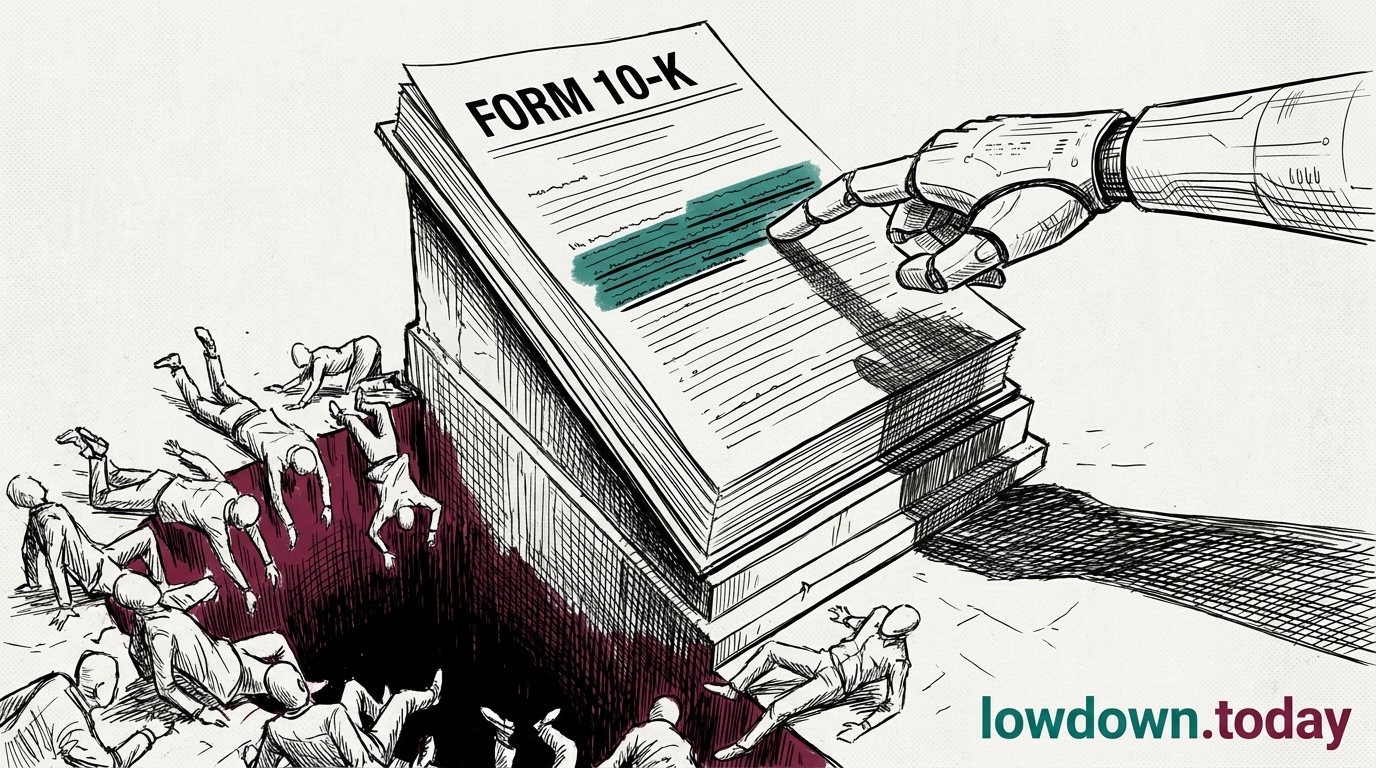
OpenAI filed a confidential draft prospectus with US regulators around 22 May and confirmed it publicly on 9 June, aiming for a public listing, an initial public offering, as early as September with Goldman Sachs, Morgan Stanley and JPMorgan underwriting 1. OpenAI is the San Francisco company behind ChatGPT and the primary demand driver for global AI infrastructure spending; an IPO would be the first time it opens its accounts to public investors.

The figures reported around the filing describe a company taking in roughly $2bn a month, about $24bn annualised, against a projected operating loss near $14bn for 2026, with no positive cash flow expected until about 2030. The public-listing target sits above $1 trillion, against an $852bn valuation set by a roughly $122bn fundraising round in March, with Amazon, Nvidia and SoftBank among the backers. These are reported figures attached to a confidential filing, not numbers drawn from a public prospectus, so each should be read as projected pending the S-1.

If the reported numbers hold, the arithmetic sets the terms. A $14bn loss against $24bn of revenue runs close to 58 cents lost for every dollar earned, which makes the shortfall the running cost of staying open rather than a one-off. A $1 trillion target prices the 2030 breakeven as near-certain, leaving thin margin if training costs climb or enterprise demand softens.

The loop closes on its own product. The same model whose jailbreak triggered the Anthropic suspension, GPT-5.5, remains on sale under OpenAI even as the lab chases a public listing at a loss-making run-rate . The engine behind much of the displacement this desk has tracked all year does not yet pay for itself, and OpenAI is asking the public to carry the gap until it might.

Deep Analysis

In plain English

OpenAI is the American company behind ChatGPT, the AI chatbot that became the fastest-growing consumer product in history. The company has told investors it wants to sell shares to the public in September 2026, at a total value above one trillion dollars. On reported figures, OpenAI takes in about two billion dollars a month in revenue but projects a loss of about fourteen billion dollars for 2026, roughly 58 cents lost for every dollar earned, with no positive cash flow expected until around 2030. An IPO above one trillion dollars asks ordinary investors to fund those four years of losses in exchange for a stake in a company that does not yet pay for itself. Amazon ran a similar loss-funded model from its 1999 IPO through its first profitable quarter in late 2001; the difference here is the scale, with OpenAI's projected 2026 loss running roughly 19 times Amazon's 1999 shortfall.

What could happen next?
  • Risk

    If the S-1 discloses a 2030 breakeven that requires revenue tripling and training-cost halving simultaneously, public-market scrutiny may trigger a WeWork-style re-pricing of the private AI market, affecting not only OpenAI but every AI company that took funding at 2025-26 valuations.

    Short term · Suggested
  • Consequence

    A successful OpenAI listing above $1 trillion would pressure Anthropic, Mistral, and other private frontier labs to file their own IPOs or take structurally similar growth-funded loss positions, sustaining the AI infrastructure spending that drives the displacement cycle.

    Medium term · Suggested
  • Opportunity

    Public-market scrutiny of OpenAI's S-1 will, for the first time, subject the displacement thesis, specifically whether AI-generated productivity gains justify the job-cut rate, to investor due diligence and analyst coverage across Goldman Sachs, Morgan Stanley, and JPMorgan research divisions.

    Short term · Assessed
  • Precedent

    Goldman Sachs and JPMorgan, which underwrite the OpenAI IPO, have simultaneously published the leading AI-displacement research and, in JPMorgan's case, confirmed internal AI displacement of staff. Their underwriting of a loss-funded AI company while documenting its displacement effects sets a precedent for institutional finance funding the transition.

    Long term · Assessed
First Reported In

Update #13 · Washington pulls a live AI model

Fortune· 13 Jun 2026
Read original
Different Perspectives
Barclays
Barclays
Barclays economist Pooja Sriram flagged a 28,000-a-month bleed in finance and information roles the same week Microsoft disputed that AI drove its own 4,800 cuts. The bank treats Challenger's AI-attribution share as a lagging indicator against faster erosion visible in raw labour-market data.
European Commission
European Commission
Brussels deferred the Digital Omnibus's Annex III employment-compliance deadline from 2 August 2026 to December 2027, even as California advanced three binding AI-hiring bills the same week. The 17-month delay leaves EU workers without the algorithmic-hiring safeguards the regulation already promises.
OpenAI
OpenAI
OpenAI proposed a 5% US government equity stake worth $42.6bn, structured as a public wealth fund modelled on the Alaska Permanent Fund, with Sam Altman pitching it directly to Trump, Bessent and Lutnick. The offer pre-empts Sanders' rival one-time 50% AI-stock tax, which has not yet reached committee.
India's IT and outsourcing sector
BAT's transfer of 3,500 roles to Accenture on 29 June fits a delivery model Indian IT firms increasingly run: consultancies win Western contracts, then execute through offshore centres. The sector expects more Fit2Win-style transfers, not straight redundancies, as employers absorb AI without cutting outsourced headcount.
European Trade Union Confederation
ETUC says the Council's shift from 'ensure' to 'support' in the AI-literacy duty, confirmed in the Digital Omnibus's final adoption on 29 June, is a collapse of the legal threshold, not a drafting tidy-up. It expects EU workers to face AI-driven hiring and monitoring decisions with a statutory right to explanation that exists in name only.
British American Tobacco's Fit2Win workforce
BAT is cutting 9,000 roles under Fit2Win, transferring 3,500 to Accenture rather than making them redundant, to reach roughly £500m in AI-driven savings by 2027. For affected staff, that distinction decides whether they keep a job at all, just not at BAT.
