Skip to content
Welcome, thoughtbot's Giant Robots listeners!Start here
2026 FIFA World Cup
11MAY

Chemicals 62-68% as the new running floor

4 min read
10:30UTC

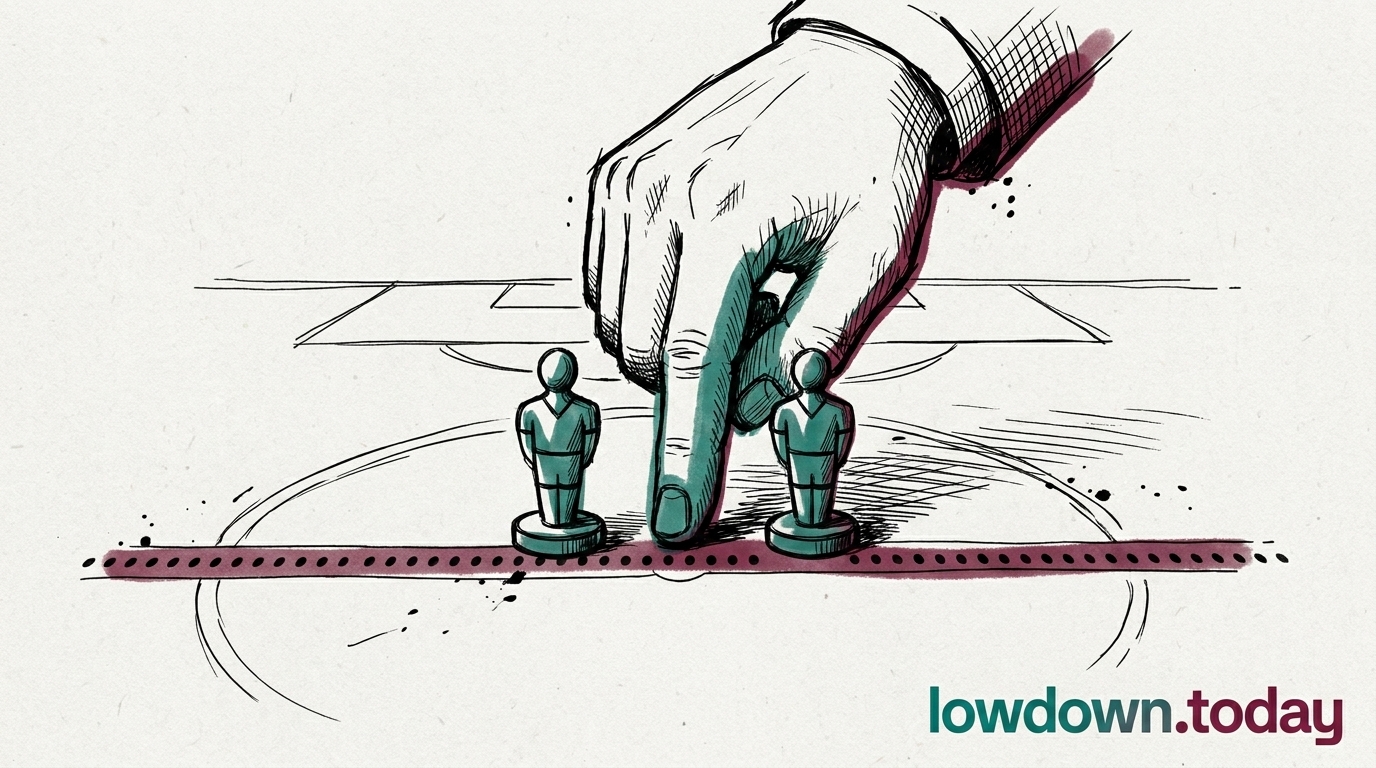
BASF, INEOS, Covestro, Lanxess and Evonik are running European plants at 62-68% capacity utilisation against an 80% profitability threshold, and industry leaders now frame the cost disadvantage as structural rather than cyclical.

SportDeveloping
Key takeaway

Demand destruction is now structural; further chemical curtailment supports TTF rather than relieves it.

BASF, Ineos, Covestro, Lanxess and Evonik are operating European plants at 62-68% capacity utilisation against an 80% profitability threshold⁠1. Industry leaders now frame the cost disadvantage as structural rather than cyclical, removing the demand-recovery story from forward TTF. European chemical exports fell from 23% to 14% of world trade between 2018 and Q1 2026; Wacker Chemie and Air Liquide are reported to be entering the same closure posture as BASF Ludwigshafen.

The Verbund freezes BASF flagged as a contingent option in Q1 and Yara International's 25% European fertiliser curtailment are no longer scenarios; they are the running posture. BASF's Ludwigshafen Verbund site is the integrated production model that monetises waste heat across the chain, and freezing a single Verbund step propagates through every downstream unit and breaks the operating economics. European industrial gas at three to four times US Henry Hub levels and twice Chinese reference levels passes a cost differential a buyer cannot absorb at integrated chemical scale.

At €50+ TTF, further chemicals curtailment arrives as a floor under prices rather than a ceiling on them: each tranche of plant closure removes summer offtake visibility that storage refill economics need to fund carry, compounding the 0.17 pp/day injection deficit on the gas side. Storage trajectory and chemicals utilisation now run as the same trade. Subsidy logic does not solve it: the trade-share collapse from 23% to 14% is the argument against gas-price subsidy as a recovery instrument; subsidising power for Ludwigshafen does not bring back lost Asian customer relationships, and European Business Magazine's reporting frames the EU industrial floor as priced into 2026-30 plant rationalisation rather than into a 2026 demand return.


Deep Analysis

In plain English

Europe's chemical industry makes the building blocks for plastics, fertilisers, medicines, and industrial materials. Five of the biggest companies - BASF, Ineos, Covestro, Lanxess and Evonik - are currently running their European factories at only 62-68% of their capacity, because high energy costs make producing at full capacity unprofitable. In the United States, gas (their main energy input) costs roughly a quarter of what European companies pay. That gap has pushed Europe's share of global chemical exports down from 23% to 14% since 2018. Companies including Wacker Chemie and Air Liquide are reportedly now considering closures similar to those already announced by BASF, meaning the jobs and production volumes involved are not bouncing back when energy prices ease - they are leaving permanently.

First Reported In

Update #11 · Germany cannot inject at this price

European Business Magazine· 22 May 2026
Read original →
Different Perspectives
Council on Foreign Relations
CFR's analysis identified 18.75% of the 48-team field facing access barriers — the only available quantification after the State Department admitted it has none. The explicit contrast with South Africa 2010's visa waiver for all ticket holders positions the US as a regressive host by historical standards.
New York commuters / Assemblyman Bhalla
Bhalla framed Penn Station's closures as a class issue: 'For the 99 percent that can't afford to attend the games, it would be nice to at least know how you're going to get home from work.' Eight closures lock 650,000 daily commuters out for tournament traffic, with one on a Monday rush hour.
French Football Federation
The FFF called an 11:00 CEST press conference for 28 July, at its Paris headquarters, following an extraordinary executive committee meeting, at which Zinedine Zidane is expected to be presented as head coach succeeding Didier Deschamps. As of this writing no communique confirms the appointment, contract length or start date.
Morocco
Morocco
Morocco is pushing for the 2030 final at its Grand Stade Hassan II in Casablanca, a planned 115,000-seat venue that would be the world's largest football stadium on completion. The venue is contested by a Spanish petition for the Santiago Bernabeu, and FIFA has fixed neither the venue nor the tournament's proposed 64-team format.
FIFA
FIFA
FIFA's first tournament report, published 27 July, itemises nearly 300,000 accredited personnel, 73,700 security staff and 300,000 square metres of custom-grown turf, with no revenue or cost figure attached. As a Swiss association answering to its own Congress rather than a treasury, FIFA has followed the same operational-before-financial sequence it used after Qatar 2022.
Javier Tebas / La Liga
La Liga president Javier Tebas said on 21 July that FIFA's system is rotten from the root and that Gianni Infantino's time as president has, in his words, concluded. Tebas has no vote in FIFA's process, so days after the IOC declined jurisdiction over a separate ethics complaint, he used the only instrument he has.

Written with AI from Lowdown's published reporting. Not individually reviewed by an editor. Editorial standards.


