Key Question
Why does BASF's Ludwigshafen site represent the entire German chemical sector's energy cost problem?
Timeline for Ludwigshafen
#11 18 May
Chemicals 62-68% as the new running floor
European Energy MarketsBackground
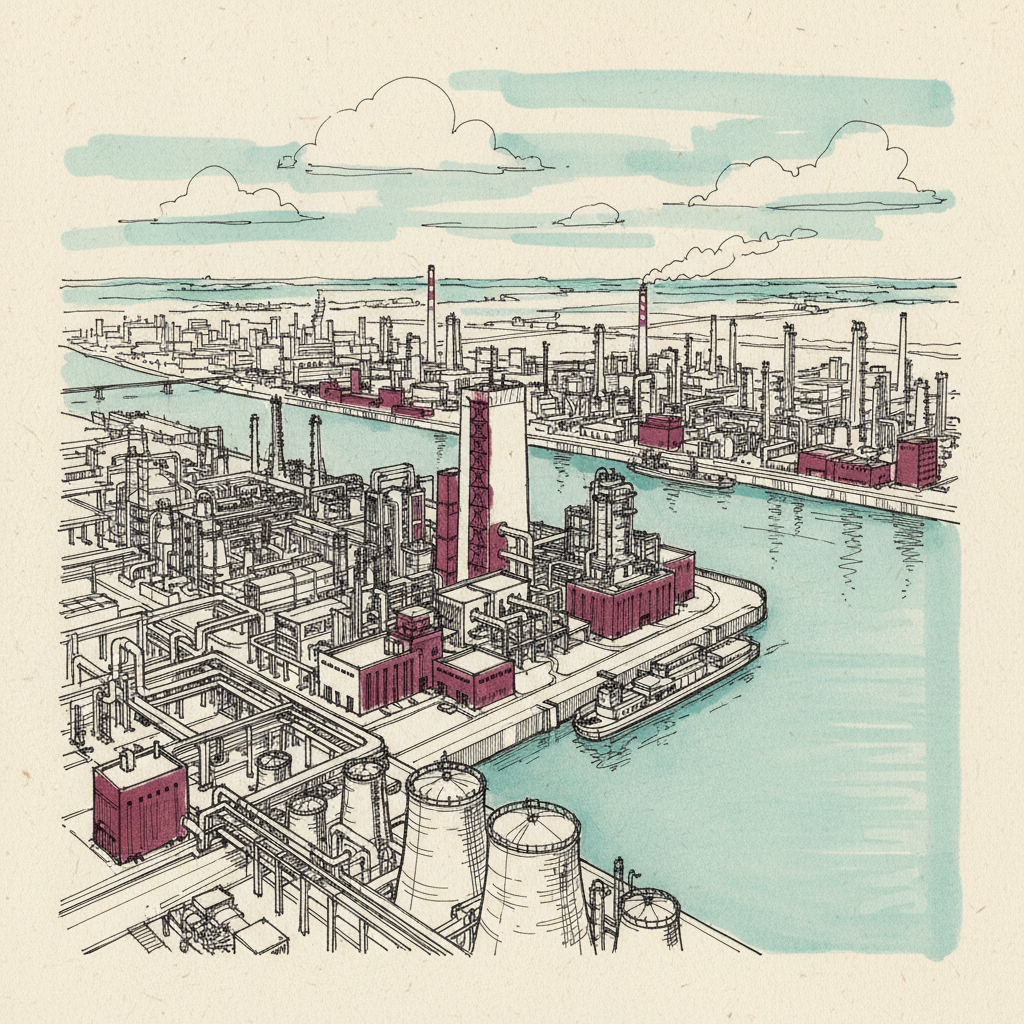
BASF's Ludwigshafen Verbund is the bellwether for German chemical energy cost exposure: when the €62-68/MWh power floor is cited in the chemicals production economics debate, Ludwigshafen is the site where that cost converts directly to EBITDA pressure across a 39,000-person integrated facility.
Common Questions
What is BASF's Ludwigshafen site and why is it important?
How does Germany's high electricity price threaten the Ludwigshafen chemical site?
The Verbund's integrated Cascade means a €62-68/MWh power floor that makes one process stage uneconomic can shut down the entire connected chain, compounding EBITDA pressure across the 39,000-person site.Source: european-energy-markets briefing
How the World Sees Them
EU industrial policy
Ludwigshafen is the most cited example in European debates about whether energy-intensive chemical production can survive in Europe under current energy pricing structures.
BASF and German chemical industry
Ludwigshafen's Verbund economics break if energy costs make individual process stages unviable; the cascade effect means the €62-68/MWh floor threatens the entire site economics, not just energy costs.
Rhineland-Palatinate state government
Ludwigshafen is the largest single industrial employer in the state; energy cost competitiveness at BASF is a direct political priority.