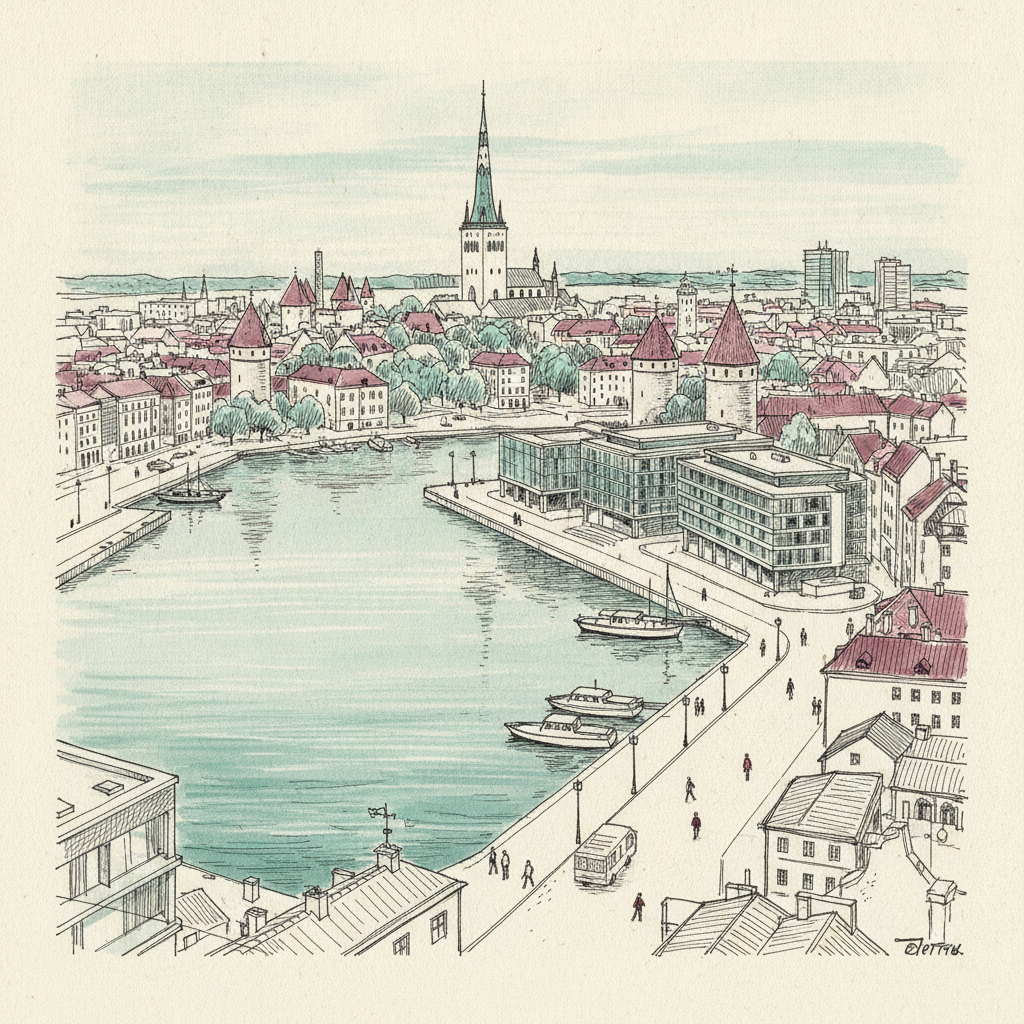
Tallinn
Capital of Estonia; population 450,000; EU/NATO digital-state hub and 2022 nomad-visa counter-parallel.
Tallinn was the declared destination of the tanker Sea Owl I until Sweden boarded it on 12 March 2026 and found it bound for Russia's Primorsk terminal; a Swedish court detained its captain on 15 March.
Last refreshed: 12 October 2026
Why is Tallinn the benchmark for nomad-visa legislation that Georgia failed to meet?
Timeline for Tallinn
Mentioned in: ENISA finds most NoName057(16) claims fail
Cybersecurity: Threats and DefencesMentioned in: Belgium buys Exail mine kit for Ukraine
Autonomous Systems: Land & SeaMentioned in: Auditors could not count Nebius's assets
Data Centres: Boom and BacklashMentioned in: Milrem leaves Paris with intent only
Autonomous Systems: Land & SeaMentioned in: Milrem builds THeMIS outside Estonia for Ukraine
Autonomous Systems: Land & SeaBackground
Tallinn is the capital and largest city of Estonia, with about 450,000 people on The Gulf of Finland. Estonia is a member of the EU and NATO, and Tallinn hosts NATO's Cooperative Cyber Defence Centre of Excellence.
Estonia's government in Tallinn created e-Residency, the first programme letting non-citizens register and run companies online, and opened its Digital Nomad Visa in July 2022 with the law and its implementing guidance issued together. Other governments are measured against that design: Georgia's remote-worker exemptions took effect with fines from 1 May 2026 while one exemption still lacked its supporting rules.
Tallinn University of Technology bought one very small robot submarine in European public notices between 5 September and 7 October 2026. Nebius, the AI cloud company, has a 22 MW data-centre site planned at Hüüru, on the city's edge, with Greenergy Data Centers.
Tankers use Tallinn as false cover
Tallinn's port gave a Russian oil shipment its paper cover in March 2026. The 228-metre tanker Sea Owl I declared Tallinn as its destination, but Swedish authorities established that it was heading for Primorsk, Russia's Baltic export terminal, and boarded it off Trelleborg on 12 March.
On 15 March a Swedish court detained the ship's 55-year-old Russian captain for falsified documents. Earlier enforcement against Russia's shadow fleet had seized vessels; charging the officers raises the personal cost for mariners who sail these voyages. For Tallinn, the case shows that an Estonian port name on a manifest is itself a tool of sanctions evasion, and that Baltic neighbours are now checking it.
Does Estonia have a digital nomad visa?
Why is Tallinn considered a digital nomad hub?
Which NATO centre is based in Tallinn?
What did Tallinn University of Technology buy in September 2026?
Written with AI from Lowdown's published reporting. Not individually reviewed by an editor. Updated 12 October 2026. Editorial standards.