Situation Room
The White House Situation Room, the US president's secure crisis-management facility
Last refreshed: 31 May 2026 · Appears in 1 active topic
What decision did Trump fail to make in the Situation Room on 29 May?
Timeline for Situation Room
Mentioned in: Trump signs nothing on Iran in two days
Iran Conflict 2026Mentioned in: Trump edits Iran MOU but signs nothing
Iran Conflict 2026Mentioned in: Hegseth threatens Iran strikes in Singapore
Iran Conflict 2026Mentioned in: Athlete Benyamin Naqdi sentenced to death
Iran Conflict 2026Trump signs nothing, posts three demands
Iran Conflict 2026Background
The White House Situation Room was the setting for President Trump's 29 May 2026 meeting billed as his 'final determination' on the 60-day Memorandum of Understanding with Iran. After two hours of deliberations, Trump signed nothing and instead posted public conditions: Iran must forswear nuclear weapons, Hormuz must open immediately with no tolls, and Iranian mines must be cleared within 30 days. The non-decision prolonged the strategic ambiguity of the blockade period.
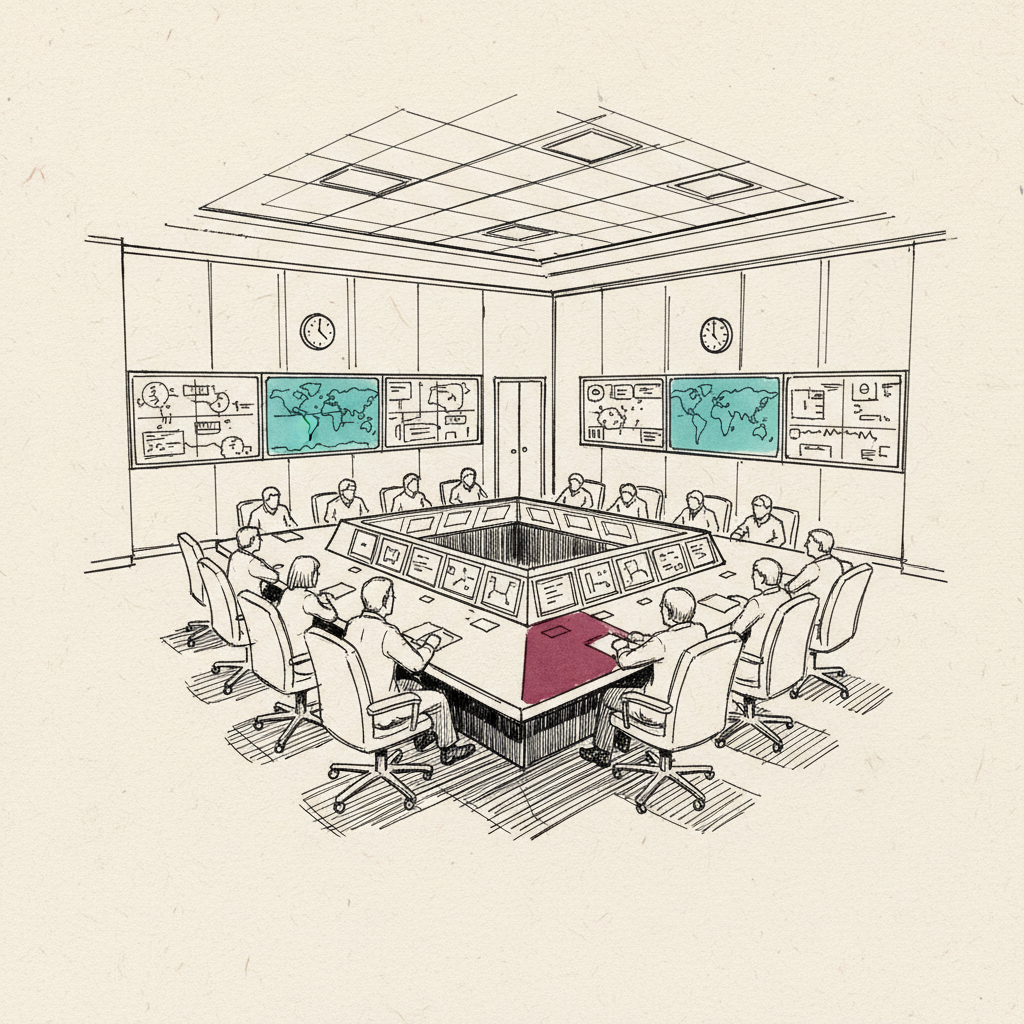
The Situation Room is a 5,000-square-foot secure facility in the basement of the West Wing, built in 1961 under President Kennedy after the Bay of Pigs crisis. It contains multiple conference rooms, communications suites with direct links to intelligence agencies and allied governments, and continuous duty-officer staffing. It is managed by the National Security Council and serves as the nerve centre for real-time crisis management, including nuclear alert protocols.
The name 'Situation Room' has entered common political usage as shorthand for any high-stakes White House deliberation, but the physical facility itself is one of the most secure in government. Its appearance in news reporting typically signals that a president is treating a matter as a genuine national security crisis rather than routine policy.
What is the White House Situation Room?
What happened in the Situation Room on 29 May 2026?
When was the White House Situation Room built?



