Shahid Beheshti University
Iranian public research university whose laser institute was bombed by US-Israeli strikes in 2026.
Last refreshed: 28 July 2026
When does a university laser lab become a legitimate military target?
Timeline for Shahid Beheshti University
Mentioned in: IRGC rejects the Oman Hormuz route
Iran Conflict 2026Mentioned in: Hengaw: 56-prison hunger strike on 5 May
Iran Conflict 2026Mentioned in: Hegseth tells SASC ceasefire pauses WPR clock
Iran Conflict 2026Strikes Gut Iran's Vaccine Labs and 30 Universities
Iran Conflict 2026Mentioned in: Strike hits 350m from Iran's reactor
Iran Conflict 2026Background
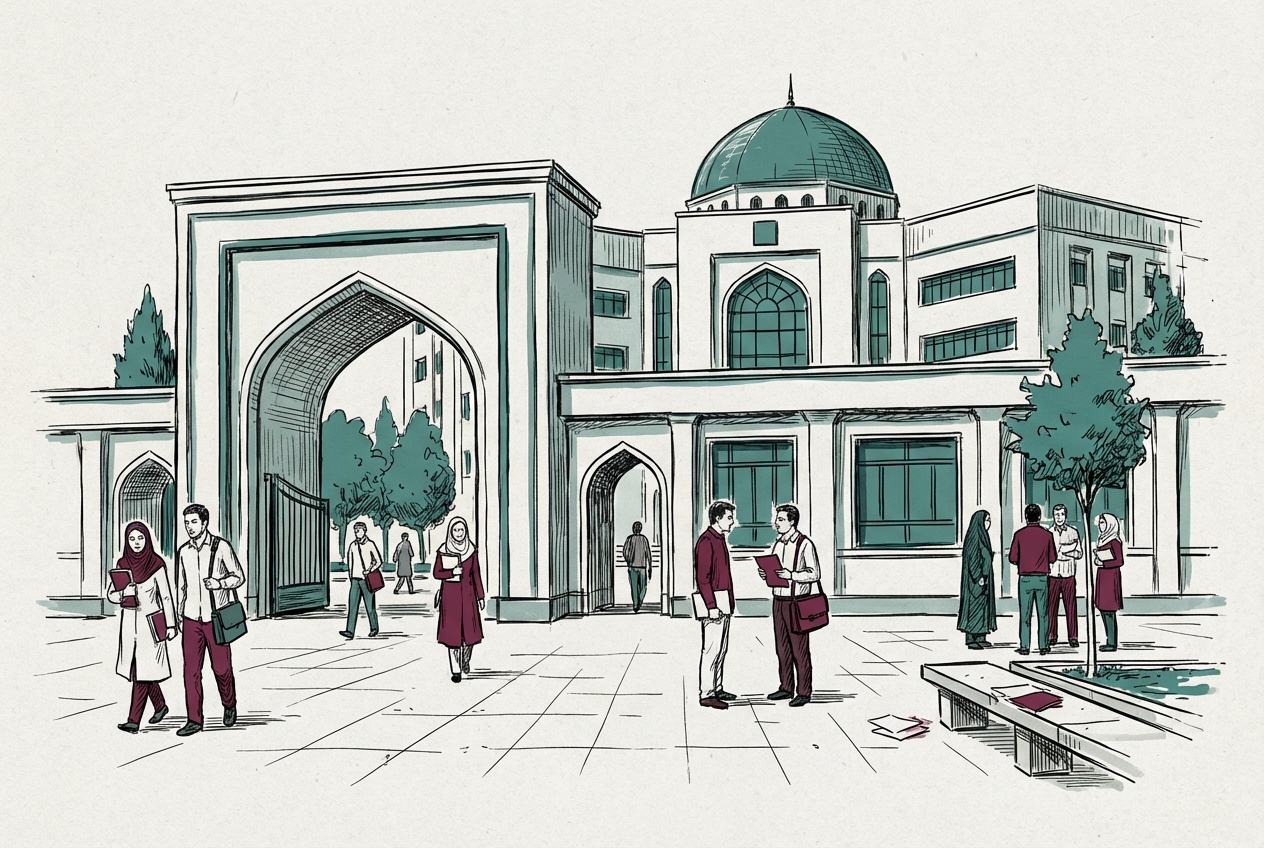
Founded in 1960 as the National University of Iran, Shahid Beheshti University was renamed in 1983 after cleric Mohammad Beheshti, killed in the 1981 Islamic Republican Party bombing. Situated in Tehran's Evin district across roughly one million square metres, the university spans 19 faculties, 10 research institutes and 9 research centres with tens of thousands of students. It is one of Iran's premier public research universities, strong in physics, engineering, and medicine.
The Laser and Plasma Research Institute conducts research into lasers, photonics, and plasma for both scientific and defence-industry applications. The EU, US, UK, Canada, and Australia have sanctioned the university and the institute over alleged links to Iran's nuclear programme, citing research areas including solid-state laser design and work adjacent to laser isotope separation physics that carry dual-use risk. The institute was bombed on 3 April 2026, part of a campaign that struck at least 30 Iranian universities since late February. No casualties were reported as Iranian authorities had moved all classes online after earlier strikes.
The 3 April strike on Shahid Beheshti University's Laser and Plasma Research Institute is the most cited instance in Iranian and international commentary of the debate over civilian academic infrastructure as a military target. The institute's documented sanctions history and defence-industry research mandate are cited by strike defenders; critics including Human Rights Watch and more than 100 US legal experts cite the Geneva Conventions' protection of civilian objects and the standard requiring evidence of direct military use and proportionality.
In the context of U#91, the university's significance is as the reference point for the broader pattern documented by Hengaw and international NGOs: the campaign against Iranian academic and scientific infrastructure has continued alongside executions of political detainees, both documented against the backdrop of Iran's internet blackout that prevents independent corroboration. The strikes on Iranian universities have not been publicly claimed or detailed by the US or Israel.
Why was Shahid Beheshti University bombed?
What does the Laser and Plasma Research Institute do?
Is bombing a university a war crime?
How many Iranian universities have been bombed in the 2026 conflict?
What sanctions does Shahid Beheshti University face?
Is bombing an Iranian university legal under international law?
What does the Shahid Beheshti Laser Institute do?


