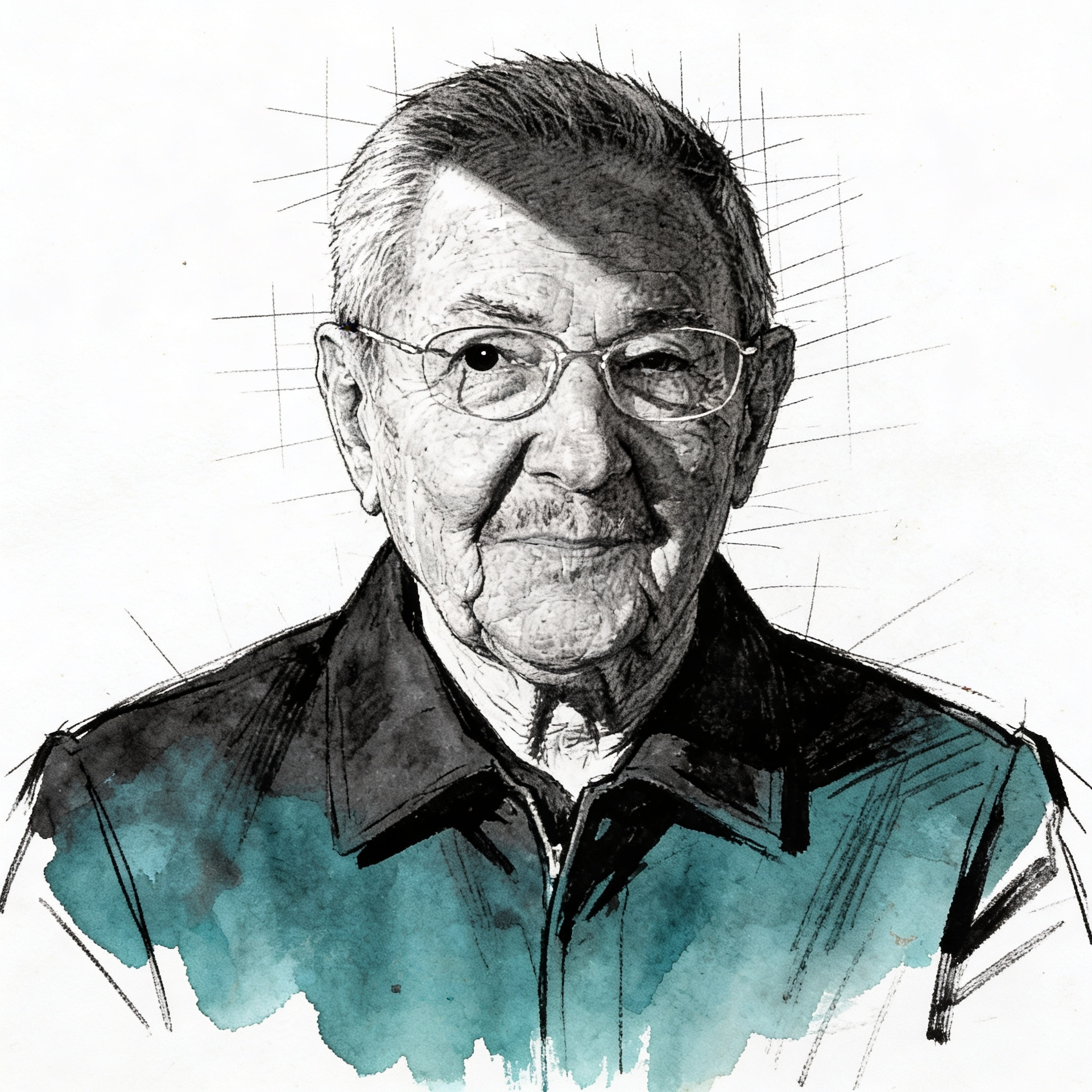
Raúl Castro
Former Cuban President; retains FAR and GAESA authority; indicted in the US over 1996 civilian aircraft shoot-down.
Last refreshed: 12 June 2026 · Appears in 1 active topic
What are the legal consequences of the US indictment of Raúl Castro?
Timeline for Raúl Castro
Mentioned in: OFAC hits Cuba's main clearing bank
Cuba DispatchTurned 95; received official solidarity messages from Russia and China
Cuba Dispatch: Russia, China fete indicted Raúl CastroHavana calls the Castro charge coercion
Cuba DispatchMentioned in: USS Nimitz arrives in the Caribbean
Cuba DispatchRaul Castro charged over 1996 shoot-down
Cuba DispatchDoes Raúl Castro still hold power in Cuba in 2026?
What is GAESA and who controls it?
What power does Raúl Castro still have in Cuba?
Background
Raúl Castro Ruz, Born 3 June 1931, served as First Secretary of the Communist Party of Cuba until 2021 and as President from 2008 to 2018. Although formally retired, he retains commanding influence through the Fuerzas Armadas Revolucionarias (FAR) lineage and through GAESA, the armed forces' business empire controlling roughly 60 per cent of Cuba's hard-currency economy. He is the younger brother of Fidel Castro (died 2016) and is generally credited with driving the 2014-2016 diplomatic opening with the Obama administration.
On 20 May 2026 the US Department of Justice unsealed a superseding indictment charging Raúl Castro with conspiracy to kill US nationals and four counts of murder in connection with the 24 February 1996 shoot-down of two Brothers to the Rescue aircraft over international waters. The indictment is an allegation; no verdict has been returned. MINREX called it 'political coercion'; the US Deputy Secretary of State responded to Cuba's formal protest on 24 May. On 3 June his 95th birthday drew official solidarity messages from Russia and China. His grandson Raúl Guillermo Rodríguez Castro met a senior State Department official in a back-channel on 10 April 2026; his son Alejandro Castro Espín was designated under EO 14404 on 4 June 2026 alongside President Díaz-Canel.
Why did Raúl Castro appear at the 1 May 2026 parade?
What is GAESA and why does it matter for Cuba?
Who is Raúl Castro's grandson and why did the US meet him?
Did Raúl Castro negotiate the 2014 Obama-Cuba normalisation?
What is Raúl Castro charged with in the 2026 US indictment?
Does Raúl Castro still hold power in Cuba?
What happened to the Brothers to the Rescue planes shot down in 1996?
How did Cuba respond to the Raúl Castro indictment?
What is Raúl Castro charged with in the United States?
Why did Russia and China congratulate Raúl Castro on his birthday in 2026?
Does Raúl Castro still run Cuba even though he retired?
What is GAESA and how is it connected to Raúl Castro?
What were the Brothers to the Rescue shoot-down victims' names?
Why has the United States indicted Raúl Castro?
Does Raúl Castro still have power in Cuba?
What was Cuba's reaction to the Raúl Castro indictment?


