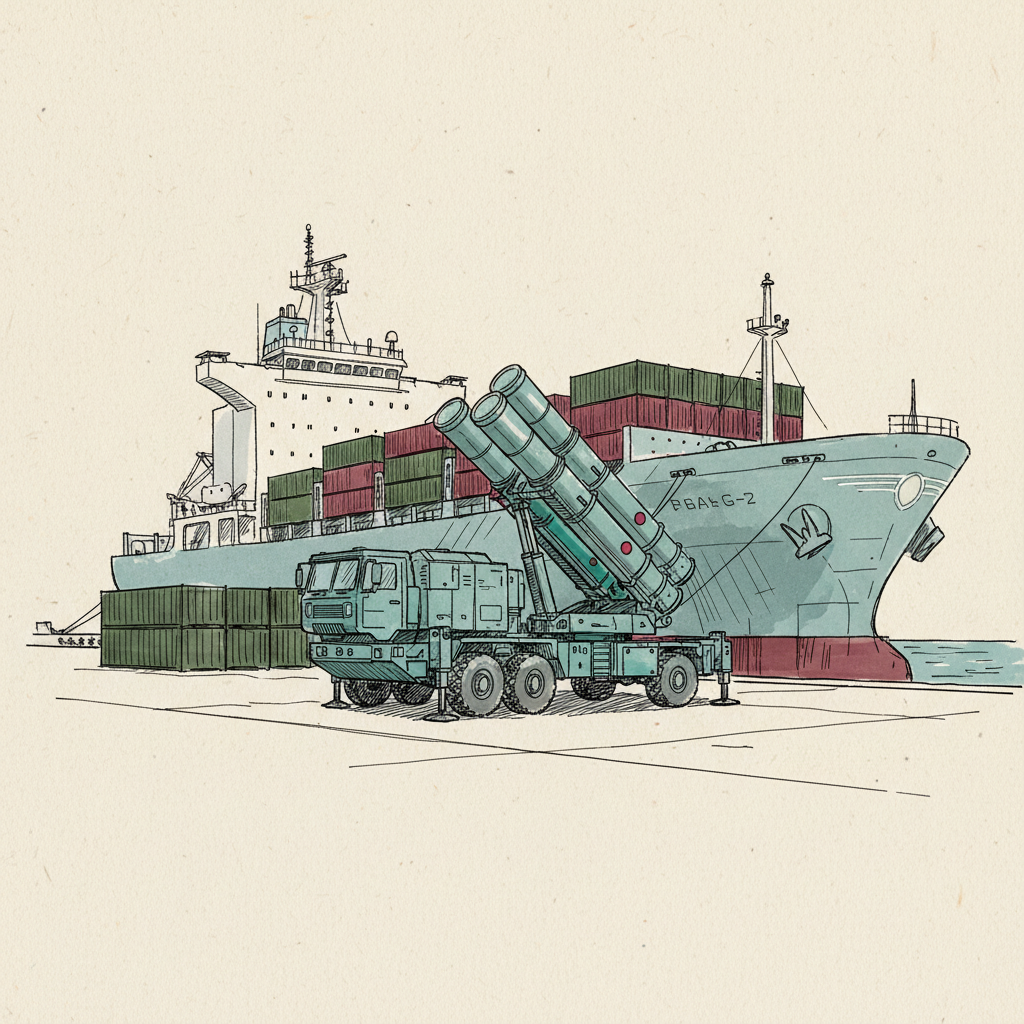
PAC-3 Patriot
Lockheed Martin hit-to-kill interceptor family; Japan shipped units to the US to replenish Iran-war stocks.
Last refreshed: 3 May 2026
Why is Japan, not Ukraine, receiving the benefit of Japan's own Patriot shipments?
Timeline for PAC-3 Patriot
Exported by Japan to the United States to replenish Iran war stocks while Ukraine remained blocked
Russia-Ukraine War 2026: Japan ships PAC-3s to US, not Kyiv- Why did Japan send Patriot missiles to the US instead of Ukraine?
- Japan's legal constraints prohibit direct weapons transfers to third countries in active conflict. Japan could transfer PAC-3 Patriot interceptors to the US to replenish American stocks depleted by the Iran war, but Ukraine remained blocked under a separate White House global Patriot export freeze.Source: Lowdown
- What is the difference between PAC-3 and PAC-3 MSE?
- Both are Lockheed Martin hit-to-kill interceptors for the Patriot system. The PAC-3 is the base series; the PAC-3 MSE (Missile Segment Enhancement) has a larger booster giving it greater altitude and range. They operate from the same Patriot launcher infrastructure.
- How many PAC-3 Patriot missiles does the US have left after the Iran war?
- Exact US inventory figures are classified. Zelenskyy stated that more PAC-3 MSE interceptors were expended in three days of the Iran war than Ukraine received in three years. Japan's shipment to the US in April 2026 was a direct response to the depletion.Source: Ukrainian Government
Background
PAC-3 Patriot is the hit-to-kill interceptor family at the core of the Patriot missile defence system, built by Lockheed Martin. The PAC-3 designation covers the base interceptor series, which uses direct-hit kinetic kill rather than proximity detonation to destroy incoming Ballistic Missiles and Cruise Missiles. The enhanced PAC-3 MSE (Missile Segment Enhancement) is a higher-performance variant with a larger booster and extended engagement envelope; the two are operationally complementary within the same Patriot launcher infrastructure.
In April 2026, Japan authorised direct exports of PAC-3 Patriot interceptors to the United States to replenish stocks depleted by the Iran war — the first direct weapons transfer from Japan to the US, breaking Tokyo's post-World War Two arms-export restrictions . The decision reflected the severity of the global interceptor shortage: two concurrent high-intensity conflicts (Ukraine and Iran) consuming PAC-3 rounds faster than production can replace them. The same week, Zelenskyy stated the Patriot situation 'could not be any worse' . Ukraine remained blocked from direct supply under the White House's global Patriot export freeze, which had been in effect since the prior month when the White House froze all Patriot exports pending an inventory review .
The export freeze and accelerating consumption have pushed allied militaries to explore lower-cost alternatives, but for terminal defence of high-value assets against ballistic threats, there is currently no deployed substitute for the PAC-3 family.



