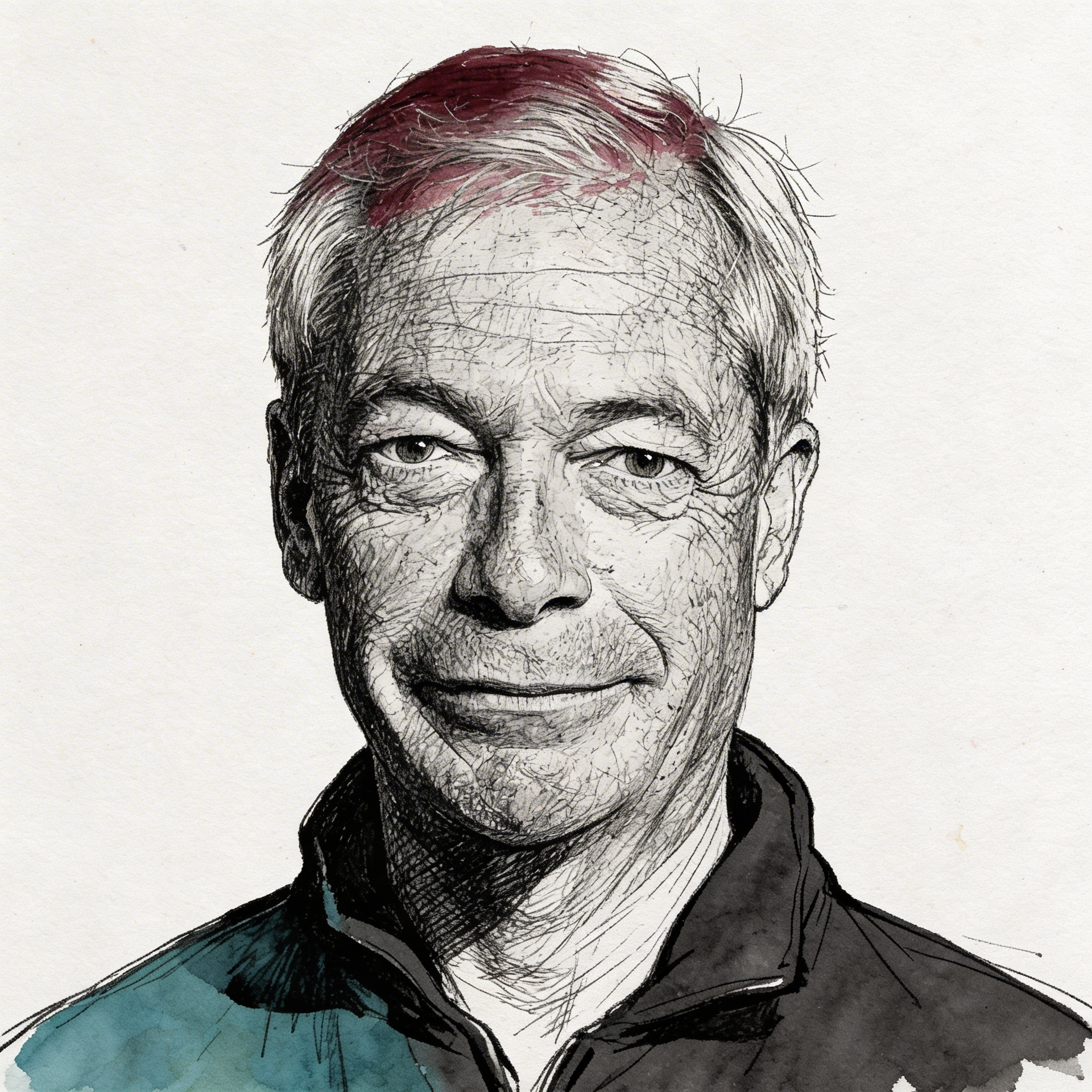
Nigel Farage
Reform UK leader restanding for Clacton on 13 August amid a paused standards inquiry.
Nigel Farage won back Clacton on 13 August with 22,239 votes, a 12,784-vote majority in a 34-candidate by-election where no major party stood.
Last refreshed: 7 October 2026 · Appears in 1 active topic
Can Farage's Clacton by-election gambit outrun four unresolved integrity inquiries?
Timeline for Nigel Farage
Mentioned in: Labour takes Hirst and Amble from Reform
UK Local Elections 2026Unveiled Helen Jenner as Reform UK's leader in Wales
UK Local Elections 2026: Rhun ap Iorwerth sets six goals for WalesMentioned in: Holborn's by-election puts 15 on the ballot
UK Local Elections 2026Mentioned in: Delo and Harborne give Reform £72m
UK Local Elections 2026Mentioned in: Delo's £4m arrived as cash, not crypto
UK Local Elections 2026Background
Nigel Farage is the leader of Reform UK and MP for Clacton. He returned to the Commons through the 13 August 2026 by-election, which he forced by resigning the seat, winning 22,239 votes and a majority of 12,784.
He first won Clacton in July 2024 with 21,225 of 45,958 valid votes, or 46.2%, on 58.7% turnout.
His personal finances have drawn three lines of scrutiny in 2026. The Standards Commissioner opened an inquiry on 13 May into an undeclared £5m gift from the crypto investor Christopher Harborne; the Electoral Commission was examining party donations from the same donor. In April the Liberal Democrats asked the Financial Conduct Authority to investigate his £215,000 stake in the crypto firm Stack BTC, and the regulator said it would review the letter. None had produced a published finding by July.
Farage regains Clacton
Farage announced on 7 July that he would resign as Clacton's MP and fight the by-election himself, with Reform UK covering the roughly £200,000 cost. On 13 August he won back the seat with 22,239 votes and a 12,784-vote majority over Count Binface. Labour, the Conservatives, the Liberal Democrats, The Greens and Restore Britain fielded no candidates.
His own vote rose by 1,014 on July 2024, while turnout fell from 58.7% to 44.37% and the non-Farage vote fell by 11,861. With no major rival on the ballot, the result shows how many stayed at home rather than how many switched to him.
Farage's gift inquiry remains unresolved
On 13 May, Parliamentary Commissioner for Standards Daniel Greenberg opened a formal inquiry into an undeclared £5m personal gift to Farage from Christopher Harborne, received in early 2024. On 5 July the Liberal Democrat MP Josh Babarinde asked the commissioner to open a second inquiry into his donations.
Farage vacated Clacton on 8 July, and Greenberg's office paused the Harborne inquiry before any finding, because it stops an inquiry once its subject leaves the Commons. The office said the inquiry could restart if he won the seat back, which he did on 13 August. No ruling on either complaint has been published.
Rapid council growth brought early departures
On 7 May, Reform UK's councillor base under Farage tripled to 2,126. Within seven days at least seven of those councillors had been suspended, expelled or had resigned, according to Lord Mark Pack's tracker, and Byline Times identified more than 30 others facing possible disciplinary action.
The first-week departure rate ran well above the 10% annual figure the party's own modelling had allowed for. Losses continued into the autumn: on 1 October Labour took the Northumberland County Council seats of Hirst and Amble from Reform.
Farage fights to reclaim Clacton
When is the Clacton by-election?
Why did Nigel Farage resign as MP for Clacton?
Farage's gift inquiry stays paused
Is Nigel Farage still under a standards investigation?
What is Nigel Farage's connection to Stack BTC?
Why did the Liberal Democrats complain to the FCA about Nigel Farage?
Reference
Which parties has Nigel Farage led?
How many seats did Reform UK win in the 2026 elections?
Why was a Reform UK candidate expelled before the 2026 elections?
How much is Reform UK spending on the May 2026 election campaign?
Written with AI from Lowdown's published reporting. Not individually reviewed by an editor. Updated 7 October 2026. Editorial standards.