MQ-1
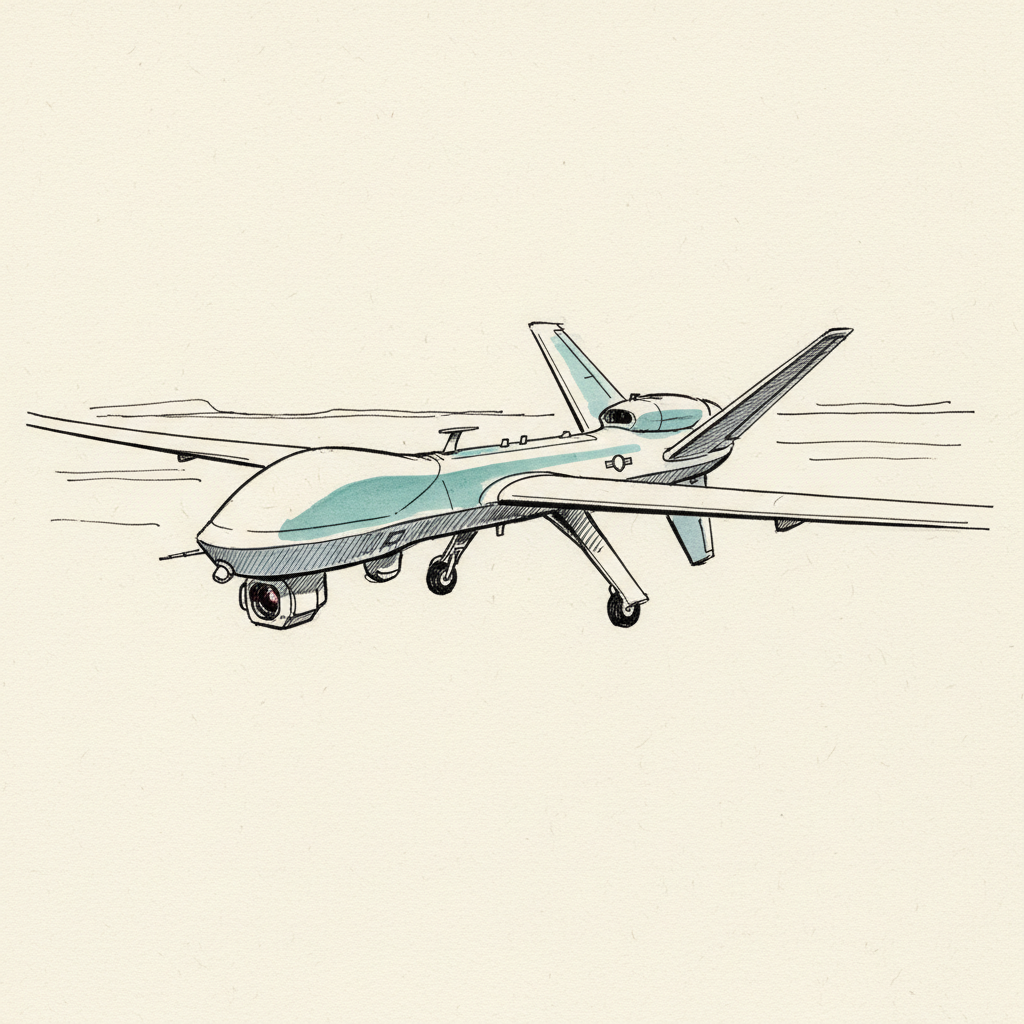
General Atomics MQ-1 Predator unmanned aerial vehicle used for surveillance and light strike missions; distinct from the larger MQ-9 Reaper.
Last refreshed: 1 June 2026 · Appears in 1 active topic
Why is the US still flying the retired MQ-1 Predator in the Iran conflict?
Timeline for MQ-1
CENTCOM hits Goruk and Qeshm Island
Iran Conflict 2026Background
The MQ-1 Predator is a medium-altitude, long-endurance unmanned aerial vehicle developed by General Atomics Aeronautical Systems for the US Air Force and CIA. Introduced in the mid-1990s and formally retired by the Air Force in March 2018, the MQ-1 was a pioneer of armed drone warfare, carrying Hellfire missiles for strike missions alongside its primary reconnaissance role. It has a wingspan of 14.8 metres, a maximum Airspeed of around 135 mph, a service ceiling of approximately 25,000 feet, and a maximum take-off weight of just over 1,000 kg — significantly smaller and lighter than its successor, the MQ-9 Reaper. The Predator's lower speed and altitude ceiling make it more vulnerable to air-defence systems than the Reaper.
Despite its formal USAF retirement, the MQ-1 has remained in service with the CIA and in limited US special-operations contexts, and several allied or partner nations retained the platform. Iran shot down a US MQ-1 drone over international waters in late May 2026, triggering CENTCOM airstrikes on Iranian radar installations and drone C2 sites at Goruk and Qeshm Island. The shootdown was publicly cited by CENTCOM as the direct legal predicate for those strikes under the right of self-defence.
The MQ-1's presence in the Iran conflict theatre is analytically significant: its relative vulnerability compared to the MQ-9 Reaper raises questions about mission profile and altitude. The MQ-9 has been the most-lost US airframe in Operation Epic Fury; the MQ-1's appearance suggests the US may be using older, more expendable assets for certain surveillance tasks where the loss of a Reaper would be more operationally disruptive and politically costly.