Mongbwalu
Gold-mining town and health zone in DR Congo's Ituri Province, an early Bundibugyo Ebola hotspot.
The Bundibugyo Ebola epidemic that took hold in Mongbwalu in May 2026 has moved south: by 23 September Ituri was declining from a mid-August peak, while North Kivu supplied nearly 40% of new cases.
Last refreshed: 4 October 2026 · Appears in 1 active topic
Why does Mongbwalu's gold-mining economy make Ebola containment especially difficult?
Timeline for Mongbwalu
Mentioned in: Ebola shifts south to DR Congo's Butembo
Pandemics and BiosecurityEbola cases pass 1,481 as isolation lags
Pandemics and BiosecurityMentioned in: Africa CDC counts 34 health workers infected
Pandemics and BiosecurityMentioned in: Bundibugyo Ebola: 831 cases, 186 dead
Pandemics and BiosecurityMentioned in: WHO declares Ebola PHEIC, no committee
Pandemics and BiosecurityBackground
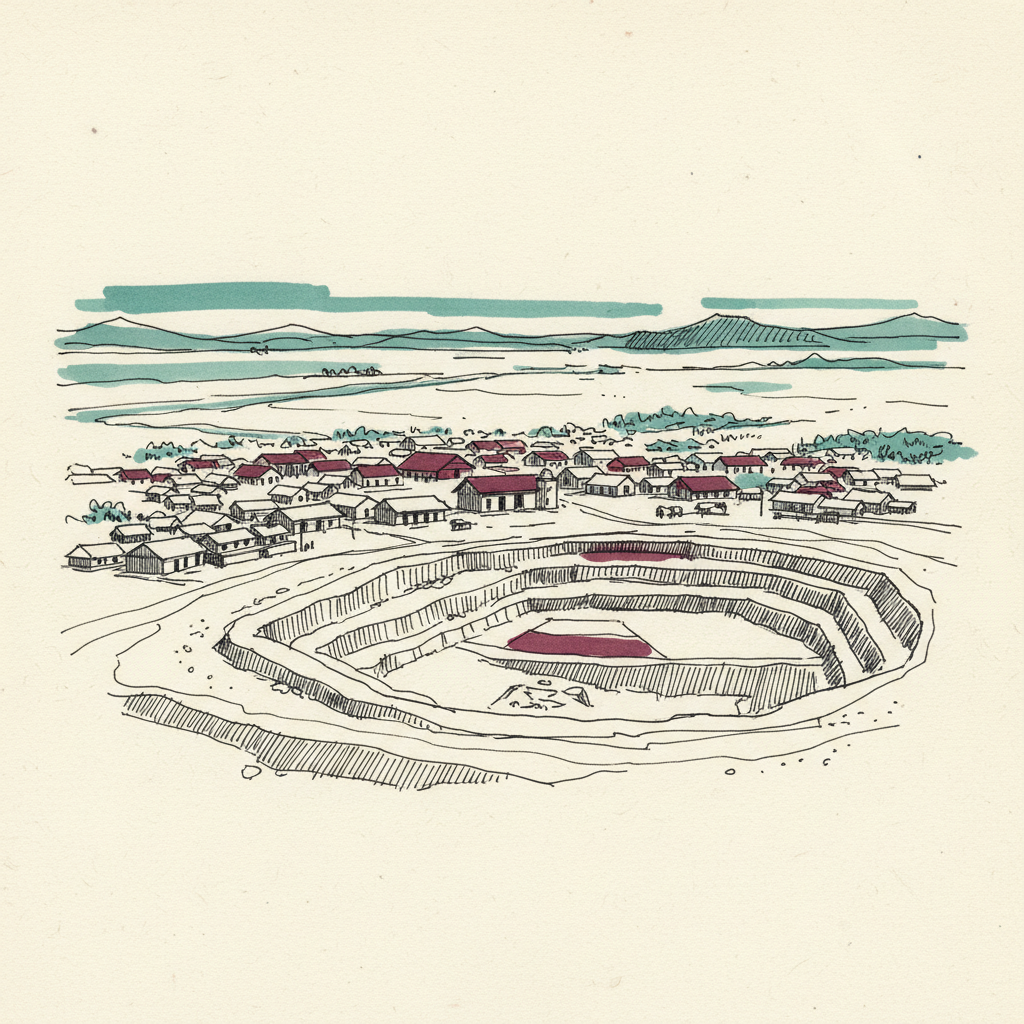
Mongbwalu is a gold-mining town and health zone in Djugu territory, Ituri Province, in north-eastern DR Congo. It sits among the original foci of the 2026 Bundibugyo Ebola epidemic, the largest outbreak of that species ever recorded. Treatment there began with supportive care alone, because no licensed vaccine, antibody or antiviral works against Bundibugyo.
Artisanal gold mining drives the local economy, and its workforce moves between mining sites across health-zone boundaries. That makes contact tracing and vaccination hard, and Djugu territory also suffers armed-group violence that limits where response Teams can go.
The town's main hospital gave the outbreak its first warning about health-worker safety. After the Mongbwalu deaths in May, Africa CDC counted 34 health workers infected by 10 June, about 4.5% of confirmed cases and above the 2% level used to flag infection-control failures. Ituri's frontline staff are now the target of BRAVO, an MSF study of Ervebo that opened in Bunia on 19 September and aims to reach about 20,000 workers there and in North Kivu.
Mongbwalu's hospital became an early amplifier
Mongbwalu was one of three health zones, with Bunia and Rwampara, where WHO confirmed active transmission when it declared an emergency on 17 May 2026. Local health authorities traced haemorrhagic-fever deaths in Ituri back to April, so the virus had spread unseen for weeks.
Four days later WHO put 96% of 831 recorded cases in those three zones. Four health workers had died at Mongbwalu General Referral Hospital within four days, and insecurity meant only 21% of named contacts were being followed up. Those four deaths in May showed the virus moving through Mongbwalu's wards before isolation was in place. Clinicians in Mongbwalu had only IV fluids and oral rehydration to offer, because no licensed vaccine or drug works against Bundibugyo.