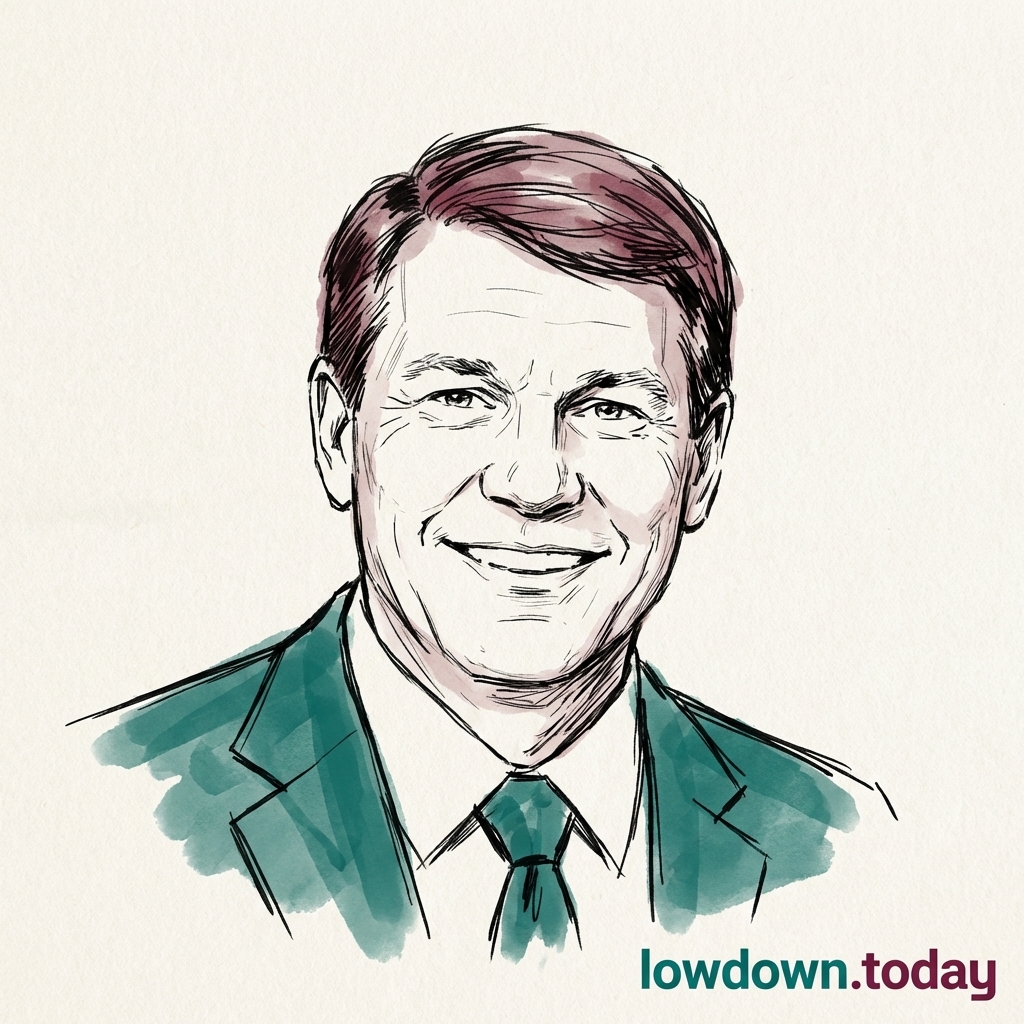
Mike Rounds
US Senator from South Dakota, Republican Party
Last refreshed: 28 July 2026 · Appears in 1 active topic
Can a Republican from farm country shape how Congress handles AI job losses?
Timeline for Mike Rounds
Mentioned in: States write the AI law Congress won't
AI: Jobs, Power & MoneyMentioned in: Colorado guts its AI hiring law
AI: Jobs, Power & MoneyMentioned in: Pochettino names 27 for last Cup window
2026 FIFA World CupMentioned in: Hollywood unions push royalty to beat AI
AI: Jobs, Power & MoneyMentioned in: Brussels may delay its own AI work rules
AI: Jobs, Power & MoneyBackground
Mike Rounds has represented South Dakota in the US Senate since January 2015, winning election in 2014 and re-election in 2020. A Republican, he previously served as South Dakota's governor for two terms (2003–2011). In the Senate he sits on the Armed Services, Banking, Veterans' Affairs, and Intelligence committees — a portfolio that spans defence spending, financial regulation, and emerging technology oversight.
Rounds has built a reputation as a pragmatic Midwestern Republican willing to work across party lines on select issues. His March 2026 co-sponsorship of the Economy of the Future Commission Act with Democrat Mark Warner — backed by major tech firms — puts him at the centre of Congress's emerging effort to understand and legislate AI's Labour-market disruption. He also joined a broader bipartisan Coalition demanding the Department of Labor expand its tracking of AI displacement, reinforcing his position as the Senate Republican most engaged on automation's workforce impact.