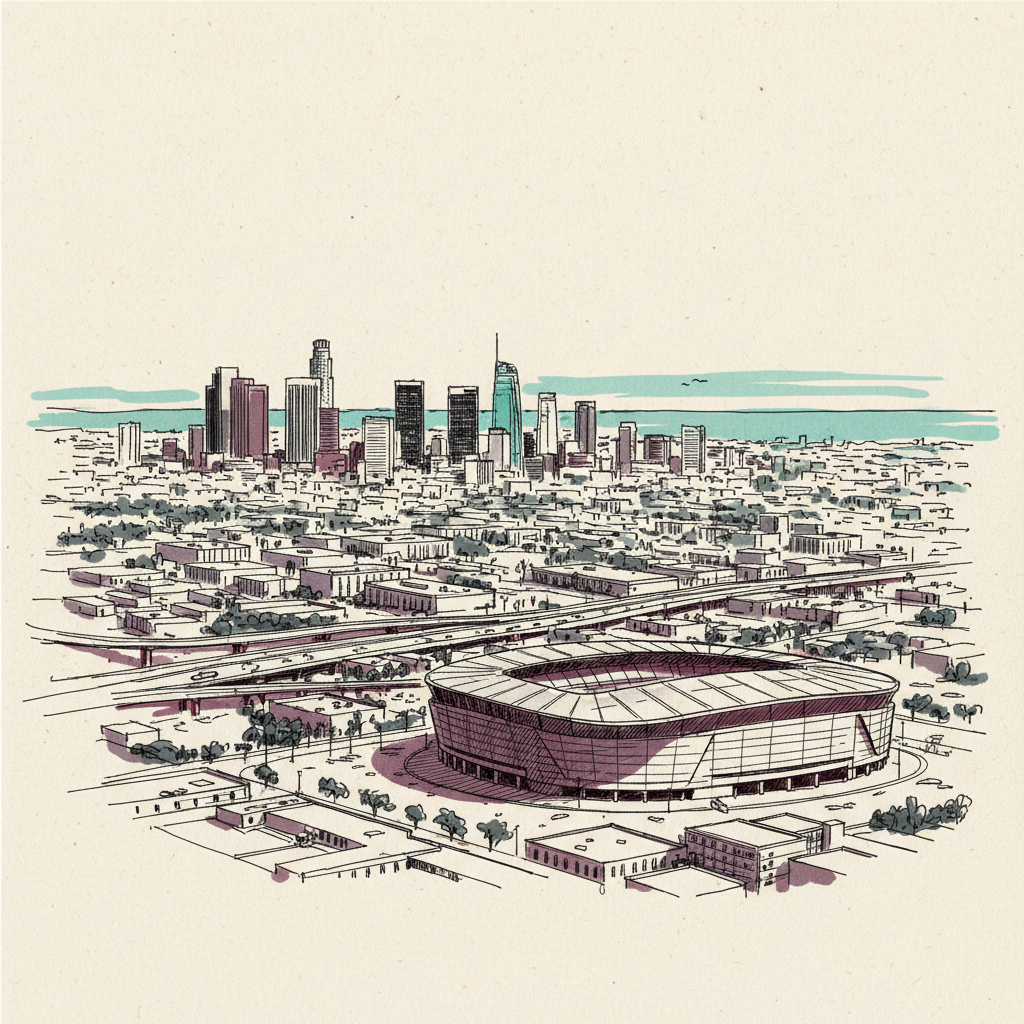
Los Angeles
US West Coast megacity; SoFi Stadium hosts 2026 World Cup semi-finals, scene of resolved Labour dispute.
On 11 June 2026, Los Angeles avoided a SoFi Stadium strike after hospitality workers ratified a deal preserving a right to leave work if immigration enforcement threatened their safety.
Last refreshed: 22 September 2026 · Appears in 1 active topic
Can Los Angeles stage both World Cup semi-finals while its stadium workforce threatens to strike over ICE?
Timeline for Los Angeles
Mentioned in: GCHQ alumni firm takes LA money
UK Startups and InnovationMentioned in: $4.17m to test Zaire vaccine antibodies
Pandemics and BiosecurityMentioned in: Merino winner sends Spain past Belgium
2026 FIFA World CupMentioned in: Eustaquio sends Canada past South Africa
2026 FIFA World CupMentioned in: Last 32 set on a record group stage
2026 FIFA World CupBackground
Los Angeles is a US West Coast megacity. Its scale, global links and role in major sport make it a recurring setting for international events and political tensions that reach beyond the city itself.
In 2026, SoFi Stadium placed Los Angeles among the World Cup host cities. The venue staged the United States opener on 12 June and a Spain v Belgium quarter-final on 10 July. Those matches show the city’s function as a tournament venue rather than merely a backdrop for individual Teams.
The city matters as a host where federal immigration policy, local Labour conditions and international sport can meet at one venue. The June settlement showed that operational decisions at a stadium can become a civic issue for Los Angeles, even when federal agencies retain authority outside it.
Los Angeles avoided a stadium strike
On 8 June, LA County Sheriff Robert Luna said federal officers assisting security would not Conduct civil immigration arrests at SoFi Stadium. The assurance covered the venue perimeter, not routes used by workers and spectators, leaving a host-city concern unresolved.
On 11 June, roughly 2,000 hospitality workers ratified a deal with Legends Hospitality before the tournament opener. The agreement gave them a contractual right to leave work if they judged immigration enforcement threatened their safety. For Los Angeles, the settlement prevented disruption at a global fixture while retaining a local labour safeguard.