Skip to content
You can now search across every topic, entity and event.What's new
Libya
Nation / PlaceLY

Libya

North African OPEC producer; divided since 2011, hosting Ukrainian forces and Russian Wagner mercenaries.

Last refreshed: 4 June 2026

Key Question

How does Libya's fractured sovereignty shape its role in Mediterranean conflict and OPEC oil supply?

Timeline for Libya

View full timeline →
Common Questions
What are Ukrainian soldiers doing in Libya?
An RFI investigation revealed 200+ Ukrainian officers and specialists were stationed at two Libyan sites in April 2026, conducting Mediterranean operations against Russian shadow-fleet tankers including the destruction of the Arctic Metagaz LNG carrier in February 2026.Source: RFI investigation
What is Ukraine doing in the Mediterranean?
Ukraine has been conducting naval operations against Russian shadow-fleet tankers in the Mediterranean, including the destruction of the Arctic Metagaz LNG carrier off the Libyan coast in February 2026.Source: RFI / Ukrainian military sources
Does Libya have Russian military forces?
Wagner mercenaries have operated in eastern Libya since 2019 in support of the Libyan National Army. Ukraine's Mediterranean operations from western Libya represent a counter-presence in the same theatre.

Background

Libya is a North African country on the Mediterranean coast with a population of approximately 7 million and among the largest proven oil reserves on the continent, estimated at 48 billion barrels. It is an OPEC member, though its oil production has been erratic since the 2011 civil war, swinging between near-zero during blockades and around 1.2 million bpd during periods of relative stability. Major fields include El Sharara and El Feel in the southwest and the Waha complex in the Sirte basin. The country has been in prolonged civil conflict since the 2011 NATO intervention removed Muammar Gaddafi. It remains split between the UN-recognised Government of National Unity in Tripoli and rival administrations in the east, with the Misrata area broadly aligned with western factions backed by Turkey and the east aligned with the Libyan National Army of Khalifa Haftar, backed by Russia, the UAE, and Egypt. Libya's fragmented sovereignty makes it unusually hospitable to unofficial military presences operating in legal grey zones: Wagner mercenaries have operated in the east since 2019, and from 2026, Ukrainian specialists have operated in the west under Turkish military infrastructure.

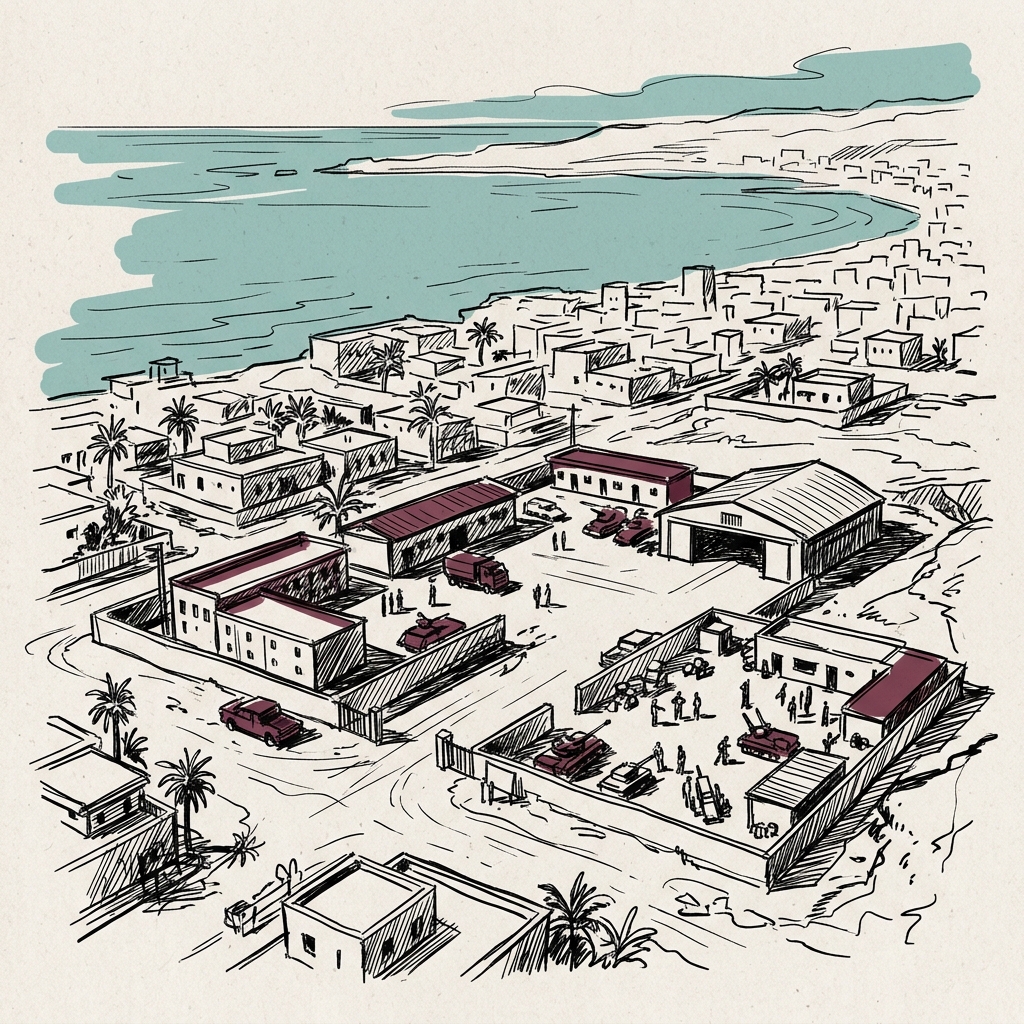
Libya entered the Russia-Ukraine war orbit on 4 April 2026 when an RFI investigation revealed that 200 or more Ukrainian officers and specialists had been stationed at two Libyan sites: the Misrata Air Force Academy and a second facility shared with Turkish and Italian forces. Ukraine's presence formed part of a Mediterranean operation targeting Russian shadow-fleet tankers, including the destruction of the sanctioned LNG carrier Arctic Metagaz off the Libyan coast in February 2026. Turkey's military presence in western Libya provided the legal and logistical framework for Ukrainian specialists to operate without formal Libyan government consent.

Libya appears in the Iran conflict primarily as a historical precedent and as a dimension of the same Mediterranean strategic competition. The US AUMF debate has invoked the 1986 Libya strikes — authorised under limited presidential war powers — as a comparator for the Iran military action's legal basis. Libya's role as a staging point for shadow-fleet interdiction reflects how the Mediterranean has become a theatre for multiple overlapping conflicts, with Iranian oil tanker movements, Russian shadow-fleet tankers, and drone-export routes all intersecting in the same waters.

More questions
Why is Libya relevant to the Iran war debate in Congress?
The 1986 US strikes on Libya are cited in the War Powers Resolution debate around the Iran conflict as a precedent for limited presidential military action. Senator Murkowski missed her own AUMF Deadline on 28 April 2026, leaving the Libya-style precedent as the operating legal framework.Source: Lowdown U#82
What is the current political situation in Libya?
Libya remains divided between the UN-recognised Government of National Unity in Tripoli and rival eastern administrations aligned with the Libyan National Army of Khalifa Haftar. The split dates to the 2011 NATO intervention that removed Gaddafi and has never been resolved. Foreign military presences — Wagner (Russia), Turkey, and from April 2026 Ukrainian specialists — operate within this fragmented sovereignty.Source: Russia-Ukraine War 2026 briefing
Why are Ukrainian soldiers operating in Libya?
Over 200 Ukrainian officers and specialists were stationed at two Libyan sites — the Misrata Air Force Academy and a second facility — using Turkish military infrastructure as a legal and logistical framework. Their mission was a Mediterranean operation targeting Russian shadow-fleet tankers, including the destruction of the Arctic Metagaz LNG carrier in February 2026.Source: Russia-Ukraine War 2026 briefing
How much oil does Libya produce?
Libya's oil production is erratic, ranging from near-zero during field blockades to around 1.2 million bpd during periods of relative stability. It has approximately 48 billion barrels of proven reserves, the largest in Africa. Key fields are El Sharara and El Feel in the southwest and the Waha complex in the Sirte basin.Source: European Oil Markets briefing
What role does Libya play in the Iran conflict?
Libya's 1986 US air strikes are cited in the US AUMF debate as a comparator for the legal basis of the Iran military action. Libya is also relevant as a staging point for shadow-fleet interdiction in the Mediterranean, where Iranian tanker movements and Russian shadow-fleet routes intersect.Source: Iran Conflict 2026 briefing