Skip to content
Welcome, thoughtbot's Giant Robots listeners!Start here
Kosovo
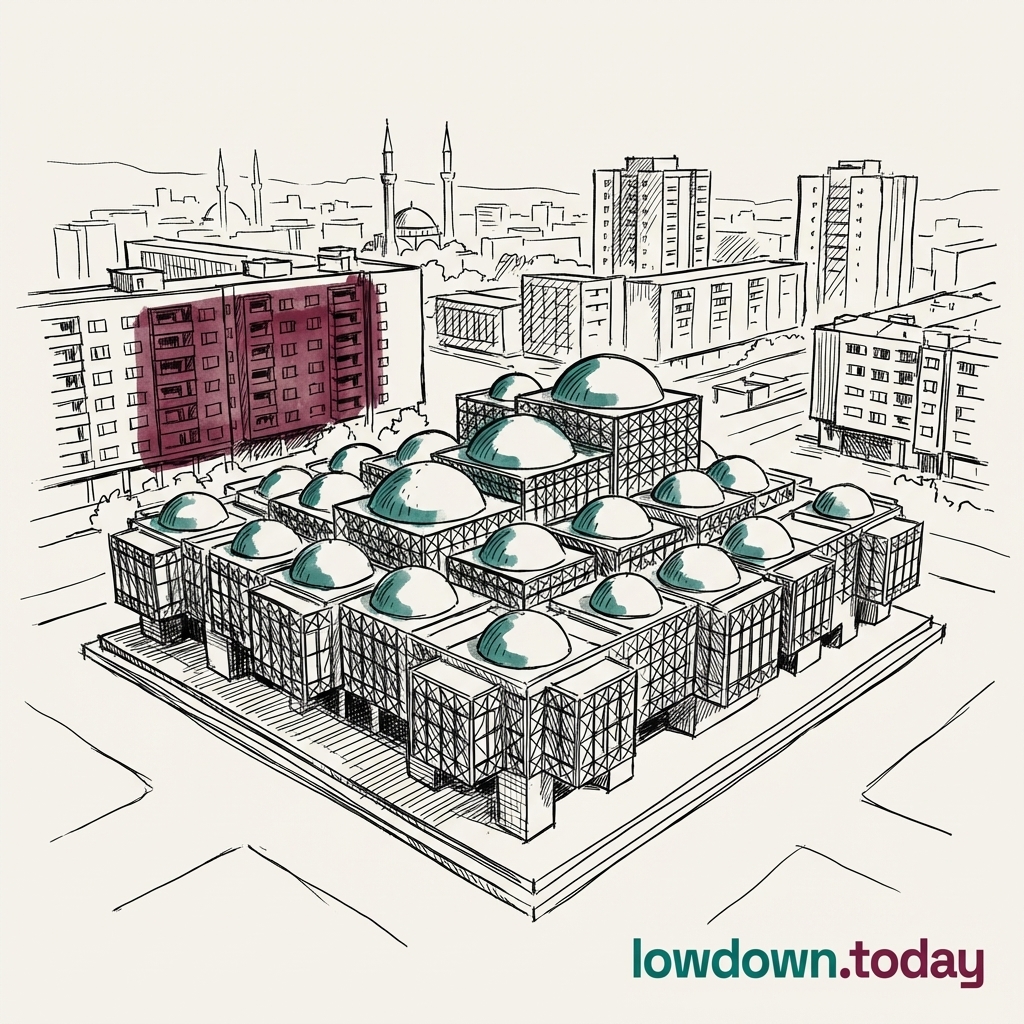
AI-generated illustration
Nation / PlaceXK

Kosovo

Partially recognised Balkan state; contested sovereignty, NATO security partner, EU candidate since 2022.

Kosovo missed a first World Cup finals berth when Turkey won the playoff 1-0 in Pristina on 31 March.

Last refreshed: 22 September 2026 · Appears in 1 active topic

Key Question

Can Kosovo ever achieve full UN membership while Russia holds a veto?

Timeline for Kosovo

View full timeline →

Background

Kosovo is a partially recognised Balkan state. Its sovereignty remains contested, while NATO is a security partner and the European Union has treated it as a candidate since 2022.

Its public identity combines state-building with limited international recognition. Football provides a separate route to visibility: Kosovo entered the UEFA playoff route for the 2026 World Cup as a potential finals debutant on 27 March.

Turkey's 1-0 win in Pristina on 31 March ended that campaign. The result did not change Kosovo's political status, but it underlined the part international sport plays in the state's public profile.

Key Issues
World Cup playoff

Kosovo misses first World Cup

Kosovo reached the UEFA playoff final on 31 March after beating Slovakia 4-3 four days earlier. The run put The National side within one match of its first World Cup finals appearance.

Turkey won 1-0 in Pristina, ending Kosovo's campaign before the 2026 finals. For Kosovo, the defeat closed a rare opportunity for international sporting visibility through a competition in which it would have appeared as a debutant.

Common Questions

Reference

What is KFOR and why is it still in Kosovo?
KFOR is the NATO-led international peacekeeping force deployed to Kosovo in June 1999 under UN Security Council Resolution 1244, after NATO air strikes compelled Serbian forces to withdraw. It remains to provide a security guarantee to Kosovo's population, support the development of Kosovo's security institutions, and deter any Serbian military action. KFOR currently numbers around 4,500 troops from 28 nations.Source: Lowdown background
Why does Russia oppose Kosovo's independence?
Russia argues that the 1999 NATO intervention and the subsequent 2008 independence declaration set an illegitimate precedent for secession backed by military force. Moscow uses the Kosovo case to argue that Western states apply double standards on territorial Integrity -- a framing it deploys to defend its own actions in Ukraine and elsewhere.Source: Lowdown background
Is Kosovo a real country?
Kosovo declared independence from Serbia in 2008 and is recognised by roughly 115 UN member states, including the United States and most EU members. However, Russia and China have blocked its UN membership, and Serbia does not recognise it. Kosovo participates in FIFA, UEFA, the World Bank, IMF, and is an EU candidate country.Source: Lowdown background
How many countries recognise Kosovo?
Approximately 115 UN member states recognise Kosovo, including the United States and most EU countries. Five EU member states still withhold recognition.Source: entity background
What is Kosovo?
Kosovo is a partially recognised Balkan state that declared independence from Serbia in 2008. Over 100 UN member states recognise it, but Russia and China have blocked its UN membership.Source: entity background
How close did Kosovo come to qualifying for the 2026 World Cup?
Kosovo beat Slovakia 4-3 in the UEFA World Cup playoff semi-final in March 2026, advancing to the playoff final against Turkey. They lost 1-0 to Turkey, missing out on what would have been their first-ever FIFA World Cup appearance. A World Cup berth would have been the most visible international legitimation of Kosovo since its 2008 independence declaration.Source: Lowdown background
Did Kosovo qualify for the 2026 World Cup?
No. Kosovo lost 1-0 to Turkey in the UEFA playoff final on 31 March 2026, missing out on their first-ever World Cup appearance.Source: entity background
Source Material

Written with AI from Lowdown's published reporting. Not individually reviewed by an editor. Updated 22 September 2026. Editorial standards.