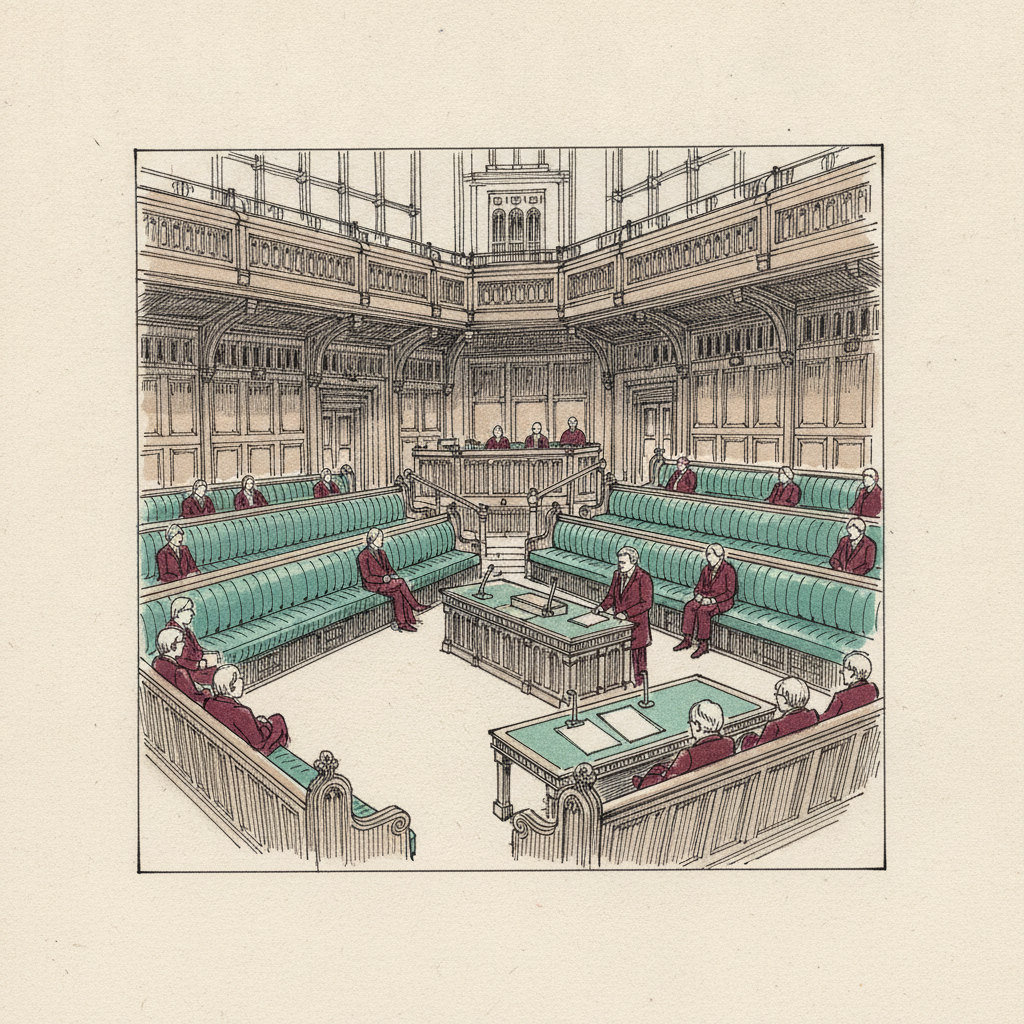
House of Commons
UK Parliament's elected 650-seat chamber in 2026.
The House of Commons sent the Representation of the People Bill to the Lords with no cap on the size of a single political donation, after MPs threw out opposition limits on 2 September 2026. Peers began line-by-line scrutiny on 2 November.
Last refreshed: 19 November 2026 · Appears in 2 active topics
Will MPs accept Lords amendments capping party donations?
Timeline for House of Commons
Mentioned in: Jeffries wins caucus for speaker, 251-11
US Midterms 2026Mentioned in: Reform's 33 MSs walk out of the Senedd
UK Local Elections 2026Mentioned in: Trump picks Ueland for 15-year GAO term
US Midterms 2026Mentioned in: Lords inflict two cyber bill defeats
Cybersecurity: Threats and DefencesMentioned in: Peers table 160 changes to voting Bill
UK Local Elections 2026Background
The House of Commons is the elected Lower Chamber of the UK Parliament. Its 650 MPs each represent one constituency, chosen by First past the post. MPs pass legislation, approve taxes and public spending, and question ministers. A government stays in office only while it keeps the confidence of a Commons majority.
Most bills need the approval of both the Commons and The House of Lords. Under the Parliament Acts the Lords can only delay most bills that MPs pass, so the elected chamber has the final word. In 2026 that rule covered the Representation of the People Bill, which reached peers without a donation cap.
The House also polices its own members through the Parliamentary Commissioner for Standards. On 13 May 2026 the Commissioner, Daniel Greenberg, opened an investigation into Nigel Farage over an undeclared £5m personal gift from Christopher Harborne.
MPs rejected a cap on donations
On 2 September 2026 the Commons threw out three opposition clauses to the Representation of the People Bill before writing in two clauses of its own. Lisa Smart lost a proposed Royal Commission on donation limits, and Katie Lam lost both her amendments. Stella Creasy withdrew her £500,000 ceiling on a single gift in return for a promised taskforce, so the Bill left the chamber with no cap.
The fight then moved to the Lords. Peers gave the Bill a Second Reading on 14 September and tabled 160 amendments for six committee sittings from 2 November to 14 December, with Conservative peers leading 66 of them. Any Lords changes must come back to MPs, who under the Parliament Acts have the final say.
What did Angela Rayner tell the House of Commons about council reorganisation?
Did the Commons vote for a cap on political donations?
How many MPs sit in the House of Commons?




Written with AI from Lowdown's published reporting. Not individually reviewed by an editor. Updated 19 November 2026. Editorial standards.