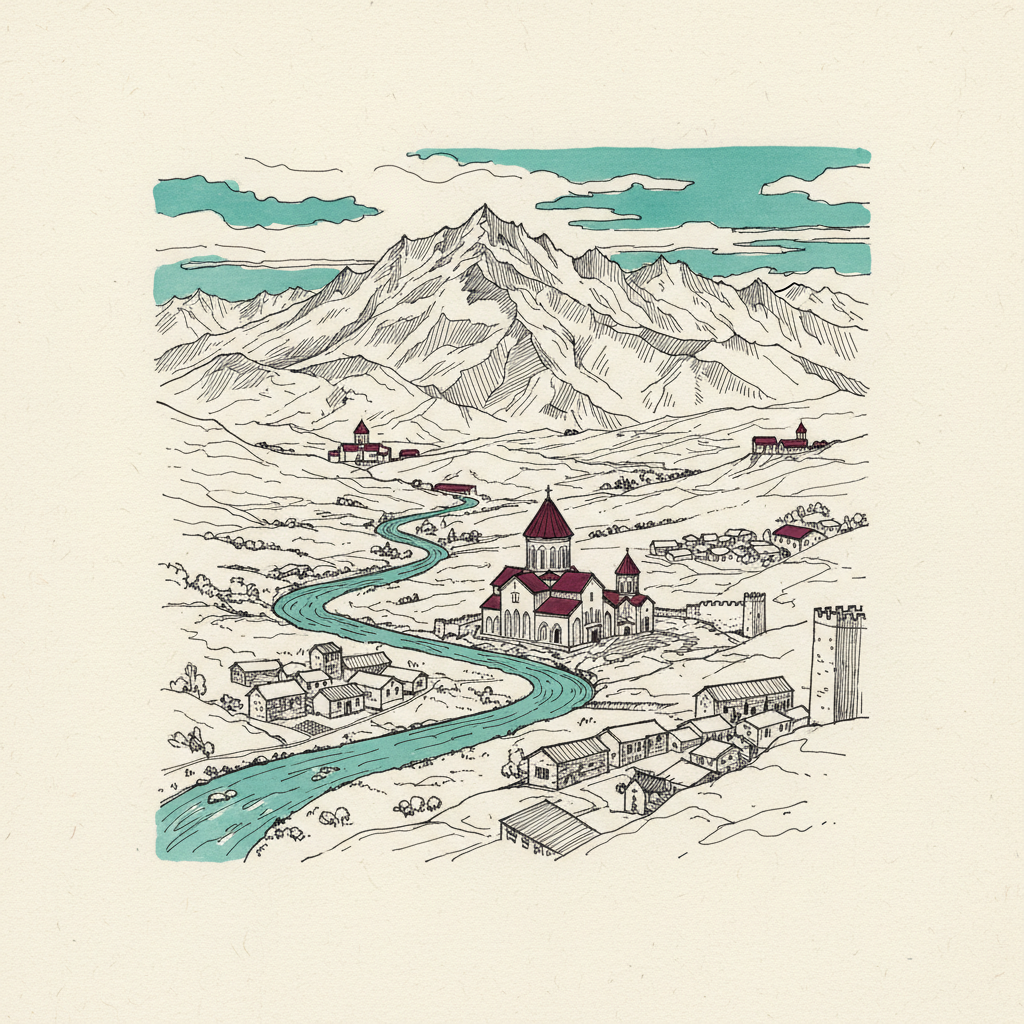
Georgia
Country in the South Caucasus, capital Tbilisi; bordered by Russia, Turkey, Armenia and Azerbaijan.
Georgia gave its Migration Department power on 20 August 2026 to detect, fine and search for breaches of the Labour-migration law, tightening a regime that has applied since March to the roughly 7,200 foreign remote workers based in Tbilisi.
Last refreshed: 18 October 2026 · Appears in 3 active topics
Is Georgia's Schengen-reset trick dead now that Europe's entry system logs every exit?
Timeline for Georgia
Sent its prime minister to meet Pezeshkian
Iran Conflict 2026: Pezeshkian goes to COP17 in YerevanMentioned in: India vows data centres won't lift bills
Data Centres: Boom and BacklashMentioned in: Caribbean PMs ask EU for CBI transition
Nomads & CommunitiesGeorgia gives its migration police teeth
Nomads & CommunitiesMentioned in: OFAC hits Iranian crypto exchanges in Dubai
Iran Conflict 2026Background
Georgia, a South Caucasus country of about 3.7 million people on the Black Sea, borders Russia, Turkey, Armenia and Azerbaijan; its capital is Tbilisi and its currency the lari. Since March 2026 its migration law has given the state power to inspect foreign remote workers, roughly 7,200 of whom live in Tbilisi. Georgia regained independence in 1991 and fought a short war with Russia in 2008, after which Moscow recognised the breakaway regions of Abkhazia and South Ossetia. The Georgian Dream party has governed since 2012.
Georgia became an EU candidate in December 2023, but its government froze accession talks until 2028, and relations with Brussels have soured. The EU suspended visa-free travel for Georgian diplomatic passports in March 2026, and talks on 11 June produced no reversal, though ordinary citizens kept visa-free Schengen access. Hungary stopped issuing worker visas to Georgians on 5 June, the same week the EU warned its suspension could widen to all citizens, with members deciding in January 2027.
For non-EU remote workers, Georgia offers a visa-free base outside the Schengen area. Between 6,000 and 8,000 of them use it to reset the Schengen 90-in-180-day clock, which the EU's Entry/Exit System now counts automatically.
Georgia tightens checks on foreign workers
Georgia's revised Labour migration law took effect on 1 March 2026. It lets the Ministry of Internal Affairs inspect foreign nationals' homes and workplaces without notice and allows deportation with a three-year entry ban for breaches, including joining a protest. Parliament added remote-worker exemptions on 15 April for people working only for non-Georgian companies, but one of the three exemptions lacked its implementing decree. Fines began on 1 May at 2,000 lari for a first offence, with no enforcement figures published.
The Interior Minister's Order No. 104, effective 20 August, merged detection, sanctions and fingerprinting under one office. The Migration Department can now find a breach, fine the offender and run search operations itself, so one body handles a foreign worker's case from inspection to penalty.
Reference
Where is Georgia the country located?
Is Georgia in the EU?
Recently resolved
Why are digital nomads leaving Georgia for Bulgaria to reset their Schengen clock?
What is Georgia's Law 1509 and how does it affect remote workers?
Why is the EU threatening visa restrictions on Georgia?


Written with AI from Lowdown's published reporting. Not individually reviewed by an editor. Updated 18 October 2026. Editorial standards.