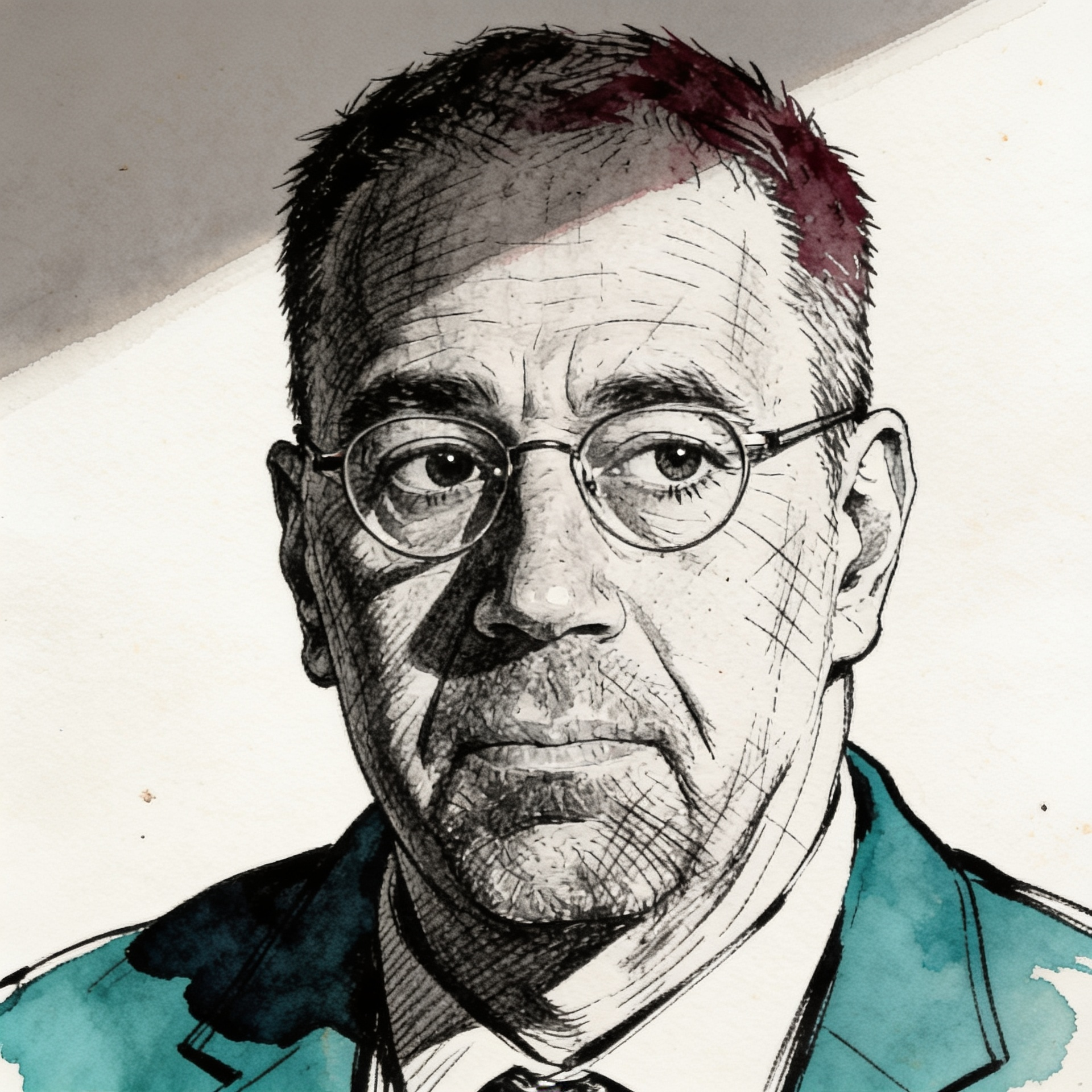
Daron Acemoglu
Economist and Nobel laureate known for research on AI's economic effects.
Daron Acemoglu is the MIT economist and 2024 Nobel laureate whose own research puts AI's ten-year productivity gain below 0.66%, the sceptical floor of the field, yet he signed Stanford's 13 July "We Must Act Now" warning anyway.
Last refreshed: 17 July 2026 · Appears in 1 active topic
Timeline for Daron Acemoglu
Signed the statement despite holding conservative AI-productivity estimates
AI: Jobs, Power & Money: 16 Nobel laureates sign Stanford's alarmMentioned in: AEI: AI is an equaliser, not a destroyer
AI: Jobs, Power & MoneyMentioned in: ServiceNow CEO warns AI could gut grad jobs
AI: Jobs, Power & MoneyBackground
Daron Acemoglu is the Elizabeth and James Killian Professor of Economics at MIT, where he has taught since 1993 and was named an Institute Professor in 2019. Born in Turkey, of Armenian descent, he studied mathematical economics at the University of York before completing a master's and doctorate at the London School of Economics.
His research spans political economy, development economics and Labour economics. He is best known for work with James A. Robinson on why some nations prosper and others do not, set out in "Why Nations Fail". In 2024 he shared the Nobel Memorial Prize in Economic Sciences with Robinson and Simon Johnson for demonstrating how inclusive political and economic institutions drive prosperity.
On AI specifically, his NBER Working Paper No. 32487, "The Simple Macroeconomics of AI", estimates the technology's contribution to total factor productivity at no more than 0.66% cumulatively over ten years, and under 0.53% on Conservative assumptions, among the most cautious figures in the economic literature on AI's growth effect. That paper's scepticism sits alongside his willingness to add his name to public warnings about AI's pace, a tension that recurs whenever his research and his advocacy are read side by side.
Who is Daron Acemoglu?
What does Daron Acemoglu's research say about AI's economic impact?
Why did Daron Acemoglu sign the Stanford AI statement despite his own sceptical estimate?


Written with AI from Lowdown's published reporting. Not individually reviewed by an editor. Updated 17 July 2026. Editorial standards.