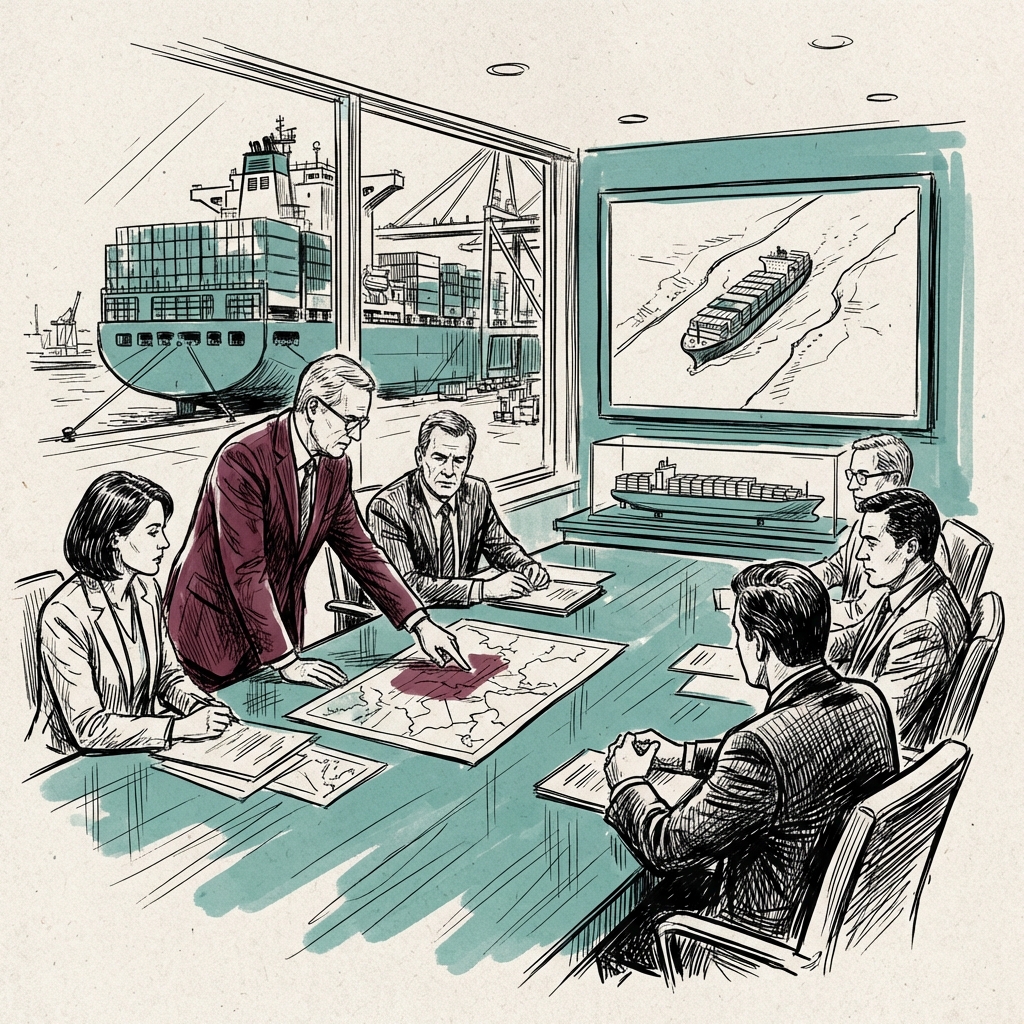
CMA CGM
French container shipping giant; first Western European vessel paid Iran's Hormuz toll, triggering US interdiction threat and French diplomatic protest.
On 5 May 2026, the CMA CGM San Antonio was hit by a missile, placing the French carrier's Gulf operations under direct threat.
Last refreshed: 22 September 2026 · Appears in 2 active topics
With Hormuz sealed, can CMA CGM reroute fast enough to avoid a manufactured-goods crunch?
Timeline for CMA CGM
Mentioned in: Iran walks out of talks at 09:56
Iran Conflict 2026Launched Maia, a Mistral-powered AI assistant for 80,000 staff, on 1 June 2026
European Tech Sovereignty: Mistral wins Airbus and BMW on meritMentioned in: Floating armoury seized 38nm off Fujairah
Iran Conflict 2026Mentioned in: CMA CGM San Antonio hit by missile
Iran Conflict 2026Mentioned in: UKMTO raises Hormuz advisory to critical
Iran Conflict 2026Background
CMA CGM is a French container shipping and logistics organisation. Its core business is moving containerised goods between ports, then linking SEA freight to inland distribution. That makes its network a practical part of the supply chain rather than merely a vessel owner.
The company matters when maritime access becomes uncertain. A carrier's decisions on routing, schedules, insurance and surcharges shape when goods leave a port and when customers receive them. CMA CGM's 1 March 2026 suspension of Hormuz transits showed that connection between a security shock and the movement of manufactured goods.
That relevance is durable because SEA freight depends on predictable passage through constrained waterways. On 4 April 2026, a CMA CGM vessel crossed Hormuz after a prolonged interruption, showing how the group can become an operational marker in a wider dispute over access. Readers should treat CMA CGM as a shipping operator whose commercial choices can carry strategic weight.
CMA CGM faces Hormuz attacks
On 1 March 2026, CMA CGM halted transits through the strait of Hormuz as commercial carriers withdrew from a sharply deteriorating security environment. The decision put a global container operator's network planning under direct pressure from a regional conflict.
The risk became physical on 5 May 2026, when the CMA CGM San Antonio was hit by a missile. For CMA CGM, the episode made contingency routing, CREW safety and reliable access to Gulf ports central operating questions rather than routine logistics tasks. The test is whether it can preserve scheduled freight services while protecting ships and cargo on a route where conditions can change without warning.
What is CMA CGM?
Why did CMA CGM suspend Hormuz routes?
How much is CMA CGM charging for Hormuz surcharges?
How does CMA CGM compare to Maersk?
What happens to shipping if Hormuz stays closed?


