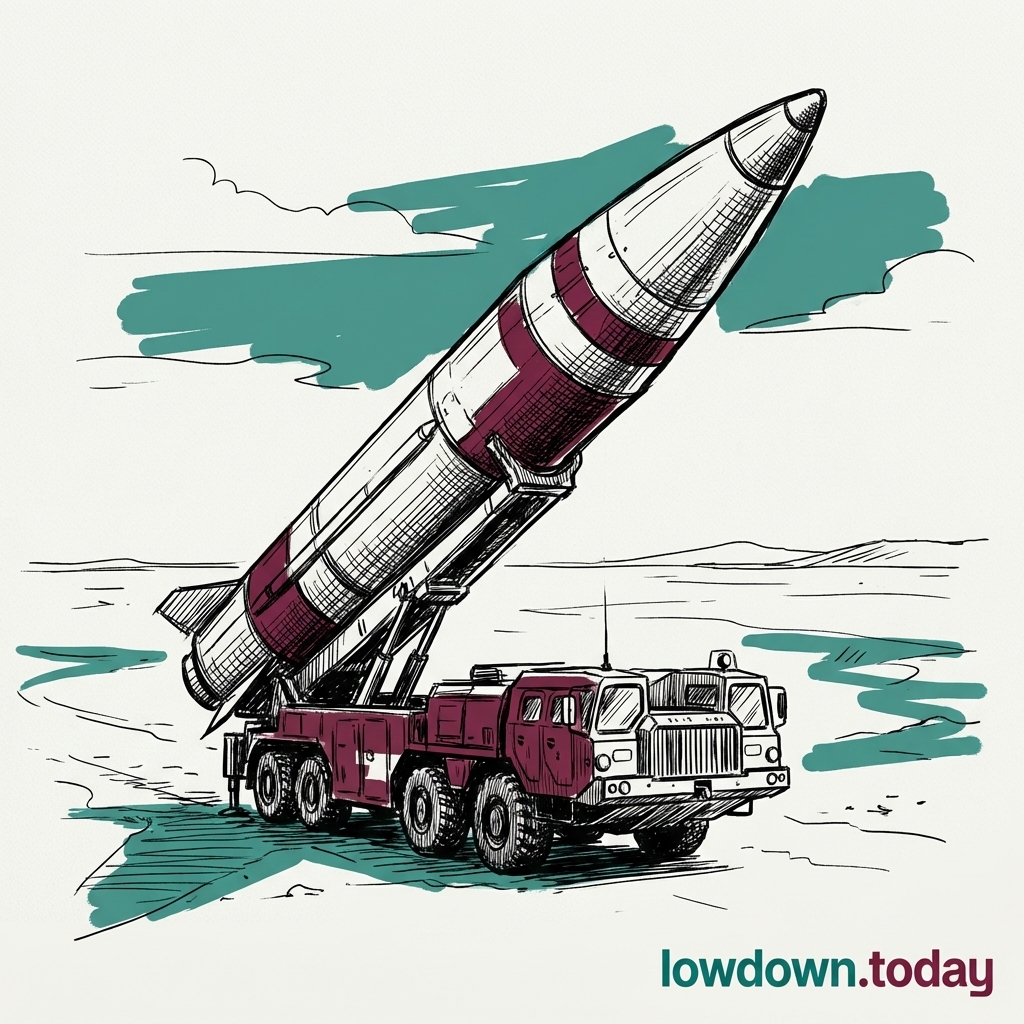
Ballistic missile
Long-range Iranian weapons system whose attacks decreased 90% by March 6 following US strikes on launch infrastructure.
Last refreshed: 14 March 2026 · Appears in 1 active topic
Can missile defences keep pace with a three-thousand-warhead arsenal?
Timeline for Ballistic missile
UAE closes Iranian hospital, voids visas
Iran Conflict 2026Mentioned in: Trump claims Hormuz prize; Iran silent
Iran Conflict 2026Mentioned in: Starmer shuts Parliament out of Iran war
Iran Conflict 2026Mentioned in: Israel kills two senior IRGC commanders
Iran Conflict 2026Mentioned in: IDF: Berlin and Paris in Iran's range
Iran Conflict 2026Background
US B-2 bombers struck hardened underground launch facilities with GBU-31 penetrating munitions in early March, cutting Iranian Ballistic missile attacks by roughly 90%. A fragment from an intercepted missile cratered Jerusalem's Old City. IDF Chief of Staff Lt Gen Eyal Zamir subsequently named European capitals as within range.
Ballistic missiles follow a free-flight arc into the upper atmosphere before descending on their target, combining long range with speeds that compress warning times to minutes. Iran's arsenal, estimated at over 3,000 missiles by the US Defense Intelligence Agency, is the largest in the Middle East, built outside the nuclear framework to give Tehran coercive leverage without triggering non-proliferation sanctions. Systems range from the Shahab-3 (2,000 km) to the claimed hypersonic Fattah; all are operated by the IRGC Aerospace Force, which launched them as the primary long-range strike instrument against Israel, US bases, and Gulf infrastructure from February 2026.
Britain's decision to open bases to US operations drew an explicit Iranian ballistic missile threat. Diego Garcia and UK mainland sites were named as targets; Parliament was shut out of the base-access decision entirely.
What is a ballistic missile?
How many ballistic missiles does Iran have?
Did Iranian missiles hit Jerusalem?
Can Iranian missiles reach Europe?
What did US bombers do to Iranian missiles?