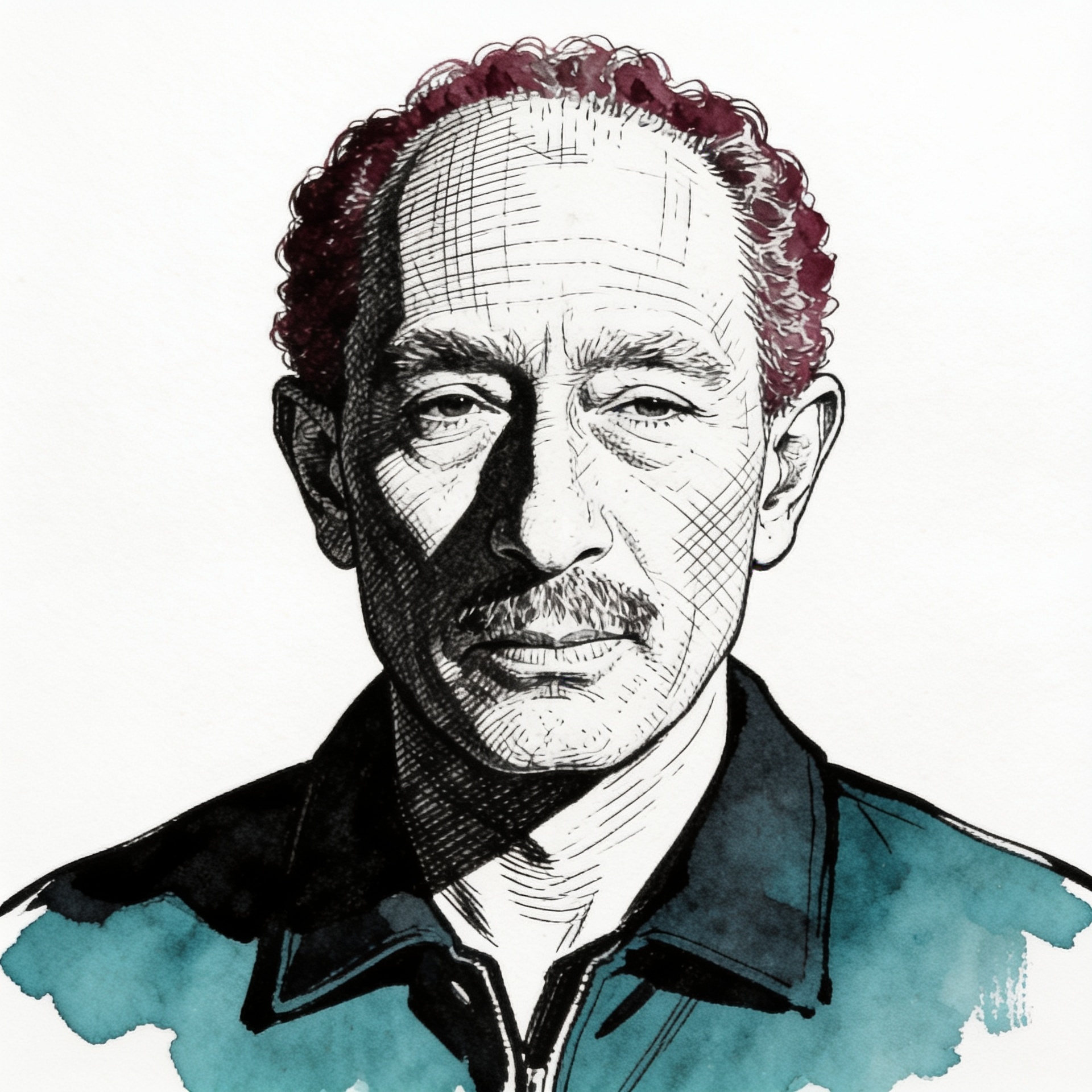
Anwar Sadat
President of Egypt 1970–1981; signed the first Arab-Israeli peace treaty and was assassinated for it.
Anwar Sadat was Egypt's president until his assassination in Cairo on 6 October 1981, after becoming the first Arab head of state to visit Israel in November 1977.
Last refreshed: 24 August 2026 · Appears in 1 active topic
Can any Arab leader today follow Sadat's path to peace with Israel?
Timeline for Anwar Sadat
Mentioned in: Ghalibaf: hungry Iran will not endure
Iran Conflict 2026Mentioned in: Israel refuses the deal's Lebanon clause
Iran Conflict 2026Mentioned in: Vance, Ghalibaf named but pen stays dry
Iran Conflict 2026Mentioned in: Iran's deal-signer cannot be reached at speed
Iran Conflict 2026Invoked by Netanyahu in endorsing Trump's 48-hour power-grid ultimatum
Iran Conflict 2026: Netanyahu backs Trump's 48hr ultimatumBackground
Anwar Sadat led Egypt from 1970 until his assassination in Cairo on 6 October 1981. He was a lieutenant in Gamal Abdel Nasser's Free Officers movement and succeeded Nasser.
In November 1977, Sadat visited Jerusalem and addressed the Knesset. In September 1978, he co-signed the Camp David Accords with Menachem Begin under Jimmy Carter's Mediation.
The Accords produced the Egyptian-Israeli Peace Treaty in March 1979. It was the first Arab state recognition of Israel, and members of Egyptian Islamic Jihad assassinated Sadat in 1981. His legacy remains a reference point for Arab-Israeli diplomacy.
Who was Anwar Sadat?
Why was Anwar Sadat assassinated?
What did Sadat agree to at Camp David?
How does Sadat's peace compare to the Abraham Accords?
Does Egypt still honour the peace treaty Sadat signed?
What did the Camp David Accords actually agree?
Was Sadat popular in Egypt when he was killed?
How did Sadat's peace deal influence the Abraham Accords?

