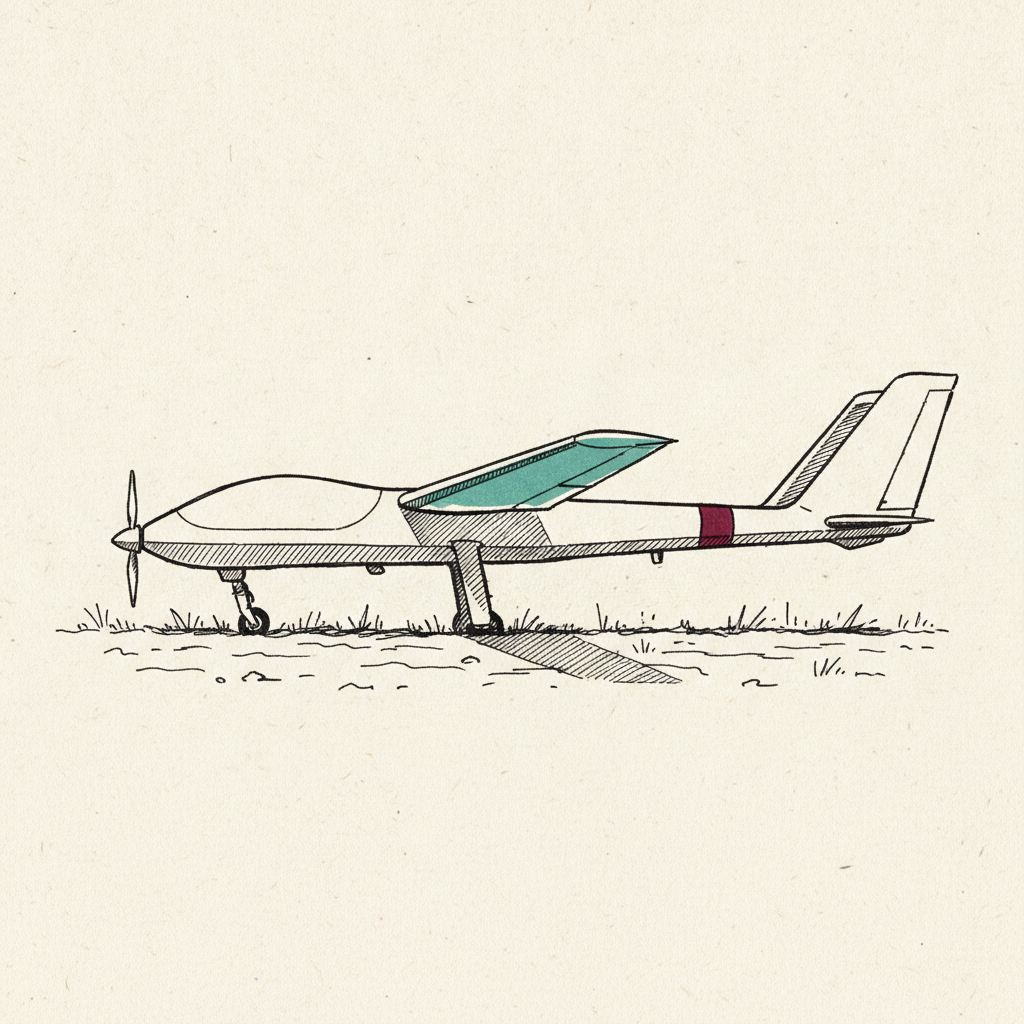
AN-196
Ukrainian long-range one-way attack drone designed by Antonov, also called the Liutyi.
Long-range AN-196 RS drones struck the Ukhta refinery in Russia's Komi Republic, about 1,900 km from the Ukrainian border, Ukrainska Pravda reported on 9 October 2026. The Antonov-designed drone's RS variant is credited with about 2,500 km.
Last refreshed: 12 October 2026 · Appears in 1 active topic
Timeline for AN-196
Mentioned in: Ukraine strikes Yandex AI data centres
Russia-Ukraine War 2026landed in Finland carrying an unexploded warhead
Drones: Industry & Defence: NATO F-16 downs drone over Estonian soilBackground
The An-196 Liutyi is a Ukrainian long-range one-way attack drone, designed and built by Antonov with the state defence group Ukroboronprom and first announced in October 2022. It carries a warhead of 50 to 75 kg. The Kyiv Post, citing BBC News Ukraine, reported that it was first launched into Russian territory in May 2023. A longer-range version, the AN-196 RS, is credited with about 2,500 km.
It is a workhorse of Ukraine's campaign against Russian refineries, including the October 2026 strike on Ukhta. Its flight paths have also tested NATO's borders: in March 2026 Finland recovered an armed AN-196 with an unexploded warhead, one of several Ukrainian drones that strayed into allied airspace, and Russian jamming of their navigation was the assessed cause.
The Liutyi matters because it gives Kyiv reach that geography once denied it. Foreign money supports that reach: in July 2025 Germany agreed to fund production of 500 of the drones.
The drone reached Russia's far north
Ukraine's Defence Ministry claimed on 4 October 2026 that its strikes had disabled 51% of Russian oil refining. Days later drones hit refineries at Omsk and Ukhta, and Ukrainska Pravda reported on 9 October that the Ukhta attack used the An-196 RS.
Ukhta lies in the Komi Republic, roughly 1,900 km from the border, which puts it within the RS variant's credited range of about 2,500 km. That reach is the drone's purpose: it lets Kyiv threaten fuel plants that Moscow once treated as beyond the war. The 51% figure is Ukraine's own claim and has not been independently verified.
What is the An-196 Liutyi drone?
How far can the An-196 fly?
When was the Liutyi drone first used against Russia?
Why was a Ukrainian An-196 drone found in Finland?






