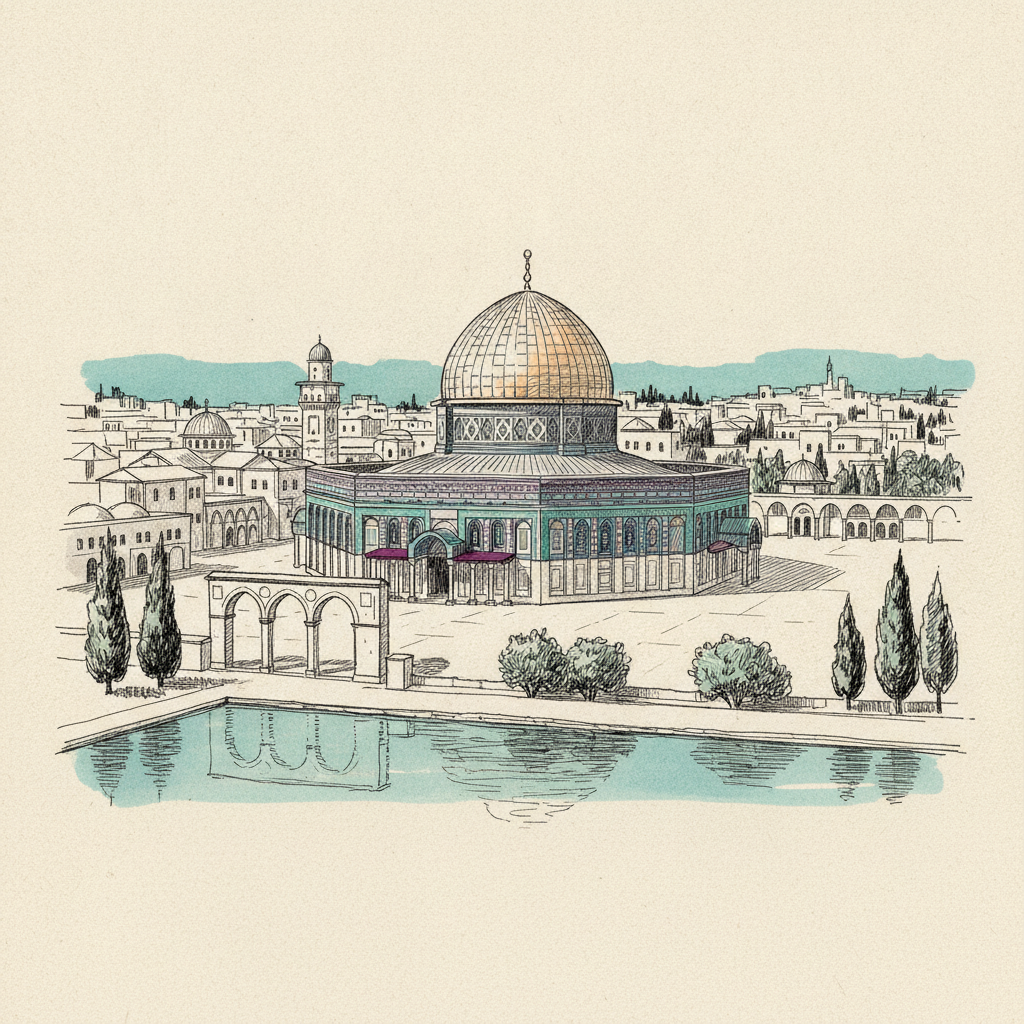
Can Israel maintain the 1967 status quo when its own forces bar worshippers at gunpoint?
Timeline for al-Aqsa Mosque
Closed to worshippers for first time since 1967
Iran Conflict 2026: Al-Aqsa sealed for Eid; first since 1967Debris hits 400m from al-Aqsa Mosque
Iran Conflict 2026Mentioned in: Debris near Knesset and Holy Sepulchre
Iran Conflict 2026Background
al-Aqsa Mosque sits within a 35-acre walled compound in Jerusalem's Old City that Muslims call al-Haram al-Sharif (the Noble Sanctuary) and Jews call the Temple Mount. Islam's third holiest site after Mecca and Medina, it draws millions of pilgrims annually and carries special resonance during Ramadan and EID. Israel has administered the compound since capturing East Jerusalem in 1967, while the Jordanian Waqf retains day-to-day custodial authority.
During EID al-Fitr 2026, Israeli authorities imposed the first full closure since 1967, barring Muslim worshippers and deploying tear gas and stun grenades against hundreds who gathered in surrounding streets. Hours earlier, a fragment from an intercepted Iranian Ballistic missile struck approximately 400 metres from the compound near Dung Gate, creating a crater but no casualties.
The two events on the same day crystallised the compound's role as a pressure point where military conflict and religious identity collide. Hamas has historically framed Israeli access restrictions as an attack on Islam; Iran has used al-Aqsa as a rallying symbol since 1979. Each closure or security incident carries the risk of igniting broader regional unrest in ways that transcend the immediate military situation.
What is the al-Aqsa Mosque?
Why did Israel close al-Aqsa for Eid al-Fitr 2026?
Did an Iranian missile hit al-Aqsa Mosque?
Who controls the al-Aqsa Mosque?
Why is al-Aqsa Mosque important to Muslims and Jews?

