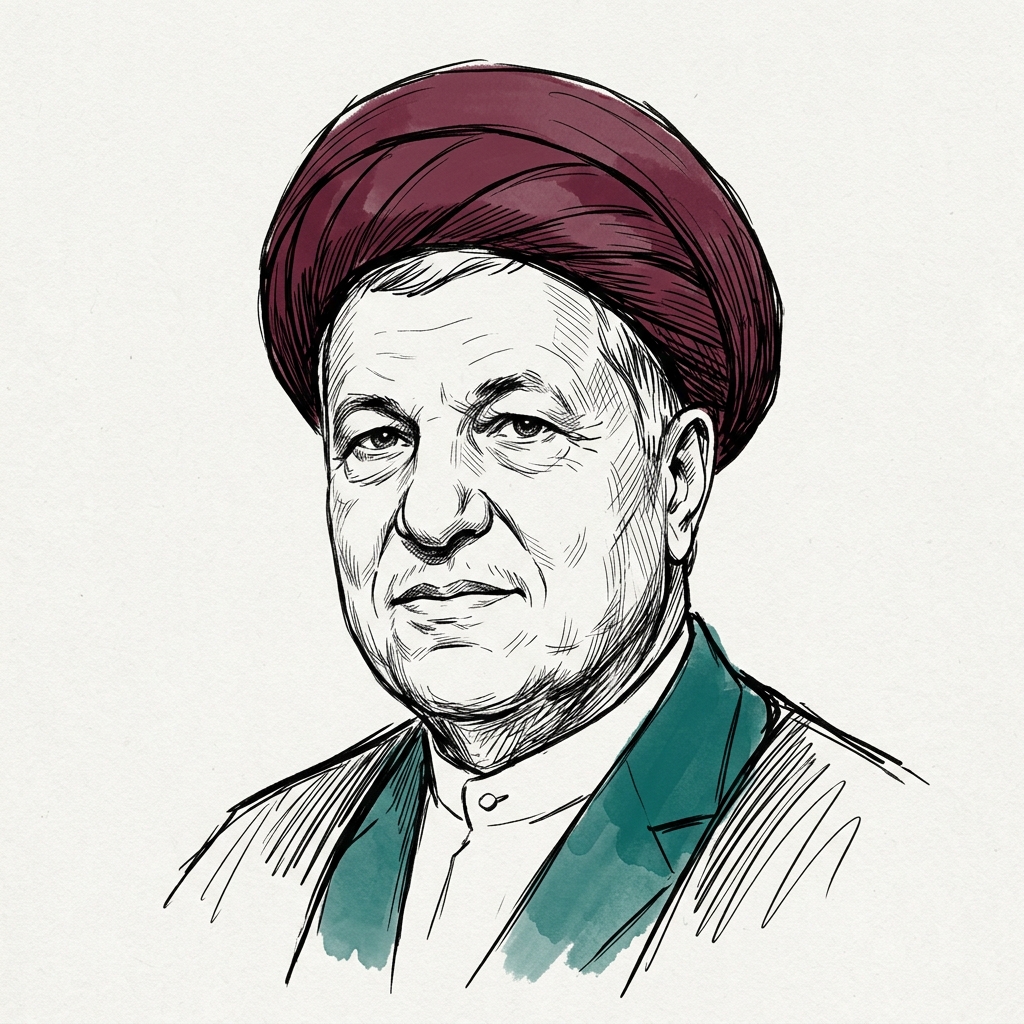
Akbar Hashemi Rafsanjani
Iran's pragmatist president 1989-1997 and Islamic Republic co-founder; died January 2017.
Last refreshed: 17 June 2026
Why does Rafsanjani's death in 2017 still matter to the 2026 Iran conflict?
Timeline for Akbar Hashemi Rafsanjani
Mentioned in: Iran hardliners rage but cannot block it
Iran Conflict 2026Mentioned in: UAE closes Iranian hospital, voids visas
Iran Conflict 2026Mentioned in: Mojtaba Khamenei named Supreme Leader
Iran Conflict 2026Mentioned in: Iran succession stalls; seat stays empty
Iran Conflict 2026Background
Akbar Hashemi Rafsanjani was one of the founding figures of the Islamic Republic, a close ally of Ayatollah Khomeini during the 1979 Revolution, and Iran's fourth president from 1989 to 1997. After leaving the presidency he chaired the Expediency Discernment Council until his death on 8 January 2017, aged 82. He represented the pragmatist wing within Iran's clerical establishment and advocated economic liberalisation and cautious engagement with the West, putting him at odds with hardliners throughout his later career.
Rafsanjani's most enduring domestic legacy is the Islamic Azad University system, which he championed as a vehicle for mass higher education. The network grew to several hundred branches across Iran and became one of the country's largest educational institutions, with its UAE branch among the Iranian institutions closed by Emirati authorities in March 2026.
His death in 2017 removed the most influential moderate voice capable of bridging factional divides within the Islamic Republic. The subsequent consolidation of IRGC power and the hardliner dominance visible in the 2026 conflict reflect the widening gap his absence created. Western diplomats at the time of his death regarded him as the last pragmatist with genuine authority within the system; no equivalent figure has emerged.
Who founded Islamic Azad University?
When was Rafsanjani president of Iran?
How did Rafsanjani die?
Who was Akbar Hashemi Rafsanjani and why was he important in Iran?
When did Rafsanjani die and what happened after?
What is the Islamic Azad University and who founded it?
