Skip to content
You can now search across every topic, entity and event.What's new
US Midterms 2026
14JUN

Alaska blocks the second Dan Sullivan

2 min read
11:52UTC

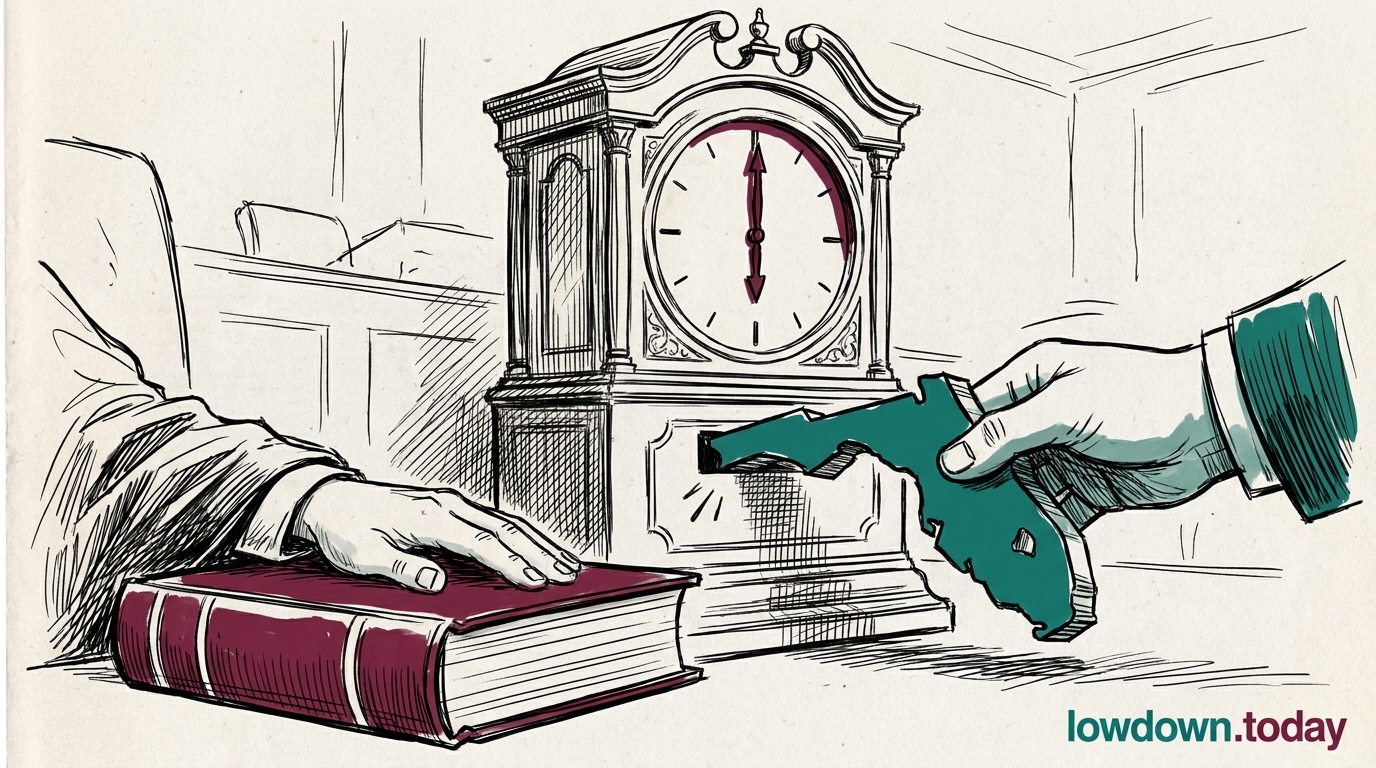
Alaska's elections director disqualified a challenger named Dan Sullivan, ruling he had not filed in good faith. Win his appeal, and two Dan Sullivans would share the primary ballot against the incumbent senator.

PoliticsDeveloping
Key takeaway

Alaska blocked a same-name challenger whose appeal must clear before ballots print on 28 June to matter.

Alaska Division of Elections Director Carol Beecher disqualified the Dan Sullivan from Petersburg, a name-duplicate challenger, ruling his filing was "not filed in good faith for the purpose of genuinely pursuing election" 1. The Division had moved to strike the name on 12 June , and Beecher's ruling completed that step. The challenger has 30 days to appeal, a window running into July, while ballots for the 18 August primary print on 28 June.

Win the appeal, and two candidates named Dan Sullivan would share the August ballot against incumbent Senator Dan Sullivan and Democrat Mary Peltola. Ballot design is a small lever with a long reach: in a low-information primary, a duplicate name can pull votes off a frontrunner purely through confusion, which is the harm the good-faith test is written to prevent. The print deadline of 28 June, not the 30-day appeal clock, is the binding date, because a name once printed cannot easily be unprinted.

The challenger's defence is that the law sets no surname bar, and that disqualifying a validly registered voter over his name is itself the overreach. Beecher's ruling turns on intent rather than identity, which is why the appeal will test whether "good faith" is a standard a court can police or a judgement an official should not be making at all.

Deep Analysis

In plain English

A man from Petersburg, Alaska, who is also named Dan Sullivan filed to run for Senate as a Republican. The problem: Alaska already has a Republican senator named Dan Sullivan who is running for re-election. The ballot would have shown two candidates with identical names and the same party label, which election officials and Republican groups argued would cause voter confusion, particularly among voters who did not know their senator's biographical details. Alaska's elections director, Carol Beecher, ruled that the Petersburg Dan Sullivan had not filed in good faith. She disqualified his candidacy. He has 30 days to appeal, but the state must print primary ballots on 28 June. So even if a court later overruled Beecher, the printed ballots may already carry the incumbent senator's name alone. The senator faces Democrat Mary Peltola in November. Alaska uses ranked-choice voting in general elections, a system where voters rank candidates in order of preference, and Peltola has used it successfully before, winning a House seat in 2022.

Deep Analysis
Root Causes

The good-faith filing disqualification rests on Alaska's ballot-access statute, which requires candidates to file with genuine intent to seek office. Beecher's ruling infers bad faith from the combination of: identical name and party as the incumbent, campaign donations to Democrats, and Democratic-aligned staff. This circumstantial chain is rebuttable on appeal; no direct evidence of the challenger's intent is publicly documented.

The structural vulnerability the case exposes is specific to Alaska's electoral environment: incumbent Dan Sullivan faces a credible Democratic challenger in Mary Peltola, making a name-confusion tactic marginally more consequential than in a genuinely safe Republican seat. A tactic that shaves even 2 percentage points off Sullivan's total by redirecting Republican votes to the wrong Dan Sullivan could matter in a race where Peltola has previously won statewide.

What could happen next?
  • Risk

    The challenger's 30-day appeal window extends into July; if the appeal succeeds after 28 June ballot printing, Alaska must choose between expensive reprinting or running a ballot with two candidates named Dan Sullivan against a Democrat in a competitive Senate race.

  • Precedent

    Beecher's good-faith filing standard for administrative ballot disqualification sets a state-level precedent that other states with similar administrative removal powers may cite when faced with name-duplicate candidates in future cycles.

First Reported In

Update #10 · Wave or grind: the measure splits

NBC News· 21 Jun 2026
Read original
Different Perspectives
Senate Republican leadership
Floor time is finite at 51-47 with a bipartisan funding negotiation running, and a contested procedural fight over grant conditions is not the best use of it this month. Nothing has been abandoned; the resolution keeps its place on the calendar.
South Carolina election administrators
The Commission applied section 7-11-55 as written and certified the field inside the window the statute allowed. Complaints about the compression belong to the legislature, which alone can change the formula.
Rival Republican campaigns
A nine-candidate field and a majority requirement mean nobody wins on 11 August. The endorsement guarantees a place in the runoff, not the seat, and a fortnight of consolidation afterwards is where the nomination is actually settled.
Trump-endorsed campaign operation
The President's endorsement of the interim senator settles the contest, and a former governor rejected by these voters in 2018 does not merit a second hearing. Outside spending against her is money wasted on a nomination already decided.
Senate Budget Committee under Ron Johnson
Johnson, reported to succeed the late Lindsey Graham as Budget chair on 22 July, has a record of opposing reconciliation packages on deficit grounds, a different proposition than his predecessor for carrying the $10bn voter-ID grant through the Senate on 51 votes after the House passed its version 216-214.
NRCC and Republican committee strategists
The NRCC's $92.7m cash on hand outweighs the DCCC's $79.0m by $13.7m even after Democrats out-raised them $37.4m to $35.4m in the second quarter, official FEC filings from 20 July confirmed. Strategists are banking on the reserve gap, not this quarter's receipts, to carry House races.