Skip to content
Briefings are running a touch slower this week while we rebuild the foundations.See roadmap
US Midterms 2026
6JUN

Virginia polls Yes as $79m floods in

3 min read
12:16UTC

Virginia's 21 April referendum on mid-decade redistricting now polls 52-47 percent Yes in a Washington Post survey, with roughly $79 million flowing through 501(c)(4) dark-money shells.

PoliticsDeveloping
Key takeaway

Virginia is the last standing track for Democratic mid-decade redistricting in 2026.

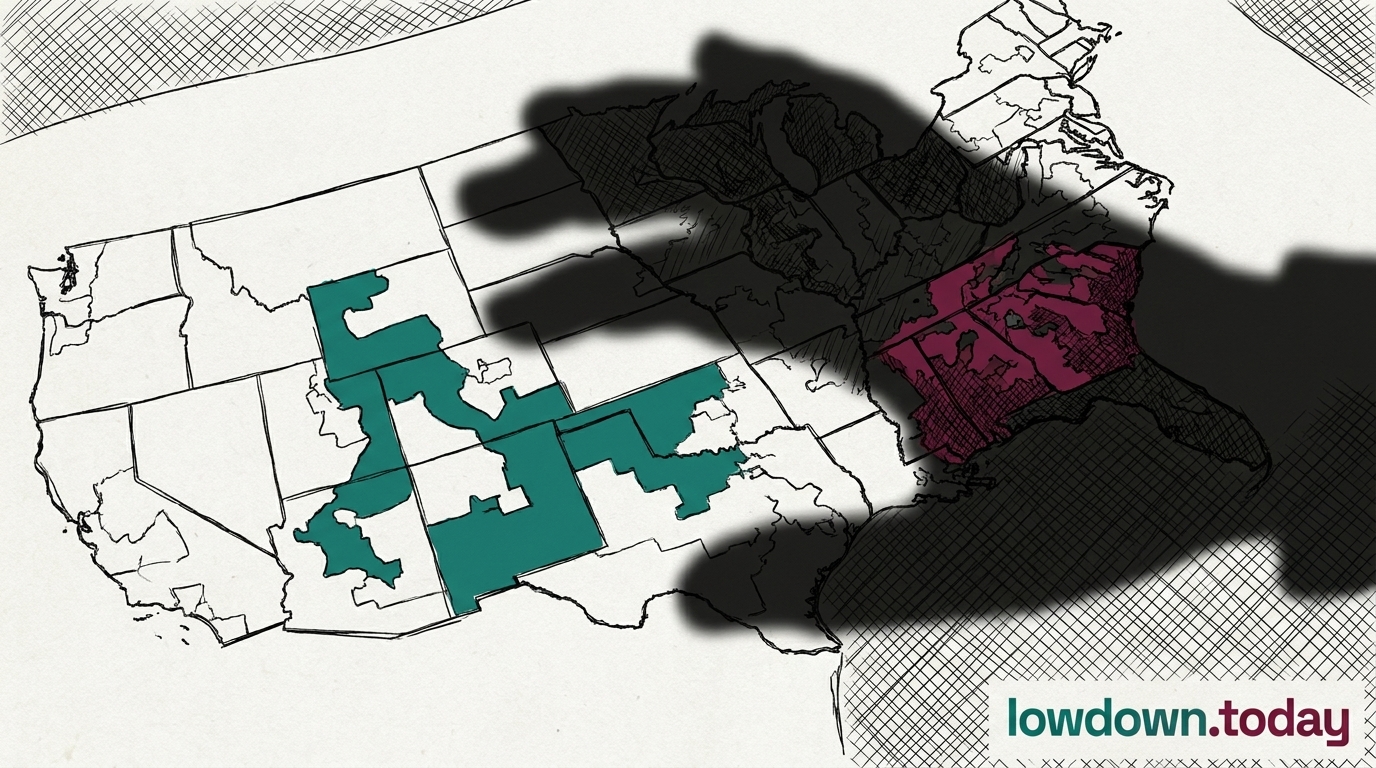
A Washington Post poll published on 14 April 2026 put the Yes side of Virginia's 21 April redistricting referendum at 52 percent against 47 for No, with combined campaign spending across both sides approaching $79 million through 501(c)(4) dark-money shells that are not required to disclose donors 1. The referendum asks voters whether the state legislature can redraw congressional districts mid-decade; the vote was scheduled in the prior update when no polling existed.

A 501(c)(4) is an IRS-classified social welfare organisation that can spend unlimited money on political campaigns without disclosing donors, provided political activity is not its "primary purpose". Cardinal News, the Virginia nonprofit news outlet that first reported the spending totals, identified vehicles on both sides running ads through these structures. That means Virginia voters are casting ballots with no public record of who has spent $79 million to influence the outcome, and the referendum question itself is structured around redistricting rules rather than donor transparency.

The political stakes extend beyond Virginia's own map. With Maryland's redistricting definitively dead and Florida's session delayed past the state's candidate filing deadline, Virginia is the last standing track for Democratic mid-decade redistricting in 2026. A No vote collapses the Democratic programme to federal litigation alone, which operates on appellate timetables incompatible with November. A 5-point polling lead on a ballot measure with this spending volume on both sides is within the margin of error and the margin of turnout.

Deep Analysis

In plain English

Virginia is holding a referendum, a direct public vote, on 21 April asking voters to approve changing the rules for how congressional district maps are drawn. Currently, the Republican-controlled legislature draws the maps. If voters say Yes, they would authorise the Democratic-majority legislature to redraw the maps mid-decade, potentially creating more Democratic-friendly districts. A poll by the Washington Post shows Yes is currently winning 52% to 47%. That is a thin margin. Both sides have spent enormous sums, $79 million combined, to influence the result. Much of this money flows through organisations called 501(c)(4)s, which are allowed under US law to spend on political campaigns without disclosing where their money comes from. The result will matter nationally: a Yes vote could add several Democratic congressional seats; a No vote would close off mid-decade redistricting as a Democratic strategy for 2026.

Deep Analysis
Root Causes

Virginia's redistricting referendum attracted $79 million because the stakes are structural: a Yes vote authorises the legislature to redraw congressional districts mid-decade, potentially producing up to four additional Democratic seats. The 501(c)(4) mechanism is the primary funding route because state campaign finance law treats referendums differently from candidate races in several states, and Virginia's disclosure thresholds were set before the current spending environment.

The asymmetry in the spending, $79 million combined on a state-level ballot measure, reflects the national stakes for both parties. Congressional majorities are decided at the margins; four additional safe Democratic seats in Virginia would offset Republican gains in Florida and Texas. Both parties treat the Virginia result as a national-map bet, which is why out-of-state money dominates.

What could happen next?
  • Risk

    A No vote eliminates Democratic mid-decade redistricting for 2026 outside federal litigation, reducing the potential Democratic House seat gain by up to four seats.

    Short term · 0.88
  • Consequence

    The $79 million spending total on a single state redistricting referendum signals that both parties are treating map control as a higher-return investment than candidate advertising, accelerating dark-money flows into future redistricting contests.

    Medium term · 0.74
  • Risk

    If Yes passes, the legislature still needs to draw an acceptable map and survive legal challenge before November; the vote authorises the process but does not guarantee a seat-producing outcome.

    Short term · 0.71
First Reported In

Update #3 · Tariff shock reads in GDP. Senate map moves.

Cardinal News· 16 Apr 2026
Read original
Different Perspectives
EU Commission trade policy directorate
EU trade analysts note the D+6.9 generic ballot is the first reading this cycle making a Democratic House flip structurally plausible; a Ways and Means Committee under Democratic chairmanship after January 2027 would restore congressional leverage on tariff schedules, reducing the probability of locked Republican tariff posture through 2028.
Canadian USMCA trade negotiators
Ottawa trade officials tracking the 2026 Senate composition see AFP Action's Montana and Iowa deployments as confirming those seats are in play; a Senate retaining John Fleming-style MAHA senators rather than Cornyn-style trade institutionalists would narrow the bipartisan coalition on which Canada's USMCA chapter renewal relies.
V-Dem Institute (University of Gothenburg)
The V-Dem Institute's electoral integrity index flags the Callais-to-Alabama-stay sequence as completing a decade-long rollback of minority voting protections: Shelby County (2013) removed preclearance, Brnovich (2021) narrowed vote-denial claims, Callais removed the majority-minority mandate, and the stay mechanism now forecloses injunctive remedies within any single electoral cycle.
Chatham House democracy analysts
Chatham House analysts assess the Alabama stay as the point at which redistricting litigation migrated from a live 2026 variable to a post-cycle accountability mechanism; the Court's seven-day reversal window is shorter than any state election calendar, meaning judicial review now operates retrospectively rather than preventively in redistricting disputes.
Republican establishment (NRCC and Senate Leadership Fund)
The NRCC is defending Iowa Senate candidate Ashley Hinson with AFP Action's $798,000 IE while simultaneously watching MAHA knock out its own NRCC-connected Iowa governor candidate Feenstra, a split that illustrates the establishment's central 2026 problem: outside money can win Senate seats but cannot resolve the factional fracture that is consuming its gubernatorial bench.
Conservative-institutionalist dissent (WSJ editorial board)
The Wall Street Journal editorial board's warning that aggressive Republican redistricting in a D+6.9 environment risks energising the opposing base beyond what drawn-in margins absorb has gained additional force after Paxton's win converted a safe Texas seat into a contested one; the board's cross-ideological caution is the dissent the Republican consensus on Callais is not publicly engaging.
