Skip to content
Briefings are running a touch slower this week while we rebuild the foundations.See roadmap
US Midterms 2026
6JUN

Sabato moves six House seats toward Democrats

2 min read
12:16UTC

Sabato's Crystal Ball shifted six House seats toward Democrats this week while noting the topline map still "remains close" after the redistricting cycle.

PoliticsDeveloping
Key takeaway

Six Crystal Ball moves in one day show the wave environment is now reaching Republican-engineered districts.

Sabato's Crystal Ball moved six House seats toward Democrats this week 1. The Crystal Ball is one of three industry-standard forecasting services alongside Cook Political Report and Inside Elections; simultaneous moves across six seats in a single update carries more weight than a routine incremental adjustment. Sabato's accompanying note called the topline map one that "remains close" despite the movement 2.

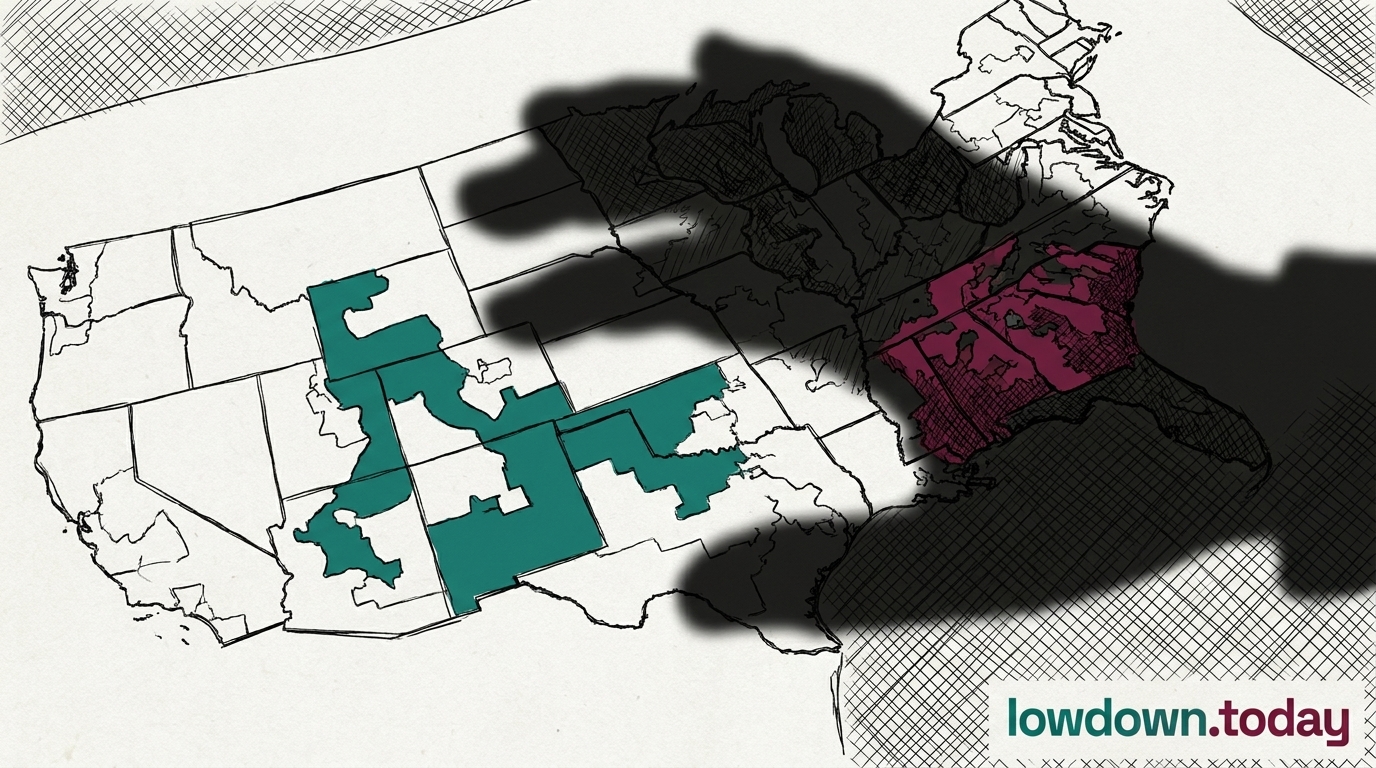
The map Sabato is assessing carries a structural Republican floor banked through post-redistricting gerrymanders: Florida's skewed 24R-4D composition, the Tennessee map eliminating Steve Cohen's seat , Texas's PlanC2333, and Alabama's redrawn lines all shifted seats to Republicans before any vote is cast. The six Democratic-direction moves test whether the national environment is reaching seats those maps were designed to insulate from wave pressure.

The current House majority stands at a three-seat margin after the April NJ-11 special election narrowed it to its slimmest. Democrats need a net gain of roughly four seats to reach a bare majority. Against a structural Republican map advantage, six Crystal Ball rating moves toward Democrats is evidence of wave pressure reaching insulated seats, not yet a projection that the House flips. Whether the moves translate into actual gains depends on whether the generic ballot remains above the threshold registered at the end of May.

Deep Analysis

In plain English

Sabato's Crystal Ball is an election forecasting service run by the University of Virginia Center for Politics. When it 'moves' a seat toward one party, it means the forecasters believe that race has become more competitive and the outcome less certain than before. Moving six seats toward Democrats in one update is notable because forecasting services typically move one or two seats at a time. Moving six at once signals that a broad environmental shift is affecting multiple races simultaneously, rather than a single candidate event. However, the forecasters also said the overall House map 'remains close' even after these moves. Republicans redrew congressional boundaries in multiple states in 2026 to build structural advantages worth 12-15 seats. Democrats need to win those newly drawn Republican seats to reach the 218 needed for a House majority.

Deep Analysis
Root Causes

The six-seat clustering reflects a methodological feature of how Sabato's Crystal Ball updates ratings: the service holds ratings steady until a threshold of evidence accumulates, then moves multiple races simultaneously rather than incrementally adjusting one seat at a time.

The Paxton runoff result on 26 May triggered a reassessment of the broader Senate and House environment in the same update window. Texas Senate moving to Leans Republican reset the forecasters' prior about which red-leaning seats are competitive; TX-35's split-ticket profile under PlanC2333 served as a template for identifying other newly drawn Republican-leaning seats where the presidential-versus-Senate ticket split might recur.

The six seats moved on 27 May are not identified individually in the published update; the competitive universe has expanded enough that the six likely include newly drawn seats in Florida, Tennessee, and Texas where PlanC2333-style redistricting created nominal Republican advantages built on thin Trump-over-Cruz or Trump-over-Senate-candidate margins.

First Reported In

Update #7 · Paxton wins; maps lock

All About Lawyer· 29 May 2026
Read original
Causes and effects
This Event
Sabato moves six House seats toward Democrats
Six simultaneous seat moves signal the national environment has moved far enough to threaten Republican seats even on a post-Callais map built to absorb Democratic gains.
Different Perspectives
EU Commission trade policy directorate
EU trade analysts note the D+6.9 generic ballot is the first reading this cycle making a Democratic House flip structurally plausible; a Ways and Means Committee under Democratic chairmanship after January 2027 would restore congressional leverage on tariff schedules, reducing the probability of locked Republican tariff posture through 2028.
Canadian USMCA trade negotiators
Ottawa trade officials tracking the 2026 Senate composition see AFP Action's Montana and Iowa deployments as confirming those seats are in play; a Senate retaining John Fleming-style MAHA senators rather than Cornyn-style trade institutionalists would narrow the bipartisan coalition on which Canada's USMCA chapter renewal relies.
V-Dem Institute (University of Gothenburg)
The V-Dem Institute's electoral integrity index flags the Callais-to-Alabama-stay sequence as completing a decade-long rollback of minority voting protections: Shelby County (2013) removed preclearance, Brnovich (2021) narrowed vote-denial claims, Callais removed the majority-minority mandate, and the stay mechanism now forecloses injunctive remedies within any single electoral cycle.
Chatham House democracy analysts
Chatham House analysts assess the Alabama stay as the point at which redistricting litigation migrated from a live 2026 variable to a post-cycle accountability mechanism; the Court's seven-day reversal window is shorter than any state election calendar, meaning judicial review now operates retrospectively rather than preventively in redistricting disputes.
Republican establishment (NRCC and Senate Leadership Fund)
The NRCC is defending Iowa Senate candidate Ashley Hinson with AFP Action's $798,000 IE while simultaneously watching MAHA knock out its own NRCC-connected Iowa governor candidate Feenstra, a split that illustrates the establishment's central 2026 problem: outside money can win Senate seats but cannot resolve the factional fracture that is consuming its gubernatorial bench.
Conservative-institutionalist dissent (WSJ editorial board)
The Wall Street Journal editorial board's warning that aggressive Republican redistricting in a D+6.9 environment risks energising the opposing base beyond what drawn-in margins absorb has gained additional force after Paxton's win converted a safe Texas seat into a contested one; the board's cross-ideological caution is the dissent the Republican consensus on Callais is not publicly engaging.
