Skip to content
Briefings are running a touch slower this week while we rebuild the foundations.See roadmap
US Midterms 2026
6JUN

DeSantis submits 24R-4D Florida map; session opens

3 min read
12:16UTC

Governor Ron DeSantis sent a proposed 24R-4D congressional map to the Florida legislature on Monday 27 April, ahead of Special Session D opening Tuesday 28 April without the Louisiana v. Callais ruling.

PoliticsDeveloping
Key takeaway

Florida is accepting double exposure to federal and state legal challenges to gain a four-seat redistricting head start.

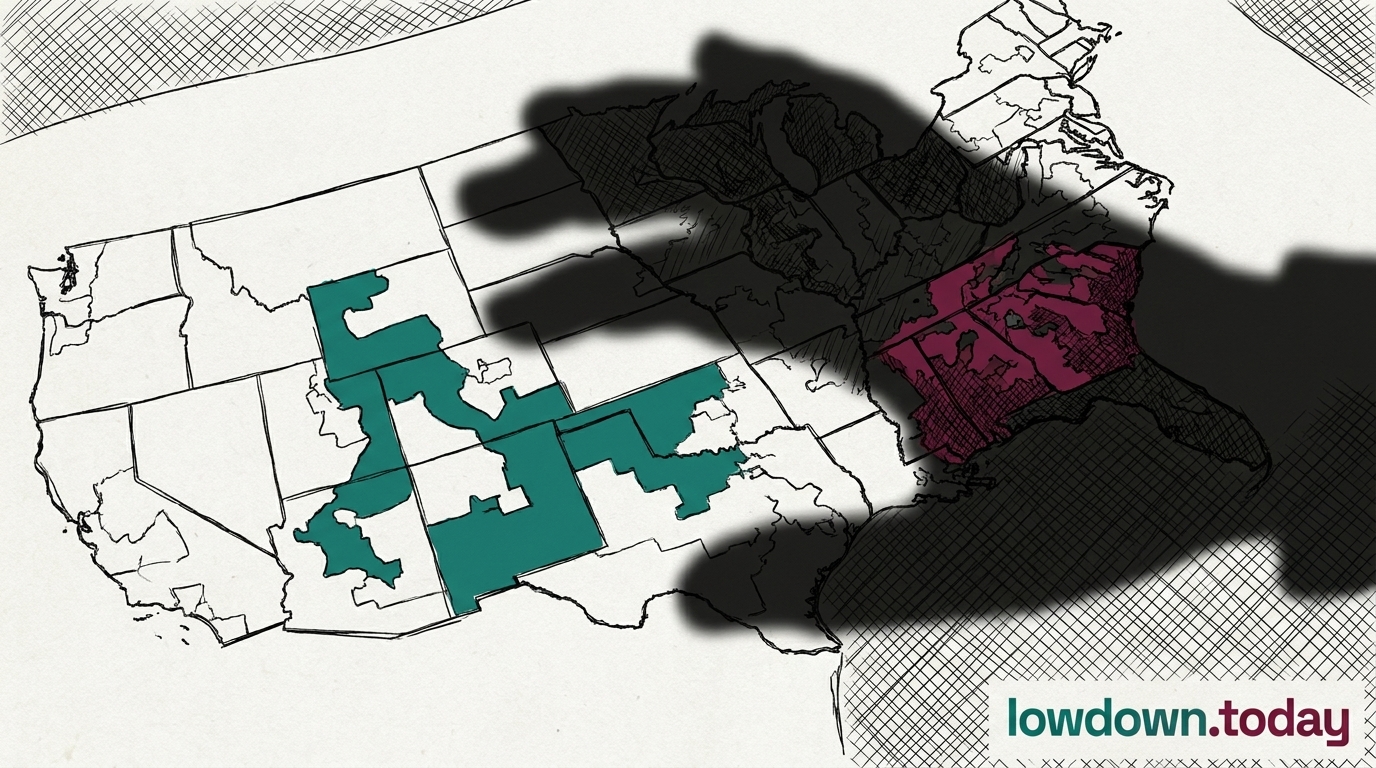
Governor Ron DeSantis submitted a proposed congressional map to the Florida legislature on 27 April, ahead of Special Session D opening Tuesday 28 April 1. The map creates 24 Republican-leaning and 4 Democratic-leaning districts, restructuring from the current 20-7 configuration. It threatens four Democratic incumbents including Reps Kathy Castor of Tampa and Darren Soto of Central Florida.

Florida is proceeding without waiting for The Supreme Court's ruling in Louisiana v. Callais, the case testing whether VRA (Voting Rights Act) Section 2 still requires majority-minority congressional districts. Section 2 requires states to draw at least one district where a racial minority is large enough to elect its preferred candidate. DeSantis had originally timed the session to await that ruling ; his 15 April proclamation delayed the session to today ; the ruling has not arrived. Maryland's competing Democratic redistricting effort collapsed on the same date the State Senate adjourned, 14 April , leaving Florida as the only Republican-led mid-decade redistricting track with congressional impact this cycle.

Proceeding without the ruling creates a double-exposure risk. A map that retains majority-minority districts could be voided if Callais strikes down Section 2; a map that eliminates them could be voided if Callais upholds it. The map also faces challenge under Florida's Fair Districts Amendment, Article III Section 20 of the state constitution, which prohibits partisan gerrymandering as a matter of state law independent of the federal VRA question. Black Voters Matter Fund, the US civil-rights organisation, has published analysis estimating a Callais ruling striking down Section 2 could give Republicans 27 additional safe House seats nationally, with 19 directly tied to the Section 2 question 2. Counter-view from Florida Republicans: some have publicly criticised how DeSantis has handled the process, which is unusual within his own caucus and suggests the procedural haste is not driven by legislative consensus.

Deep Analysis

In plain English

Florida's governor submitted a plan to create 24 Republican-leaning congressional seats and only four Democratic ones, a shift from the current 20 Republican to seven Democratic split. He did this before the Supreme Court issued a ruling on a related voting rights case, taking a legal gamble that could make the map vulnerable to two separate court challenges: one under federal law and one under Florida's own constitution, which voters approved in 2010 specifically to stop politicians from drawing maps that favour their own party.

Deep Analysis
Root Causes

Florida's mid-decade redistricting became available to DeSantis because the state has no independent redistricting commission and no provision requiring redistricting only after the decennial census.

The Fair Districts amendment prohibits partisan intent but requires a successful legal challenge to enforce, creating a gap between the constitutional prohibition and its implementation.

DeSantis's calculation is that the window between session completion and a court-enforced remedy spans the November 2026 election, allowing the new map to take effect for one cycle even if it is subsequently struck down. The 2022 redistricting cycle confirmed this calculation: DeSantis ultimately lost part of his map in court but kept the strategic benefit for one election.

What could happen next?
  • Consequence

    If the map takes effect before any court order, Republicans gain four additional House seats for November 2026, potentially decisive in a chamber where Republicans hold only a 217-214 majority.

    Short term · 0.65
  • Risk

    A Florida Supreme Court order under the Fair Districts amendment could block or modify the map before November 2026, repeating the 2022 remediation pattern and potentially producing a court-drawn map more favourable to Democrats than DeSantis's proposal.

    Short term · 0.55
  • Precedent

    If the Callais ruling strikes down VRA Section 2 after the Florida session, DeSantis gains political credit for anticipating the legal environment; if Callais upholds Section 2, the map's majority-minority district treatment becomes a separate constitutional liability.

    Medium term · 0.6
First Reported In

Update #4 · Calendar versus court

Florida Senate Office of the President· 28 Apr 2026
Read original
Different Perspectives
EU Commission trade policy directorate
EU trade analysts note the D+6.9 generic ballot is the first reading this cycle making a Democratic House flip structurally plausible; a Ways and Means Committee under Democratic chairmanship after January 2027 would restore congressional leverage on tariff schedules, reducing the probability of locked Republican tariff posture through 2028.
Canadian USMCA trade negotiators
Ottawa trade officials tracking the 2026 Senate composition see AFP Action's Montana and Iowa deployments as confirming those seats are in play; a Senate retaining John Fleming-style MAHA senators rather than Cornyn-style trade institutionalists would narrow the bipartisan coalition on which Canada's USMCA chapter renewal relies.
V-Dem Institute (University of Gothenburg)
The V-Dem Institute's electoral integrity index flags the Callais-to-Alabama-stay sequence as completing a decade-long rollback of minority voting protections: Shelby County (2013) removed preclearance, Brnovich (2021) narrowed vote-denial claims, Callais removed the majority-minority mandate, and the stay mechanism now forecloses injunctive remedies within any single electoral cycle.
Chatham House democracy analysts
Chatham House analysts assess the Alabama stay as the point at which redistricting litigation migrated from a live 2026 variable to a post-cycle accountability mechanism; the Court's seven-day reversal window is shorter than any state election calendar, meaning judicial review now operates retrospectively rather than preventively in redistricting disputes.
Republican establishment (NRCC and Senate Leadership Fund)
The NRCC is defending Iowa Senate candidate Ashley Hinson with AFP Action's $798,000 IE while simultaneously watching MAHA knock out its own NRCC-connected Iowa governor candidate Feenstra, a split that illustrates the establishment's central 2026 problem: outside money can win Senate seats but cannot resolve the factional fracture that is consuming its gubernatorial bench.
Conservative-institutionalist dissent (WSJ editorial board)
The Wall Street Journal editorial board's warning that aggressive Republican redistricting in a D+6.9 environment risks energising the opposing base beyond what drawn-in margins absorb has gained additional force after Paxton's win converted a safe Texas seat into a contested one; the board's cross-ideological caution is the dissent the Republican consensus on Callais is not publicly engaging.
