Skip to content
Welcome, thoughtbot's Giant Robots listeners!Start here
US Midterms 2026
24SEP

SAVE Act Stalls as Thune Refuses Nuclear Option

2 min read
11:45UTC

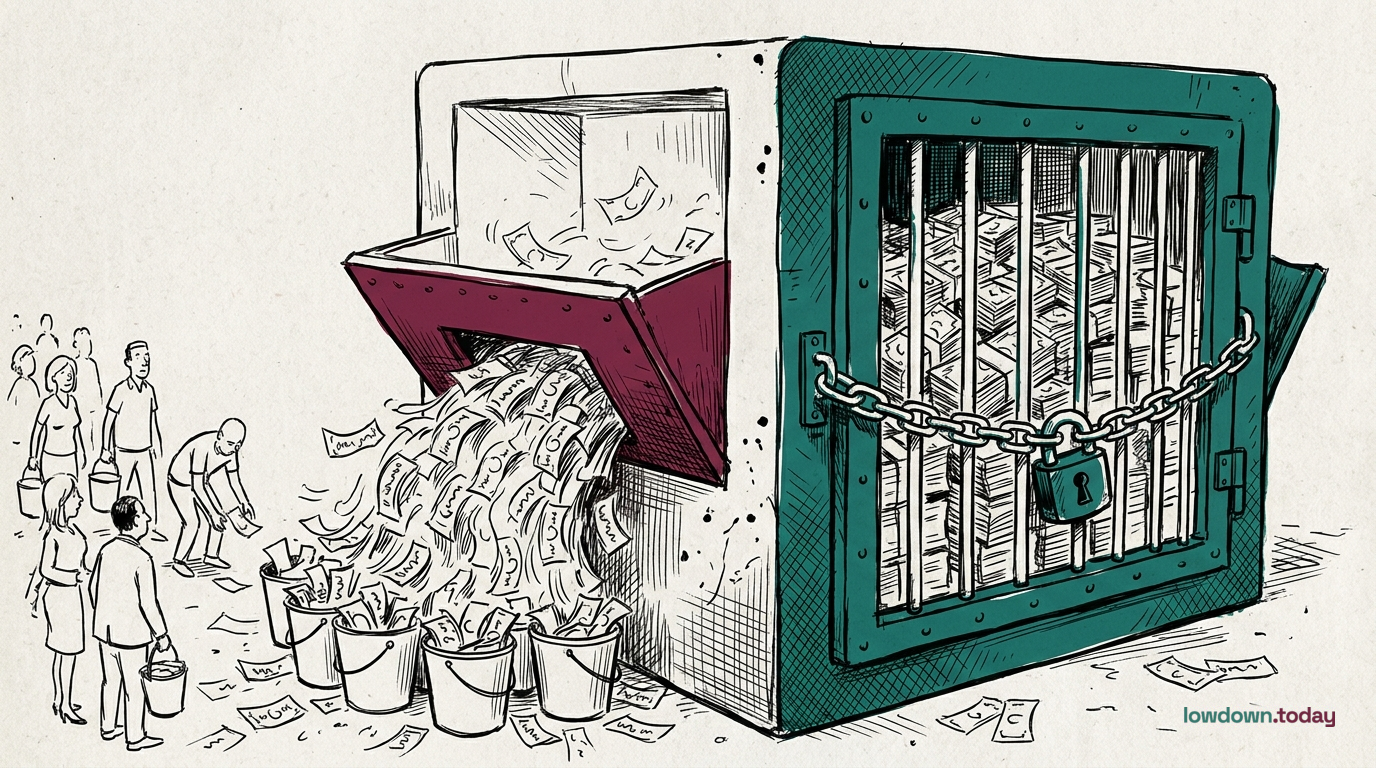
Senate Republicans have abandoned any genuine attempt to pass the SAVE Act. The strategy has shifted to a performative marathon floor debate designed to display Democratic opposition rather than achieve cloture.

PoliticsDeveloping
Key takeaway

The SAVE Act cannot pass the Senate, leaving the blocked executive order as the only remaining vehicle.

Senate Majority Leader John Thune has explicitly refused the nuclear option to pass the SAVE Act (Safeguard American Voter Eligibility Act), citing insufficient votes within his own conference⁠1. The strategy has shifted to a "marathon floor debate": a performative takeover designed to display Democratic opposition rather than achieve cloture.

The filibuster holds. Republicans have 53 seats; they need 60. Senator Lisa Murkowski (Republican, Alaska) has already voted against proceeding. The Federalist reports other GOP senators calling for filibuster elimination, but Thune's refusal makes that a dead letter for this bill.

The pivot confirms what The earlier briefing flagged as likely: the EO is now the sole vehicle for citizenship verification requirements. With most of the EO enjoined and the legislative route dead, the administration's electoral infrastructure agenda rests on federal litigation demanding voter rolls from nearly every state and a voter screening system that flags one in six records incorrectly. The constitutional stakes are elevated precisely because the normal legislative path has failed; executive action is substituting for legislation that could not command a majority even among Republican senators.

Deep Analysis

In plain English

The United States Senate requires 60 votes to end debate and move to a final vote on most legislation. This is called cloture. Republicans control only 53 seats, meaning they need at least 7 Democrats to join them , and Democrats are unanimously opposed to the SAVE Act, which would require documentary proof of citizenship to register to vote in federal elections. Senate Majority Leader John Thune could have tried to change the rules to allow the SAVE Act to pass with only 51 votes (eliminating the filibuster for this legislation), but he publicly refused. He cited insufficient support within his own Republican conference , including Senator Lisa Murkowski of Alaska, who voted against even beginning debate on the bill. Instead, Republicans plan a long floor debate to demonstrate that Democrats are blocking the bill. The bill will not become law, but the public opposition can be used in campaign advertising.

Deep Analysis
Root Causes

The SAVE Act's legislative failure rests on the 60-vote cloture threshold and the Republican caucus's internal disagreement on filibuster elimination.

Murkowski's opposition is structural: she represents a state with significant indigenous Alaskan communities for whom documentary proof of citizenship creates disproportionate registration barriers (birth certificates are often unavailable for older Alaska Native individuals). She has consistently opposed legislation that creates registration barriers, making her vote predictable regardless of the broader political context.

Thune's refusal of the nuclear option reflects a calculation about caucus management: if he attempts filibuster elimination and fails (because even one additional Republican beyond Murkowski defects), he exposes the limits of Republican Senate discipline and creates a template for future defections on other priorities. The cost of failure exceeds the cost of not trying.

What could happen next?
  • Consequence

    With the SAVE Act dead legislatively and seven EO provisions blocked by courts, the administration's entire citizenship verification agenda now rests on the DOJ voter data litigation and the SAVE system's 17% error rate , both operating without statutory authority or legislative mandate.

  • Opportunity

    The performative floor debate creates extended opposition party contrast footage for Republican campaign advertising , particularly in districts where Democratic senators are in competitive races in 2026.

First Reported In

Update #2 · First votes exceed every forecast

The Hill· 12 Apr 2026
Read original →
Different Perspectives
Missouri and Secretary of State Denny Hoskins
Missouri and Hoskins, held in contempt by the state's own supreme court on 10 September for prematurely reverting to HB 1, filed against a pause of the 8th Circuit's order restoring the same 2025 map.
Richard von Glahn and People Not Politicians
Von Glahn and People Not Politicians filed emergency application 26A388 on 22 September asking Justice Kavanaugh to pause the 8th Circuit's order restoring the 2025 map, days after Missouri mailed overseas ballots under the 2022 lines. A refusal to pause it would leave those ballots carrying the wrong districts.
Harmeet Dhillon, Justice Department
Dhillon said the department will send about 1,000 election monitors to Nevada, Pennsylvania and Rhode Island in November, calling it "the biggest DOJ election observer effort in history" and citing "67 election-related indictments and convictions" against 13 under the Biden administration.
National Association for the Advancement of Colored People and co-plaintiffs
The NAACP and eight other groups sued DHS in Washington on 18 September to keep ICE away from polling places, citing federal statutes barring armed officers and troops at elections. The suit follows a released 2025 DHS email listing non-English-language voting jurisdictions beside a Justice Department prosecution checklist.
Cook Political Report
Cook wrote that "the amount of money national Republicans have dedicated to this race is a flashing red light for Democrats" when it moved New Hampshire from Lean Democrat to Toss Up on 15 September, citing the NRSC's $5.18m for Sununu. It is the one state where Republican spending and the rating move the same direction.
Democratic Senate strategists
Strategists note the DSCC held a $37.6m cash lead over the NRSC's $18.7m at the end of August, after coordinating just $1.00m of spending itself. One reading holds the committee is banking that cash for the campaign's final weeks rather than matching Republican spending dollar-for-dollar in August.