Skip to content
You can now search across every topic, entity and event.What's new
US Midterms 2026
4AUG

Nine certified, three refused, filing shut

2 min read
08:56UTC

Elections desk

PoliticsDeveloping
Key takeaway

Twelve filed, nine qualified, and a nine-way field makes a late-August runoff the likely outcome.

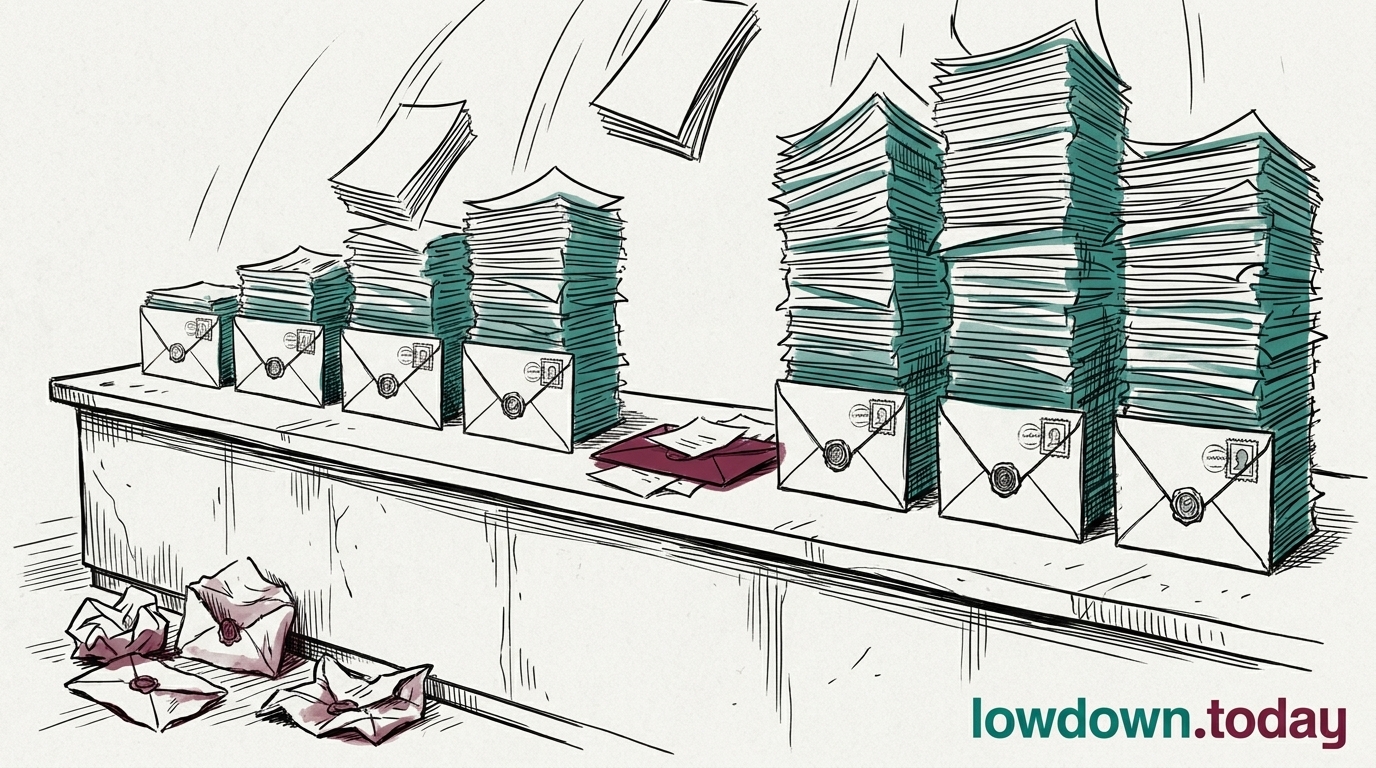
Noon on 28 July closed candidate filing for South Carolina's special Senate primary, and the State Election Commission's own tracking system now lists nine Republicans as Active on the 11 August ballot: Duke Buckner, Russell Fry, Darline Graham, Mark Lynch, Mark McBride, Ralph Norman, Glenda Gail Parker, Mark Sanford and Samuel Shepherd. Three further filers, Danny Ford II, Darius Mitchell and Clark Neilson, carry the status Not Certified for Primary.

One filer in four failed to qualify. That rate says something about a window the Commission could not widen: seven days to gather signatures, satisfy the paperwork and hand over a $10,440 fee. Fry and Norman entered on 20 July without surrendering the House seats they hold , and neither faces a choice about that until January.

Nine names also change the arithmetic of the contest itself. A field this size makes it considerably harder for anyone to clear fifty per cent on 11 August, which pushes a 25 August runoff from a possibility toward an expectation and extends the campaign by a fortnight nobody has budgeted for.

Deep Analysis

In plain English

When a senator dies in office in South Carolina, state law starts a clock. Candidates get a fixed short period to put their names forward, and the state then checks each one qualifies. Twelve people applied for this seat between 21 and 28 July; nine passed the check and three did not. Because so many are standing, it is unlikely any single candidate wins more than half the vote on 11 August, which would trigger a second round two weeks later.

Deep Analysis
Root Causes

Section 7-11-55 of the South Carolina code counts every date in a special nomination forward from the moment the vacancy arises, so the Commission held no discretion over the length of the filing window.

Lindsey Graham's death on 11 July therefore fixed a 21 to 28 July filing period mechanically. Candidates had seven days to complete paperwork and pay a $10,440 fee, and a one-in-four failure rate is what that compression produced.

What could happen next?
  • Consequence

    A nine-candidate field makes a 25 August runoff substantially more likely than a first-round decision.

  • Risk

    A runoff extends overseas and military balloting further into a calendar that already missed the federal 45-day standard.

First Reported In

Update #15 · Trump's pick is being outspent in a safe seat

South Carolina State Election Commission· 4 Aug 2026
Read original
Causes and effects
This Event
Nine certified, three refused, filing shut
Settles who can actually win the seat, and shows how much a seven-day filing window costs applicants.
Different Perspectives
Senate Republican leadership
Floor time is finite at 51-47 with a bipartisan funding negotiation running, and a contested procedural fight over grant conditions is not the best use of it this month. Nothing has been abandoned; the resolution keeps its place on the calendar.
South Carolina election administrators
The Commission applied section 7-11-55 as written and certified the field inside the window the statute allowed. Complaints about the compression belong to the legislature, which alone can change the formula.
Rival Republican campaigns
A nine-candidate field and a majority requirement mean nobody wins on 11 August. The endorsement guarantees a place in the runoff, not the seat, and a fortnight of consolidation afterwards is where the nomination is actually settled.
Trump-endorsed campaign operation
The President's endorsement of the interim senator settles the contest, and a former governor rejected by these voters in 2018 does not merit a second hearing. Outside spending against her is money wasted on a nomination already decided.
Senate Budget Committee under Ron Johnson
Johnson, reported to succeed the late Lindsey Graham as Budget chair on 22 July, has a record of opposing reconciliation packages on deficit grounds, a different proposition than his predecessor for carrying the $10bn voter-ID grant through the Senate on 51 votes after the House passed its version 216-214.
NRCC and Republican committee strategists
The NRCC's $92.7m cash on hand outweighs the DCCC's $79.0m by $13.7m even after Democrats out-raised them $37.4m to $35.4m in the second quarter, official FEC filings from 20 July confirmed. Strategists are banking on the reserve gap, not this quarter's receipts, to carry House races.