Skip to content
You can now search across every topic, entity and event.What's new
US Midterms 2026
4AUG

DCCC flips committee lead; super PACs diverge

4 min read
08:56UTC

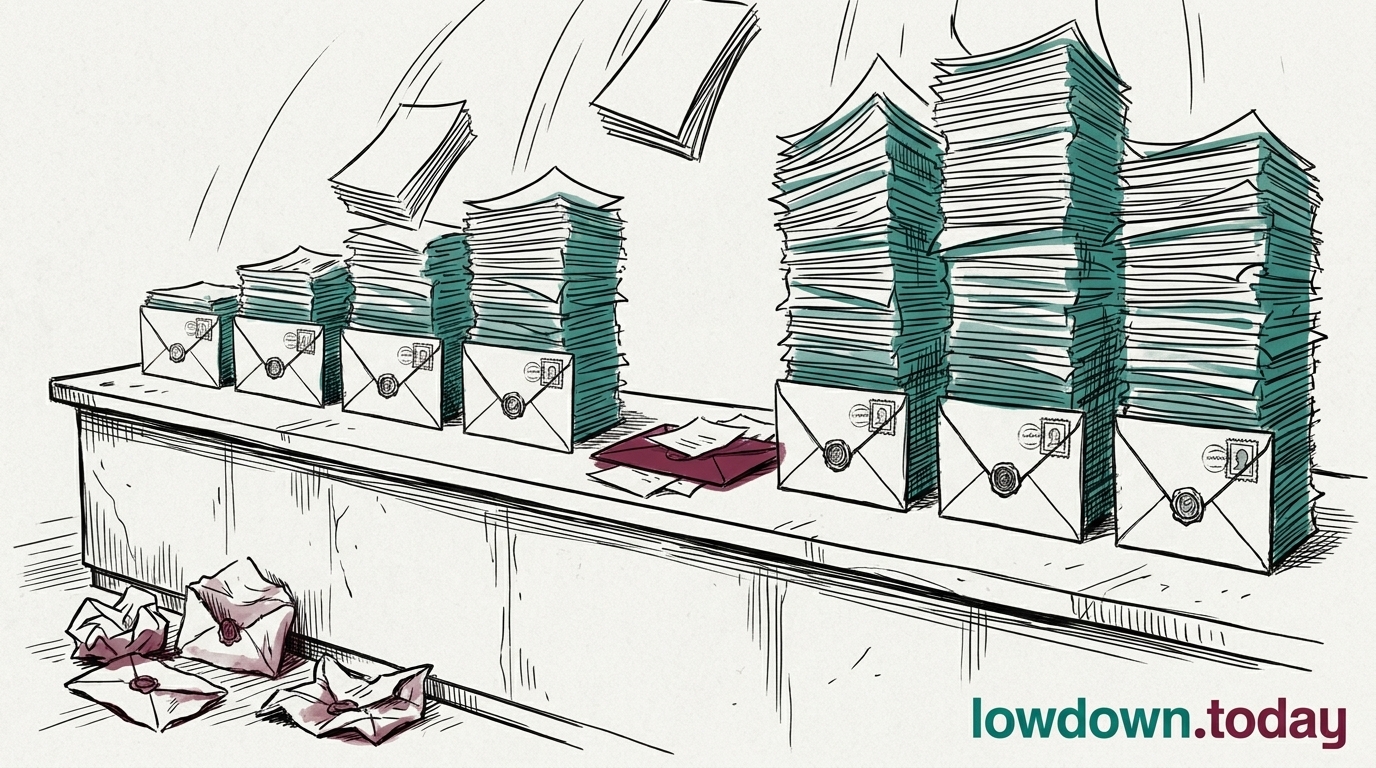
The DCCC ended April with $32.9 million in cash and a $12.6 million lead over the NRCC, a $21 million monthly swing; Republican super PACs hold a $118 million advantage at the outside-spending layer.

PoliticsDeveloping
Key takeaway

Democrats outraise Republicans on the ground game by $12.6 million and are outraised on the air war by $118 million.

The Democratic Congressional Campaign Committee ended April with $32.9 million in cash despite $4 million in debt; the National Republican Congressional Committee ended with $20.3 million and no debt 1. The DCCC raised $8.1 million in April and spent $9 million. The NRCC raised $7 million and spent $10.5 million. The net effect is a $21 million relative swing in a single month: from NRCC plus $8.3 million at the end of Q1 to DCCC plus $12.6 million after April. That is the second consecutive month of Democratic committee parity-or-better since the February reading .

Federal law bars super PACs from coordinating with campaigns on the ground game, which means committees buy field offices, registration drives, paid canvassers and voter-data infrastructure that super PACs cannot replicate. The April flip translates to more Democratic ground staff in the roughly 30 competitive House districts before Labour Day. The NRCC's burn pattern, spending $10.5 million against $7 million raised, indicates defensive advertising reservation rather than infrastructure build.

The super PAC layer runs in the opposite direction. The Senate Leadership Fund unveiled a $342 million deployment plan in early April targeting eight Senate races, its largest ever. SLF plus the Congressional Leadership Fund hold $257 million combined. House Majority PAC plus Senate Majority PAC hold $139 million. That is a $118 million Republican advantage at the outside-spending layer, against the $12.6 million Democratic advantage at the committee layer.

Wesleyan Media Project director Erika Franklin Fowler called the divergence the cycle's defining structural feature: Republicans hold the air war, Democrats hold the ground. Senate Majority PAC president J.B. Poersch's counter-view, in a Punchbowl interview, is that the SLF plan was sized before Cook's post-Callais rating moves and overcommits relative to the current environment. The two layers scale through May in parallel, not in substitution; one buys television advertising, the other buys the canvassers who knock on doors.

Deep Analysis

In plain English

American election campaign finance has two main layers that operate very differently. The first layer is the official party committees. The DCCC raises money for Democratic House candidates; the NRCC does the same for Republicans. These committees can coordinate directly with campaigns. They spend their money on canvassers who knock on doors, local field offices, and voter databases. At this layer, Democrats ended April with $12.6 million more than Republicans. Super PACs raise and spend unlimited amounts but by law cannot coordinate with official campaigns. They spend mainly on television advertising. Republicans hold $257 million across their main super PACs against Democrats' $139 million, a $118 million Republican advantage at this layer. Democrats lead Republicans by $12.6 million at the committee layer and trail Republicans by $118 million at the super-PAC layer. Democrats have the advantage in the operations that run ground campaigns. Republicans have the advantage in the advertising that runs on television. Both matter, but for different parts of winning an election.

What could happen next?
  • Consequence

    The DCCC's April flip to $12.6 million cash lead means Democrats can staff field offices in the approximately 30 competitive House districts before Labour Day, a ground infrastructure Republicans cannot match with super-PAC money by law.

    Short term · 0.78
  • Risk

    The NRCC's burn pattern, spending $10.5 million against $7 million raised in April, indicates defensive advertising reservation rather than infrastructure build. Sustained over three more months, it depletes NRCC reserves before the fall advertising war.

    Medium term · 0.65
  • Consequence

    The SLF's $342 million deployment plan, if not reallocated after Cook's post-Callais rating moves, concentrates Republican outside spending in states where the map already favours Republicans, reducing its marginal value in the 30 genuinely competitive districts.

    Medium term · 0.58
First Reported In

Update #6 · A primary nullified mid-vote

Punchbowl News· 19 May 2026
Read original
Different Perspectives
Senate Republican leadership
Floor time is finite at 51-47 with a bipartisan funding negotiation running, and a contested procedural fight over grant conditions is not the best use of it this month. Nothing has been abandoned; the resolution keeps its place on the calendar.
South Carolina election administrators
The Commission applied section 7-11-55 as written and certified the field inside the window the statute allowed. Complaints about the compression belong to the legislature, which alone can change the formula.
Rival Republican campaigns
A nine-candidate field and a majority requirement mean nobody wins on 11 August. The endorsement guarantees a place in the runoff, not the seat, and a fortnight of consolidation afterwards is where the nomination is actually settled.
Trump-endorsed campaign operation
The President's endorsement of the interim senator settles the contest, and a former governor rejected by these voters in 2018 does not merit a second hearing. Outside spending against her is money wasted on a nomination already decided.
Senate Budget Committee under Ron Johnson
Johnson, reported to succeed the late Lindsey Graham as Budget chair on 22 July, has a record of opposing reconciliation packages on deficit grounds, a different proposition than his predecessor for carrying the $10bn voter-ID grant through the Senate on 51 votes after the House passed its version 216-214.
NRCC and Republican committee strategists
The NRCC's $92.7m cash on hand outweighs the DCCC's $79.0m by $13.7m even after Democrats out-raised them $37.4m to $35.4m in the second quarter, official FEC filings from 20 July confirmed. Strategists are banking on the reserve gap, not this quarter's receipts, to carry House races.