Skip to content
You can now search across every topic, entity and event.What's new
UK Local Elections 2026
12AUG

Three run for Scottish Labour leader

2 min read
14:07UTC

Michael Marra, Joe Fagan and Monica Lennon are standing to lead Scottish Labour. Nominations close at 10:00 on 17 August, and reaching the ballot takes nine separate endorsements.

PoliticsDeveloping
Key takeaway

Nine endorsements by 17 August decide which of the three reaches the members' ballot.

Three candidates have declared for the Scottish Labour leadership: Michael Marra, Joe Fagan and Monica Lennon 1. Joe Fagan is the MSP (Member of the Scottish Parliament) for South Scotland and a former leader of South Lanarkshire Council. Marra sits for North East Scotland, Lennon for the Glasgow region. Nominations opened on 3 August to replace Anas Sarwar .

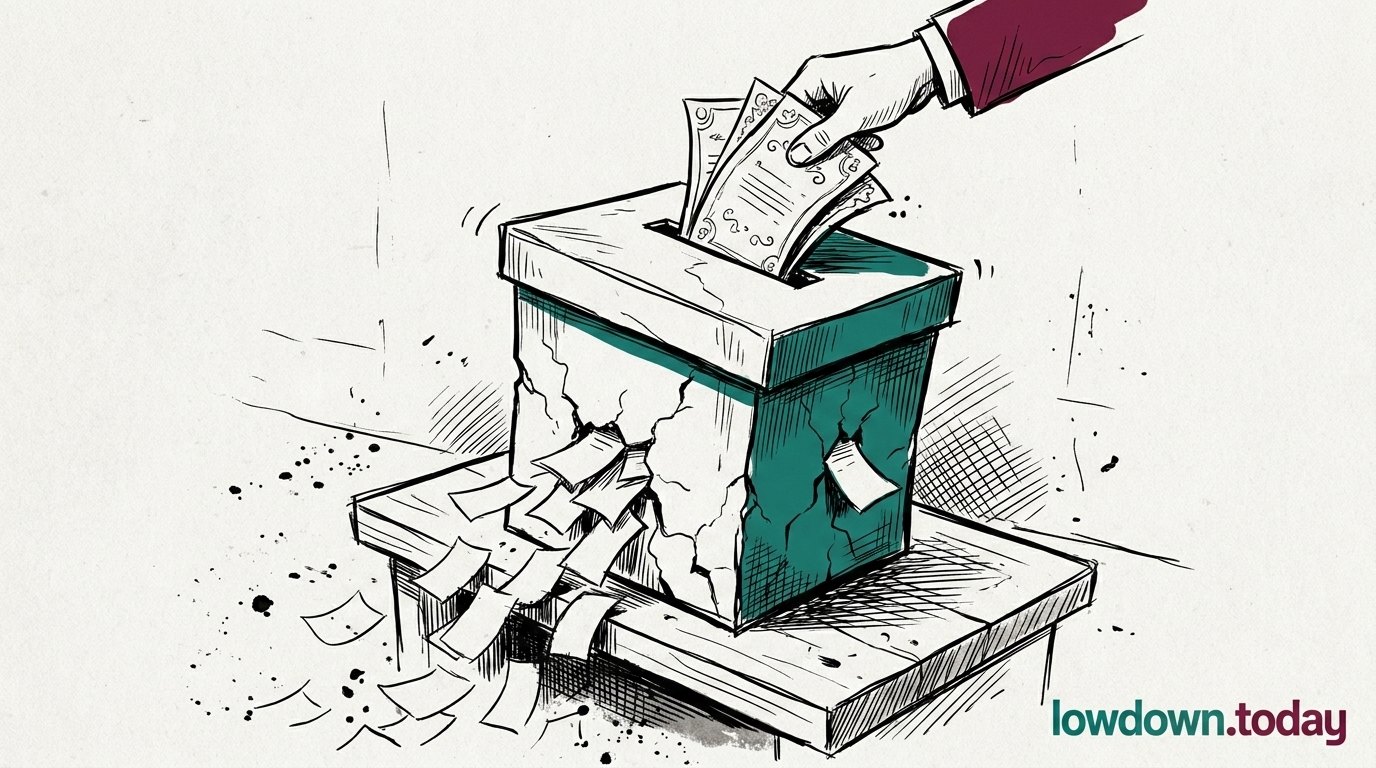
Declaring a candidacy does not put a name on the ballot. Nominations close at 10:00 on Monday 17 August, and a candidate reaches the ballot only with three MSPs, three Members of Parliament and three affiliated organisations behind them, two of which must be trade unions 2. Nine endorsements from three distinct constituencies is a high bar for a Holyrood group of 17. If a candidate clears it, members vote from 28 August to 17 September and the result comes on 19 September 3.

A threshold of that shape hands the first decision to elected members and union officials rather than to the party's membership. No member votes on who passes it, and by the time the ballot opens the field is already settled. Labour built the rule to filter out candidates without institutional support, which works exactly as designed and is the point of complaint against it.

Whoever wins takes on a constitutional position fixed elsewhere. Andy Burnham told Scottish Labour's Members of Parliament on 7 July that no Section 30 order would be granted , the instrument that would let Holyrood hold a second independence referendum lawfully. The new leader must argue the union case in Scotland from a decision taken for them at Westminster, which leaves delivery and party management as the ground the contest can actually be fought on.

Deep Analysis

In plain English

To stand for Scottish Labour leader, a candidate needs backing from three sitting MSPs, three MPs, and three organisations affiliated to the party, at least two of which must be trade unions. This is a higher bar than it sounds: Scottish Labour has relatively few MPs and only a handful of affiliated unions, so failing to win over two of those unions can knock a candidate out before ordinary party members ever get a vote. Michael Marra, Joe Fagan and Monica Lennon have all declared they want to run, but nominations do not close until 10:00 on 17 August, so it is not yet known which of them will actually clear all three thresholds and reach the ballot.

Deep Analysis
Root Causes

Scottish Labour's leadership rules require any candidate to secure nominations from three MSPs, three MPs and three affiliated organisations, of which at least two must be trade unions, before nominations close at 10:00 on 17 August. With only a small number of Westminster MPs and a limited roster of affiliated unions in Scotland, that threshold gives disproportionate gatekeeping power to whichever unions choose to back a candidate, compared with a contest that only required MSP support.

The three-declared-candidate field, Marra, Fagan and Lennon, reflects that structural filter already at work: Scottish Labour's MSP group is large enough to produce several credible contenders, but the union and MP thresholds will likely determine which of them actually reach a members' ballot.

What could happen next?
  • Meaning

    Union backing, not MSP support, is likely to be the deciding factor in which candidates reach the members' ballot.

  • Risk

    A candidate with strong MSP support but no union nominations could be eliminated before nominations close on 17 August.

First Reported In

Update #15 · Reform bleeds councillors, wins by-elections

Irish News· 12 Aug 2026
Read original
Different Perspectives
Sinn Féin
Sinn Féin
Sinn Féin's John O'Dowd ruled out a Stormont walkout on 11 August despite calling the DUP increasingly difficult to work with, closing a question Conor Murphy had left open a fortnight earlier. Only Sinn Féin or the DUP can collapse the joint First Minister office, so the denial gives up the party's own leverage in budget talks.
Scottish Labour
Scottish Labour
Michael Marra, Joe Fagan and Monica Lennon declared for the Scottish Labour leadership, but each needs nine endorsements from MSPs, MPs and unions before members vote, with nominations closing 17 August. Lennon, the only woman standing, says the threshold favours a male-run process and could produce an all-male ballot.
Plaid Cymru
Plaid Cymru
Plaid Cymru held both Welsh wards Reform challenged in the same set of by-elections, Bro'r Llynnoedd on Anglesey by 48.5% to 39.3% and Hengoed on Caerphilly by 49.9% to 36.4%. The party that leads the Welsh government kept Reform in second in both.
Conservative Party
Conservative Party
The Conservatives lost three of ten council by-elections fought on 30 July and 6 August, two wards to Reform in Norfolk and one to the Greens in Surrey, continuing a run of losses since the May sweep. Every seat gone had been Conservative-held going into the contest.
Reform UK
Reform UK
Reform's 56 lost councillors since May came from defection, suspension and resignation, not lost votes, while the party gained three of ten council by-elections and finished second in four more over the same fortnight. That record undercuts reading the churn as electoral retreat.
Democratic Unionist Party
Gavin Robinson rejects Sinn Féin's characterisation of the institutions as precarious, says the DUP is "committed to" delivering for the public, and will not be "goaded" into a dispute he attributes to Treasury funding rather than unionist bad faith.